
I am Regina Lynette, daughter of Donna Maria, daughter of Dorothy Lee, daughter of Odetta, daughter of Peoria. And I have been searching for myself in my mothers’ gardens. But what do I do when all I know is a name, some basic statistics, and a cause of death? I wish I knew if one of them had these ankles – they’re hereditary and I’ll never forgive the ancestor who passed them on to me. They skipped over my parents and none of my siblings got them so I can’t track them down.
Odetta (Cox) Thomas, my great-grandmother, is practically just a name and possibly a photograph along with a death certificate and a few census records to me. She was my great-grandfather’s first wife and together they had three daughters, including my grandmother. She stayed barefoot and pregnant having all three daughters in the span of about 3 years but lost the last of those daughters at just 6 months old. She married young, probably about 14 years old and died young at 31 years old. She died from paralysis and apoplexy (presumably a stroke) due to interstitial nephritis according to her death certificate (it only took me years to decipher the handwriting on the certificate). With this information, I can’t guarantee that she had these ankles.
The last census taken during her life, one year before she died, shows that she was divorced from my great-grandfather, but her death certificate shows she was married when she died, and no name was listed for her husband. She is listed with my great-grandfather’s name on her death certificate, and he is noted as a widower before his second marriage. What’s for certain is that she was not living with him nor her children – at the time, she was a roomer in a house with her parents. Somewhere between 1920 and 1930, my great-grandparents had some kind of separation – an undocumented/unfiled divorce – and I’m left with far too many ideas of why she wasn’t living with her children. I cannot confirm where my great- grandfather and his daughters were living that year.
Without one single family story about Odetta, it’s difficult for me to even make assumptions about the way life treated her. Even though she married at such a young age, it wasn’t atypical for the time. All signs point to her death being sudden and unexpected – her age and her immediate cause of death support that assumption. She has been laid to rest in Mt Carmel cemetery in Memphis. We visited this cemetery with little hope of finding her or my other relatives buried there. The cemetery has become an “eyesore” because the company that owned it and another cemetery where prominent black people of Memphis are laid to rest went bankrupt. There was a local group who worked to clean it up some back in 2014, but as of 2017 it was still a mess. There are broken headstones, those that are now illegible, and of course I had no access to anything with a locater for the graves. As I walked through the areas that I had enough courage to enter, I thought of Alice Walker describing her experience in seeking out Zora Neale Hurston’s resting place. I had hoped to feel the souls of my ancestors there, but I can’t say that I did. What I did recall though was Mommy lamenting that she didn’t take good care of the graves – tending to them and making sure they had fresh flowers regularly – and based on what I know now she must have meant those in Mt Carmel. She believed she wouldn’t have been able to find them.
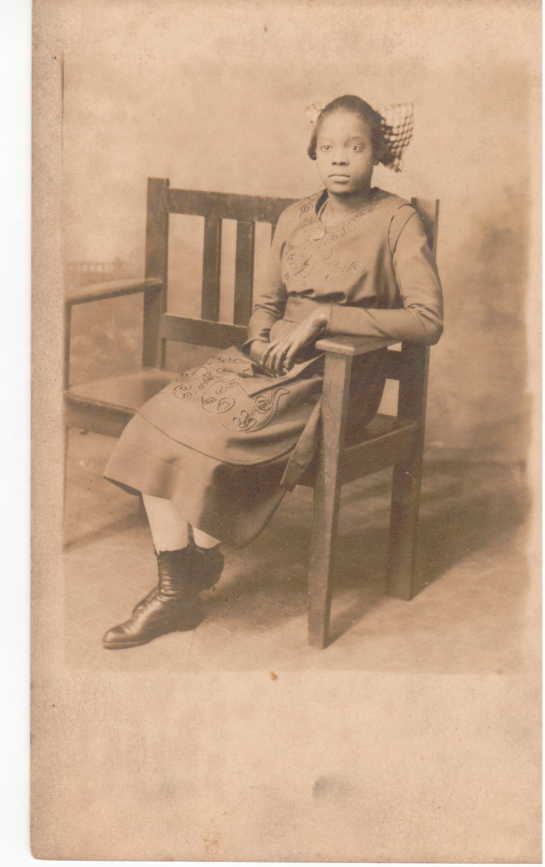
This photo post card was found in my mother’s things and based on what was written on the back of the photo, I assume this to be Odetta Cox Thomas. I want desperately to see myself in her face and in her eyes. And I really want to know about those ankles. Where is my great-grandmother’s garden and what was in it for me? At least I know her name and her mother’s name. Perhaps in speaking her name I will find her.
Peoria Cox is my 2nd great-grandmother and I know even less about her than of Odetta. Peoria’s parents remain unknown to me except that her mother was born in Mississippi, but without any name for her mother or even Peoria’s maiden name, it is difficult to find them. Even if I did find a couple with a daughter named Odetta (and possibly a sister named Mary), I couldn’t confirm them. But if she passed on these ankles, skipping generations, I will never forgive her.
My 2nd great-grandmother was born in Arkansas and I assume she moved to Memphis with her husband and children when they were young. But the earliest address I find for her is in Memphis where she had two children, including my great-grandmother. Her daughter lived with her, likely until her marriage, and then for some time before her death. Mommy once told me that losing a child was the worst pain to suffer in the world. If that’s true, Peoria surviving her daughter also means she survived the worst pain in the world. Peoria died about 5 years after her daughter. The first census after Odetta died – the last one of Peoria’s life – listed Odetta’s daughters at two different locations. The girls obviously split their time between their maternal grandparents and their father and his aunt. Peoria died when my grandmother was a young woman and Mommy was a toddler, so I also like to think that Mommy spent some time in Peoria’s arms. If Mommy’s arms ever hugged Peoria’s neck, then those same arms cradled me and by association I have been touched by all of my known mothers.
Peoria’s immediate cause of death was cerebral hemorrhage from unknown causes – another sudden and unexpected death. She lays in the same cemetery as Odetta – Mt Carmel in Memphis. We weren’t able to find her in 2017 either.
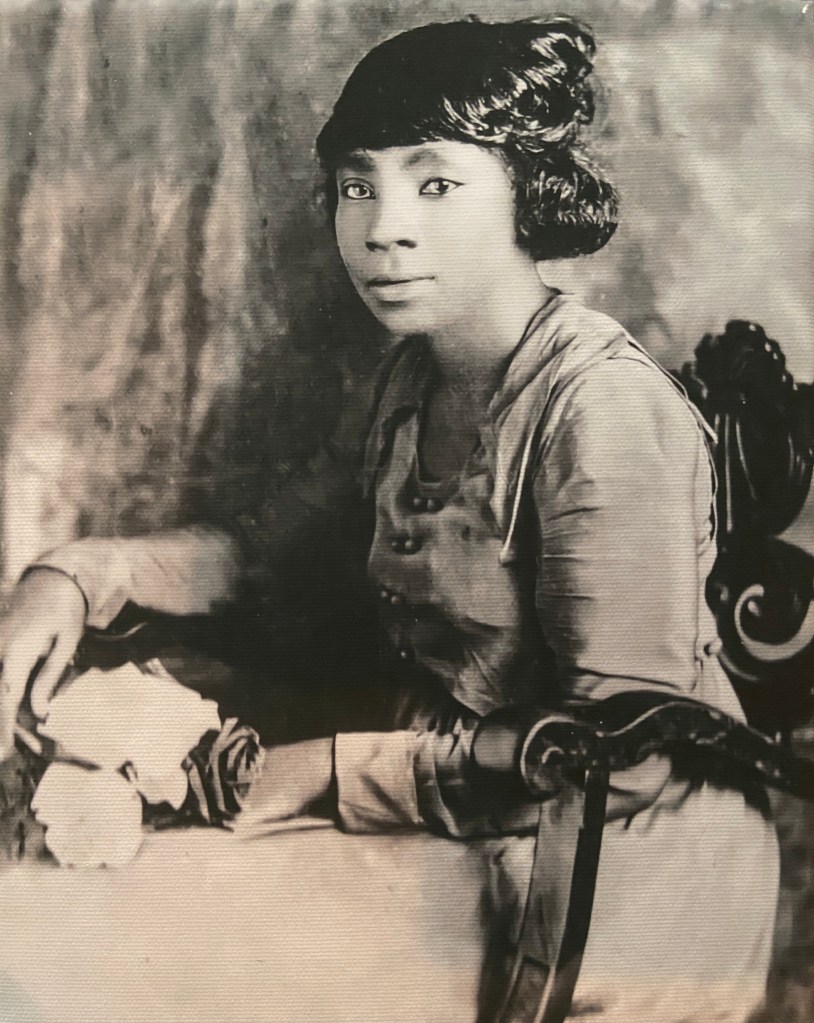
This photo hung in my childhood home, and I know I asked Mommy who she was, but I cannot remember which relative she said. Based on the information I have I am making a guess that this is truly Peoria. I want desperately to see myself in her face and in her eyes. And I really want to know about those ankles. Where is my 2nd great-grandmother’s garden and what was in it for me? At least I know her name and her mother’s birthplace. Perhaps in speaking her name I will find her.
DNA testing identifies us with the Bamileke Tribe of the Cameroonian peoples. This testing goes back along the line of mothers, so I like to think that Peoria passed down some traditions, recipes, and rituals from Cameroon even if the daughters didn’t know the origins. I understand that many things have interrupted the passing on of our culture – Peoria is listed as mulatto on at least one piece of documentation suggesting that one of her parents was white; slavery and colonialism worked against the passing on of anything sacred; and divorce, death, and moves across country left young girls without the ones who would have passed down anything of cultural significance. But there is always something that remains imprinted on our DNA and there is a such thing as blood memory that keeps our hearts beating to the original drums. And our souls are always looking to return to our first homes – our mothers.
I am Regina Lynette, daughter of Donna Maria, daughter of Dorothy Lee, daughter of Odetta, daughter of Peoria.
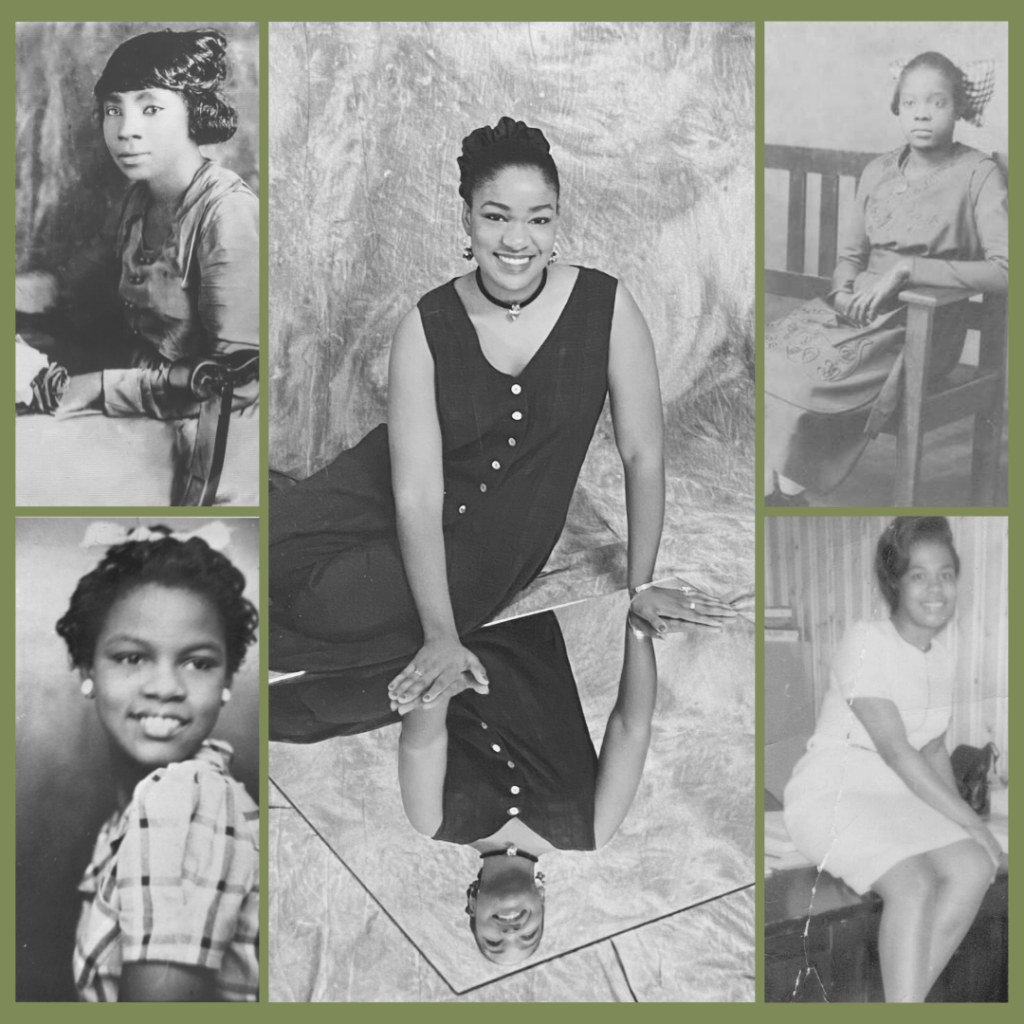

 I am Regina Lynette