I grew up in a house situated on a tiny lawn with a ginormous unkempt magnolia tree in the back and a mighty oak in the front. The land and house were not large enough for those trees and they created a bit of a mess of the lawn with roots and affecting drainage. But I didn’t understand any of that as a child and it didn’t matter too much – it was my yard to navigate. I loved those trees and felt like they were planted just for me, and I hold on to memories of those trees today.
I love magnolia blooms. They’re beautiful. And they smell glorious. I love walking around and catching a whiff of a magnolia bloom before I notice the tree. And it seems so wrong to pluck a bloom – everyone who walks the same path deserves to catch the same scent and then turn and see the same beauty I’ve experienced. I might take a petal with me though, if there are not too many critters to fight and I can reach a bloom easily. Sometimes I rub my skin with the fragrance from the petal. Magnolia blooms are a reminder of the glory of creation – it’s pretty and it smells nice.
Me and my acorn tree in the fall.
I always called the tree in our front yard an “acorn tree” because, well, acorns. Because there are so many kinds of oak trees, I don’t always recognize them immediately on sight. But I recognize them by their fruit – when I see acorns on the ground, I smile and look for the “acorn tree” it fell from. And when I do I’m usually surprised to realize I’m absolutely surrounded by them. The greatest of them make the best shade trees, as did my “acorn tree”. Despite the ubiquitous nature of the acorn, they turn up during critical moments like messages from God.
The first time I received a message in the form of an acorn, it was one of many in a series all in the same day. I had decided, rather logically and fairly stoically that I wanted to die. I selected a date of death and prayed for a clear sign from God if there was anything good to come in my future. And the acorn was the first message I saw. This acorn turned up in a place where there were no trees around when I looked up. It saved my life. I found them in the weirdest places all day – in places where there were no “acorn trees” nearby – in between seeing suicide hotline numbers written in chalk nearly everywhere I walked that day.
The second time I received a message in the form of an acorn, it was startling and a bit unclear at first. A young oak tree was placed in front of the door where I worked and could look at it the entire workday. Then it was moved a little further down the lawn and another oak planted in its place. In a couple of years the oak tree that had been moved produced an impossibly large number of acorns and they were the largest I’d ever seen – larger than walnuts. I don’t claim to know anything at all about the propagation of “acorn trees” or what all acorns look like, but everyone I’ve mentioned this to and the people who witnessed them observed that this was particularly odd and no one had ever seen acorns quite so large. The message was one of hope and I received it just before a major life change – I entered a season of growth, learning things that were clearly preparing me for my life’s dream.
The third time I received a message in the form of an acorn was just a few days ago. And it’s a message of hope and courage, something to push me through the fear that’s stopping me from continuing to move in the direction of my dreams. I recently found a renewed energy to continue towards making an abundant life in spite of all the disappointments and delays, but fear proved to be a formidable obstacle in a way it never had before. I found one acorn on the stairs toward my living area – literally inside the house – and then a second upstairs in my living area. This was the most startling find because there is no oak tree at our house and the acorns were too large to fit in the sole of a shoe nor likely to be tracked in by any source I can think of. It was incredibly odd to find them upstairs because I don’t go anywhere to track in acorns because, well, COVID.
Me and my acorn tree in the spring.
The significance of acorns to me is two-fold. The fact that they were around during my childhood feels like a reminder of my origins and the place where I first became aware of my life’s dream and my life’s purpose. I recall I was about 11 years old on an afternoon that I should have been doing homework but was staring through the door at my “acorn tree” daydreaming when I formed the realization into a vision. This vision didn’t align with Mommy’s plans for me so I never told anyone until after both my parents died. I did imagine it would happen much later in life even though I hoped it would begin in my mid-twenties. As I am beyond my mid-twenties, I suppose my imagining was correct. On the other side of the same “acorn” coin, an acorn represents a seed – a relatively tiny seed that in a lot of time has the potential to grow into something that we call mighty, something that provides a covering, something to climb, and something that remains strong and sturdy with deep roots for a very long time while remaining abundantly fruitful. To sum it up, the acorn is a reminder of possibilities that manifest relatively slowly but are effectively everlasting. And thus they serve as a reminder of my life dreams that are manifesting slowly but will be something that others call mighty and will last for generations.
Dorothy Lee Thomas was born on October 31, 1925. I’ve only ever heard her called Dorothy, so I’ve only ever called her Dorothy because no one ever corrected me. I wouldn’t dare attempt anything southern like Mee-Maw, but I don’t think anything modern like G-Momma is quite right either. I think I would have called her Grandmother should we have had a relationship. So, as of October 31, 2021, I call her Grandmother.
I feel somewhat lucky to have not made any memories of spending time with Dorothy Lee. It sounds illogical because I also feel tremendous loss from not knowing her. Here is the reason I find myself so lucky. Dorothy Lee’s actions caused many people who knew her a lot of pain and confusion. Should I have known her in the natural during the first nine years of my life I might be stuck with terrible memories and anger and grief as well. But as I get to know her as an ancestor, I get to see the impossibility of Dorothy Lee and can love her from a spiritual place. I can love her from a place where she’s eternal.
The first big thing that happened to Dorothy Lee after she was born was that she lost her place as the baby of the family when her mother gave birth to her third daughter in not even as many years. Now Dorothy was the middle child of a trio of infant girls. Before she could begin to learn what that meant for her, and just as she made peace with the idea of sharing her parents with her sisters, she lost her baby sister. And no one helped her with her grief because no one believed a 19-month-old toddler knew to grieve her baby sister. And no one helped her with her grief because everyone else was grieving a 6-month-old baby. And no one ever believed Dorothy could possibly feel any residual pain of her own from losing her baby sister. But I know she did. She absolutely had to feel it. I have one memory from my life between birth and 36 months old. It’s probably more of a blend of multiple events morphed into one trauma – there are some connectors missing and mismatched details – but it was a memory of something that affected my behavior, shaped my attitudes, and kept me in a loop of abuse and misuse for twenty years before I asked my family if there was such a secret. I saw the pain on their faces and could see that they were reliving, to a degree, the painful event that they swore to secrecy because they believed I couldn’t possibly remember it. And I saw that in order to protect themselves they would have projected that pain on each other. Because the point of my inquiry was to know what was true so that I could begin to move forward and break the loop of abuse and misuse, I left them out of it and continued seeking help to navigate those painful memories. I maintain that my life would have been better if my pain had been considered at the time it happened and I had been taught how to move forward in life from that trauma. But, unlike Dorothy Lee, I was able to get good help years later of my own volition. Grandmother would have been comforted and encouraged by her family as a child through her grief of her baby sister rather than be left to her own toddler devices. And Grandmother would have told my mother to talk to me about what happened to me as a child rather than trying and failing to protect my feelings. Grandmother would have shown Mommy that she was leaving me to my own toddler devices to process and live through the terrible things that happened. Grandmother would have held me and my mother both as she talked to me – boldly speaking to a toddler about things that are too heavy for some adults to carry, empowering me along the way.
Within the first 36 months, Gina needed Grandmother.
The second big thing that happened to Dorothy was that her parents separated. I don’t know the reason nor the length of time of separation – nothing was documented as a divorce at any time, but Dorothy, her sister and her mother were listed on one census record with her maternal grandparents while Dorothy, her sister and her father were listed on another with her father’s auntie. This is also the year of a few family deaths, none more significant than Dorothy’s mother. Dorothy was just 14 years old when she lost her mother. I know two things about losing your mother as a teenager. First, no one in the world can explain what it is like to be the baby girl of the family and to lose your mother just as you are becoming a lady unless it happened to you. Second, grief is just as unique as the person who is experiencing it and no two people grieve alike. Dorothy was going through a second loss that I know no one helped her through. Worst case scenario she was a burden to be ignored or passed off. Best case scenario, everyone was so busy making sure she was provided for and had care that no one had time to care for her. But Grandmother, who got the help she needed from losing her mother, was by my side when I lost mine. She was the voice, yet again, telling the family how to look out for me and how to get me back up to a place of functionality so that I wouldn’t have to wait until I was an adult to get treatment for grief and trauma. Grandmother would hold me in her arms and let me sob in her chest until my head throbbed and I fell asleep from exhaustion. And then she would tell me that I was the strongest person she knew, that my tender-heart was the strongest part of me. She would say that it was beautiful that I was able to fall apart into her arms, having the courage to both feel and express my pain and to be able to trust her with my most vulnerable parts. I can feel Grandmother’s hands around my face, cupping the tears that fell from my chin and letting them roll down the insides of her wrists. Smiling through her own tears and wiping away my fresh tears with her thumbs, Grandmother would look into my eyes for my silent questions, and she would wait until she could see I got the answers from looking into her eyes.
Dorothy had a baby girl and got married as a teenager and her husband left four months later to serve in World War II. I don’t have a lot of answers about that period of time and maybe that’s something that will be made clear at another time. But Grandmother is who I would have talked to about my teenage relationships and the one person’s advice I would have trusted implicitly. Grandmother would tell me all about my biological grandfather, what the family thought of him, why she didn’t get married until a month after my mother was born, what it was like for her husband to leave for war, and how the relationship ended. I would have made the same teenager decisions I made for the same reasons I made them, but I wouldn’t have made myself sick with doubt and grief prolonging the closing season for those teenage relationships. Then I would have walked hand in hand with Grandmother in places where the grass was lush and green while she beamed at me with pride, knowing I was moving forward courageously, unconcerned that I would have all the relationships I needed along the way.
Teenage Regina needed Grandmother.
Dorothy had a boyfriend who was just as, if not more, significant than my biological grandfather in some ways. This boyfriend saw her talent, shared her talent, and made her an offer she wouldn’t have refused. Her father stood in between her and this dream. I believe this act – one I am certain was made out of love and the best intentions – was the beginning of a horrible downfall provoking Dorothy to lash out, causing regrettable and significant harm to her loved ones. So, because I can know Dorothy as the Grandmother who sang in talent shows and with doo-wop groups, I can spend time with the Grandmother who tells me that I can have everything I’ve ever dreamed of and more. Grandmother calls me her “partner” – because she can see so much of herself in me. I am the one who drives her everywhere she needs to go while we sing every song on the radio at the top of our lungs together. We spend Saturdays together, sitting on the floor in a small room where her phonograph (that still works fine) is stored, listening to records. When it’s my turn to choose songs, I select some vinyl that makes her smile and then choose some things from my iPhone that I know she’ll absolutely love to hate. We’ll sing together and I’ll read liner notes to her while we listen to music for hours exchanging fun facts about the musicians. And she’ll have a couple fingers of something brown and smooth while teasing me for preferring something pink with bubbles. When I see she’s getting sleepy, I begin to put away the records with the same care she taught me when I was very little. When we’ve played our last song for the night, I walk her to her bed and tuck her in just before kissing her cheek. Grandmother knows I can’t sing for shit but loves the way I sing with my whole heart. She laughs at me when I screech out the high notes and when I ask why she’s laughing, she tells me that she laughs when she’s happy.
Dorothy Lee wrote on the back of this photo that she was too flabby and that this was her real hair. She would write addresses and stories on the back of photos that she sent but never the date.
This is the Grandmother with whom I spent last Halloween. October 31, 1925 was Grandmother’s 96th birthday. She didn’t grow up in a perfect world – life dealt its blows often leaving her heartbroken – but she lived with all of her needs met, whether physical, emotional, or spiritual. She tells stories of love and loved ones lost, of dreams deferred and changed, and how to find the beautiful things in a world of ugliness. She smiles at me with her eyes and her heart, knowing that she walked the path she did so that I would have someone holding my hand while I walked the path destined for me to walk. She is happy to do it because with everything I go through, she gets to advise me from a place of experience. When she recalls wondering why such terrible things happened to her when she was younger, it all makes sense when she sees me.
I am Regina Lynette, granddaughter of Dorothy Lee.
I was born into a legacy of Baptist preachers and deacons. My religious beliefs come from that legacy and were of significant importance to me from my earliest memories. The first three churches in my life both caused me to experience painful spiritual wounds and caused me to experience immense spiritual growth. They all broke my heart in one way or another – I am not sure how much detail I want to share about everything that I experienced just yet – but this doesn’t discount the fact that what I experienced in those churches has left me in a more mature place spiritually. I suppose it’s sufficient to say that some of the things that happened were entirely the fault of others and not always because of good intentions, and other things that happened were unfortunate but exposed some things I wanted to change about myself that ranged from making sure I didn’t do the things they did to making sure I didn’t react to those things the way I did.
Barcelona, Spain
After I sort of walked away from the church – the building and corporate fellowship, not my Christianity – I tried to find the ideal church and had a number of experiences similar to a series of bad first dates. Immediately after college graduation I attended the same church as my family – we’ll call it NBFGB – and despite the “prophecy” (one of the lies declared over my life) that I was going to be ministering in the pulpit of that church for the whole world to see, I regarded it as a temporary stop until I found the church that was perfect for me. There were a series of quick changes involving that church that made it an extremely poor fit for me and I sought out my own church apart from that of my family’s. The season of Rebel Gina was in full effect by then and I entered each church on my list ready for war. I wanted to elicit reactions from the congregants and leadership to determine if I wanted to be in that particular flock of Christians. I intentionally wore jeans and sneakers, sometimes a t-shirt, and looked everyone in the eye for any reaction of my attire. When that didn’t work – no one even batted an eye – I stopped carrying a Bible to church thinking that the black canvas covered study Bible could give me a sort of status that might give people hope that I was a “seasoned Christian”. I wanted to look like I had just basically wandered inside off the street and dared people to react. I looked at each person who made a move and dropped them in categories, stereotyping them, and identifying their similarities to other Christians I’d met. And I examined the pastor with the scrutiny of a microscope and judged their entire ministry – their entire lives – based on whatever I found striking. One was shorter than me and preached in a muscle shirt and I decided I would never want to interact with any man who would be under his leadership. One described a time he called his daddy to rescue him from the side of the road because he had a flat tire and had just gotten a manicure, and I left his church immediately after he made that statement never to return again. And one was so intelligent – and not at all pretentious – that I really tried to make the church fit and never joined despite returning several times. When I noticed everything that was going on, that I was behaving like a woman with a broken heart accusing all men of being worthless just because of my bad relationship, I intentionally stopped searching for a church for what I thought was going to be about 3 months and managed to last years. I wanted to take a moment to understand what I was looking for in a church and to release the anger I was carrying for people who I had put on a pedestal that they didn’t deserve.
Ibiza, Spain
While discussing churches with a relative, she shared with me that she was becoming disillusioned with the Missionary Baptist church in general. I entertained the conversation because I’d also thought that changing denominations might be the way to finding the right church home. I’ve considered the United Methodist Church, non-denominational churches, the Full Gospel Baptist church, and other Christian churches and I even though I don’t believe the denomination is that critical in my particular search, I made the conscious choice to stay with the Missionary Baptist Church that was my first love.
Even though what I thought would be about 3 months turned into years, I still had spurts of looking for churches intermittently with a new set of criteria that I expected would make for a better fit. I still haven’t found a church home and most recently I’ve had episodes that allude to a much more significant problem than I can squarely blame on any one thing or any one person involved in my spiritual journey.
Grenada, Spain
Not too long ago I got ready to attend a series of churches in my new hometown. As I was about to leave the house, I had a full-on panic attack. I didn’t leave for that church and when I abandoned the list of churches, I felt completely relieved. I had never experienced that level of anxiety over going to church (except for funerals) and tried to explore it further to see what kind of help I needed. When the desire to find a church returned a few years later, I managed to leave the house with the help of my niece but as soon as we parked the car my fingers went numb. I managed to attend the service with my niece at my side and had enough positive experiences that I considered returning, though I never did. The numb fingers episode scared me. And a couple years after that COVID, which is an entirely different series of anxieties and stories to share later.
The need for a spiritual connection without having a church family led me to creating rituals that were meaningful to me independent of the religion they were associated with or if they were even associated with a religion. I spend a lot of time in nature performing various rituals as they feel true and appropriate for the time. I take 3 hour retreats of silence at the beach. I write prayers or burdens on paper that dissolves in water and release them into the gulf. I allow the water to wash my bare feet as a symbol of asking forgiveness. I watch the sun set and admire the glorious reds, oranges, and yellows that turn into pinks, blues, and purples and am in awe of creation. I never walk past the color purple in landscaping or fields without pausing and taking notice. I stop to smell magnolia blooms. I acknowledge the seeds of great potential when I see acorns. And I am very careful to acknowledge the beauty of creation while worshipping the creator. While this doesn’t meet the need of having a shepherd, ministering to others, or joining in the fellowship, it allows me to celebrate the thing that keeps me forever tethered to God, Jesus, my Christianity – more specifically my Baptist Christianity.
I haven’t given up yet and I hope to find a church where I feel welcome, where I belong, where I am fed, and where I can minister. And I guess once I find it I’ll be writing a part four.
I am Regina Lynette. I am a Baptist Christian. By Choice.
I am Regina Lynette, daughter of Donna Maria, daughter of Dorothy Lee, daughter of Odetta, daughter of Peoria. And I have been searching for myself in my mothers’ gardens. But what do I do when all I know is a name, some basic statistics, and a cause of death? I wish I knew if one of them had these ankles – they’re hereditary and I’ll never forgive the ancestor who passed them on to me. They skipped over my parents and none of my siblings got them so I can’t track them down.
Odetta (Cox) Thomas, my great-grandmother, is practically just a name and possibly a photograph along with a death certificate and a few census records to me. She was my great-grandfather’s first wife and together they had three daughters, including my grandmother. She stayed barefoot and pregnant having all three daughters in the span of about 3 years but lost the last of those daughters at just 6 months old. She married young, probably about 14 years old and died young at 31 years old. She died from paralysis and apoplexy (presumably a stroke) due to interstitial nephritis according to her death certificate (it only took me years to decipher the handwriting on the certificate). With this information, I can’t guarantee that she had these ankles.
The last census taken during her life, one year before she died, shows that she was divorced from my great-grandfather, but her death certificate shows she was married when she died, and no name was listed for her husband. She is listed with my great-grandfather’s name on her death certificate, and he is noted as a widower before his second marriage. What’s for certain is that she was not living with him nor her children – at the time, she was a roomer in a house with her parents. Somewhere between 1920 and 1930, my great-grandparents had some kind of separation – an undocumented/unfiled divorce – and I’m left with far too many ideas of why she wasn’t living with her children. I cannot confirm where my great- grandfather and his daughters were living that year.
Without one single family story about Odetta, it’s difficult for me to even make assumptions about the way life treated her. Even though she married at such a young age, it wasn’t atypical for the time. All signs point to her death being sudden and unexpected – her age and her immediate cause of death support that assumption. She has been laid to rest in Mt Carmel cemetery in Memphis. We visited this cemetery with little hope of finding her or my other relatives buried there. The cemetery has become an “eyesore” because the company that owned it and another cemetery where prominent black people of Memphis are laid to rest went bankrupt. There was a local group who worked to clean it up some back in 2014, but as of 2017 it was still a mess. There are broken headstones, those that are now illegible, and of course I had no access to anything with a locater for the graves. As I walked through the areas that I had enough courage to enter, I thought of Alice Walker describing her experience in seeking out Zora Neale Hurston’s resting place. I had hoped to feel the souls of my ancestors there, but I can’t say that I did. What I did recall though was Mommy lamenting that she didn’t take good care of the graves – tending to them and making sure they had fresh flowers regularly – and based on what I know now she must have meant those in Mt Carmel. She believed she wouldn’t have been able to find them.
This photo post card was found in my mother’s things and based on what was written on the back of the photo, I assume this to be Odetta Cox Thomas. I want desperately to see myself in her face and in her eyes. And I really want to know about those ankles. Where is my great-grandmother’s garden and what was in it for me? At least I know her name and her mother’s name. Perhaps in speaking her name I will find her.
Peoria Cox is my 2nd great-grandmother and I know even less about her than of Odetta. Peoria’s parents remain unknown to me except that her mother was born in Mississippi, but without any name for her mother or even Peoria’s maiden name, it is difficult to find them. Even if I did find a couple with a daughter named Odetta (and possibly a sister named Mary), I couldn’t confirm them. But if she passed on these ankles, skipping generations, I will never forgive her.
My 2nd great-grandmother was born in Arkansas and I assume she moved to Memphis with her husband and children when they were young. But the earliest address I find for her is in Memphis where she had two children, including my great-grandmother. Her daughter lived with her, likely until her marriage, and then for some time before her death. Mommy once told me that losing a child was the worst pain to suffer in the world. If that’s true, Peoria surviving her daughter also means she survived the worst pain in the world. Peoria died about 5 years after her daughter. The first census after Odetta died – the last one of Peoria’s life – listed Odetta’s daughters at two different locations. The girls obviously split their time between their maternal grandparents and their father and his aunt. Peoria died when my grandmother was a young woman and Mommy was a toddler, so I also like to think that Mommy spent some time in Peoria’s arms. If Mommy’s arms ever hugged Peoria’s neck, then those same arms cradled me and by association I have been touched by all of my known mothers.
Peoria’s immediate cause of death was cerebral hemorrhage from unknown causes – another sudden and unexpected death. She lays in the same cemetery as Odetta – Mt Carmel in Memphis. We weren’t able to find her in 2017 either.
This photo hung in my childhood home, and I know I asked Mommy who she was, but I cannot remember which relative she said. Based on the information I have I am making a guess that this is truly Peoria. I want desperately to see myself in her face and in her eyes. And I really want to know about those ankles. Where is my 2nd great-grandmother’s garden and what was in it for me? At least I know her name and her mother’s birthplace. Perhaps in speaking her name I will find her.
DNA testing identifies us with the Bamileke Tribe of the Cameroonian peoples. This testing goes back along the line of mothers, so I like to think that Peoria passed down some traditions, recipes, and rituals from Cameroon even if the daughters didn’t know the origins. I understand that many things have interrupted the passing on of our culture – Peoria is listed as mulatto on at least one piece of documentation suggesting that one of her parents was white; slavery and colonialism worked against the passing on of anything sacred; and divorce, death, and moves across country left young girls without the ones who would have passed down anything of cultural significance. But there is always something that remains imprinted on our DNA and there is a such thing as blood memory that keeps our hearts beating to the original drums. And our souls are always looking to return to our first homes – our mothers.
I am Regina Lynette, daughter of Donna Maria, daughter of Dorothy Lee, daughter of Odetta, daughter of Peoria.
In the year 1889 in the perfect month on the perfect day, Peoria was born in Arkansas. Twenty years after her birth in 1909 in the perfect month on the perfect day, Peoria gave birth to Odetta in Arkansas. While Odetta was yet 16 years old, she gave birth to Dorothy Lee on October 31, 1925 in Memphis, Tennessee. Dorothy Lee was also 16 years old when she gave birth to her daughter, Donna Maria on September 16, 1942 in Memphis, Tennessee. And when Donna Maria was in her 33rd year of life, she gave birth to me on December 12 in Memphis, Tennessee. I am Regina Lynette, daughter of Donna Maria, daughter of Dorothy Lee, daughter of Odetta, daughter of Peoria.
Peoria Cox {circa 1889 – December 10, 1945}; Mothers unkown
My mother told me who this was when I was a child, but I regrettably do not recall what she said. For many reasons, I have made a guess that this is Peoria. I have no way to know if that’s accurate but until I get different information, the person in this photo represents Peoria, my mother’s great grandmother.”
Peoria, who gave birth at 20 years old to Odetta, lost that girlchild a mere 31 years later to apoplexy due to interstitial nephritis. Peoria was presumably involved in her granddaughter, Dorothy Lee’s, life until her own death on December 10, 1945, of cerebral hemorrhage due to unknown causes. Peoria outlived her daughter – my mother often said that losing a child was the worst pain in the world so I declare that Peoria survived the worst pain that life could dish out. Dorothy Lee, who lost her mother at 14, gave birth 2 years later without her mother. I declare that Dorothy Lee’s losing her mother as a young teenager was something incredibly difficult because losing my own mother as a young teenager was incredibly difficult. Donna Maria was born without a grandmother. She was but 3 when her great-grandmother died – who we only presume was involved in her life. But Donna Maria outlived her mother, Dorothy, who died of cancer while Donna was 42 years old. I would not know Peoria existed until I was an adult and even then, she was only a name in a baby book and on a death certificate. I did not know that Odetta Cox existed until I was in college and at that time she was only a name in an email provided through my uncle from a distant cousin, a name in a baby book and a name on a death certificate. I knew of Dorothy Lee but never met her before her death when I was 8 years old. I lost my mother from a heart attack about 5 years later, 2 weeks after my 13th birthday.
Odetta (Cox) Thomas {circa 1909 – March 24, 1940}; Daughter of Peoria Cox
I am not certain that this photo is my great-grandmother but based on a relatively reasonable deduction, I think this is Odetta.
My maternal ancestry can be traced back to the Bamileke (a corruption of the name) People of Cameroon and this has been guaranteed accurate from Odetta. Where did that heritage die out? Did Peoria – who is not guaranteed by our DNA testing to be from the Bamileke People of Cameroon – pass down any traditions, rituals or recipes to Odetta? Dorothy didn’t live her entire childhood with Peoria and Odetta so would she even have been passed down anything of her maternal line? Was our heritage completely wiped out by the ins and outs of slavery leaving Dorothy, her mother and her grandmother to have little to pass on? I don’t know. I’m left to put pieces together from birthdates, death certificates, and general world history. Peoria was born a free woman but her mother would have likely been born a slave and then freed by the time Odetta was born. I have no details for Peoria’s mother’s history – not even Peoria’s maiden name. I am happy to know my mothers’ names from my great-great grandmother. But I know very little about their gardens because 2 weeks after my 13th birthday, they were all gone.
How simple a thing it seems to me that to know ourselves as we are, we must know our mothers’ names.
Alice Walker, O Magazine, May 2003
“Mama’s baby, daddy’s maybe” was not the prevalent pattern in my family. Hardy Cox was in his daughter, Odetta’s, life. Rodney Thomas cared for his daughters after Odetta’s death as well as my mother, his granddaughter, and her children. While I don’t know the story behind Warren Terry’s absence in Donna’s life beyond the time he enlisted in the army during World War II, he was married to her mother and his family is mentioned as a part of her young life. And I was Robert Walker’s Daddy’s Girl, identifying more with his side of the family than my mother’s. In fact, most of what I know to be true and passed down in my family is from the men. I’m grateful for these men because I can attribute a lot of positive things from their influence. However, I really miss not knowing my maternal tribe.
Dorothy Lee Thomas {October 31, 1925 – May 15, 1985}; daughter of Odetta (Cox) Thomas, daughter of Peoria Cox
This is a photo of Dorothy from high school. I have more recent photographs of her but she wrote notes on the backs of them stating that she looked horrible and was ill (or convalescing).
A few years ago I felt particularly lost and was looking to find myself in my family. Since I was nothing like my siblings and not a lot like my mother (other than sometimes my eyes and sometimes my smile), I looked to my father’s family. I didn’t find my face (other than my happiest smile), my body, nor my personality in any of them. Much later I caught a glimpse of myself (personality) in my mother’s brother and I realized that I hadn’t looked to find myself in my mothers’ gardens. I’ve decided to use the photos in this entry to represent these mothers in my sacred space and I constantly look for myself in their eyes and faces and hands and hair.
Our mothers are our first homes, and that’s why we’re always trying to return to them.
Michele Filgate, What My Mother and I Don’t Talk About (Simon & Schuster, 2019)
One good thing about the deceased is that the rest of the generations to come have a chance to only know the best of that person. I don’t mean that the bad goes away or that you shouldn’t know the full history of a person – generational curses, ancestral rituals, as well as their life stories. I mean that when I tell stories about my parents, I tell the hard parts through a filter of both understanding and acceptance. I’ve had to forgive them for all of their mistakes. I’d begun the forgiveness process with Daddy before he died, thankfully, but I didn’t realize I had to forgive my mother until she had been gone several years (and family secrets were revealed). I have tried to understand Dorothy as well when I hear hard things about her, often trying to guess what might have happened to her to cause poor behaviors. When my sister’s children indulge me and let me walk them around Memphis telling tales of our history, it’s “my parents met in this lobby and it was love at first sight” rather than “my Daddy was married and 24 years older than my Mommy when they started their affair”. Neither version is a secret and while both are true, one is more fun to talk about to the ones who didn’t know them.
Donna Maria (Terry/Thomas) Walker {September 16, 1942 – December 26, 1989}; daughter of Dorothy Lee, daughter of Odetta, daughter of Peoria
Mommy’s parents married a couple months after she was born and her maiden name on her birth certificate is Thomas (Dorothy’s maiden name). However, I found a doodle from either Dorothy or Mommy that had Terry (Donna’s father) as her last name – kind of the way you doodle your own name with your crush’s last name in your school notebooks.
So, while unfortunately I do not know of any remaining family who can share stories about my generations of mothers, I do get to put the pieces together guessing the best outcomes and I can channel my own femininity from common Bamileke/Cameroonian ancestral rituals and fill in the gaps with pieces of myself.
Regina Lynette Walker; daughter of Donna Maria, daughter of Dorothy Lee, daughter of Odetta, daughter of Peoria
I am Regina Lynette, daughter of Donna Maria, daughter of Dorothy Lee, daughter of Odetta, daughter of Peoria.
As a child Mother’s Day was not a huge deal to me specifically. It was always hot that Sunday. I would usually have a new shorts ensemble. I don’t think it was a “ring curls” event but I can’t really remember and for some reason I can’t find a single photograph from Mother’s Day. And as a motherless child with a dream of parenting deferred, it was hell and now it’s just unpleasant. But I remain slightly melodramatic and declare I hate Mother’s Day.
At my church – the place where I was baptized and a member until my last year of high school, Mother’s Day events happened for my family mostly on the Sunday and Saturday before. We still attended whatever rehearsal or practice or meeting that was scheduled even though we weren’t going to be in town on that Sunday. And at the end of either the Sunday before Mother’s Day or on that Saturday just before the day, we’d go to the ladies with the trays of corsages – carnations made from tissues – in red and white. I can’t be certain, and it doesn’t seem quite right, but in my mind the ladies were selling these faux carnations. We received 3 – white for Daddy and red for me and Mommy. Remembering this transaction means this memory happened only a couple years but they were obviously poignant years. It was after Grandmommy died and before Dorothy died. (Mommy’s mother was always identified by her first name instead of any version of Grand Mother.)
And for a period of time, I remember the 3 carnations – one white and 2 red – carried a little bit of pride and a little bit of sadness. I was sad that Daddy had to wear a white carnation, but he seemed to wear it proudly. And I took on that emotion and carried it as if it were my own. I was sad that Mommy wore a red flower and as she pinned it on her left side she’d always say, “I don’t know if my mother is dead or alive so I will wear red. I hope she’s still alive.” She was sad, but hopeful to some degree and I took on that emotion, added it to Daddy’s, and carried it as if it were my own. And then she pinned my red flower on my left side, and I was proud. My mommy was still alive, and I saw her every day and I knew for sure that she loved me. I chose to put my feelings in my back pocket, carrying my parents’ emotions as an expression of loyalty. Even though she received the tissue carnations from the church ladies, we usually wore a different faux flower, a pretty one that Mommy bought, to go to Mississippi.
If my memories are accurate, we went to Corinth and Rienzi in Mississippi – the place Daddy always called home – every Mother’s Day until I graduated high school. I don’t remember the years before Grandmommy’s death vividly – just little flashes of only her like when she saved me from a grasshopper and would have to call me out to come and greet her because I was too shy to just jump in and hug her when we got to her trailer on my uncle’s land. I’d hang outside the door or against a wall, maybe hiding behind Daddy’s leg until she asked about me.
We dressed in our Sunday best, I remember Daddy wearing his clergy collar and I felt like it made him royalty for a Sunday. We’d get into the car and drive toward the country. We would make one stop before heading to church – the church I always believed my entire family for generations belonged, even though truthfully I don’t know for sure how many generations before my father’s attended that church. We’d stop where Grandmommy was buried, beside the grandfather I never knew and Daddy would go alone. Then we were off to Mount Pleasant Missionary Baptist Church. On the way to finding a seat we’d speak to everyone – I told you I felt like Daddy was royalty that day, greeting all of the parishioners who seemed so excited to see him. I determined after all those greetings that we were related to no less than half of the congregants. Daddy preached the sermon. My aunties and cousins sang in the choir. My uncle was a deacon and usually led devotion. After the service was over we spoke to the people we missed or who arrived late. This is when I tried to figure out how I was going to ride to my uncle’s house with my uncle. Most of the time that meant finding his wife, my auntie, because she always just told me I was going with them. There was no asking permission and no risk of hearing “no”. Uncle would always call me his “pretty little niece” when we greeted and for some reason my braids and shoes didn’t feel so tight anymore. We’d head to my uncle’s house where I’d change into my shorts ensemble to play with my cousins. Sometimes we ate at my auntie’s house in Corinth and sometimes she came to my uncle’s house in Rienzi. The fried chicken – Grandmommy’s recipe – was the star of the meal for me. After filling up on dinner and getting to have sodas – pops – without permission (carbonated water irritated my system so they were off limits) I spent the rest of the day playing with my cousins. We’d return to the city (Memphis), and we’d do it all again in one year’s time. Nothing about that day meant Mother’s Day to me. It might as well have been called Mississippi Day.
When I was 6 or 7 years old, Dorothy surfaced. She was dying of cancer and the family who had been estranged to Mommy for what seemed my entire life were calling her to California. After what felt like an eternity of Mommy sitting at her mother’s bedside, she came back home to me. But Dorothy took another turn without Mommy with her, was refusing to obey some doctor’s order – like eat or something – and was calling for Mommy to return to her. I wanted to go but she was going for an indefinite period of time and I had school. Dorothy died a few days after she returned to California and it ended up being about 2 weeks from the time she returned to California, Dorothy died and was cremated, and Mommy returned home to me. The next 4 or 5 Mother’s Days, mommy wore a white flower. Even though she seemed sad, she also seemed relieved to a degree. She would shed a couple tears, but I think just knowing for certain whether Dorothy was dead or alive was enough. I also think whatever happened in Dorothy’s last days allowed Mommy some closure if not a repair of over 40 years of a challenging mother-daughter relationship and she could more easily wear that white flower.
Two weeks after my 13th birthday, I lost my own mother. That first Sunday going to Mississippi the only assertion of my own rights (as opposed to unspoken rules) was to wear a white corsage, one that chose and found beautiful, and I wore a white dress. Even though I had been sitting alone at church services for about 5 months, that Sunday felt particularly lonely. And it was the last time I would wear a white flower. The main reason was because that white flower served no purpose to me and all it did was made me angry. But the secondary reason was because people – I think Daddy was one of them – told me to wear a red flower because I had a step-monster the next year. I hated the entire system of red and white flowers and determined to leave Mother’s Day on the calendar as simply the 2nd Sunday of May and Mississippi Day. Who the hell thought I was supposed to replace my white flower with a red one because of a step-monster? Did no one see that it meant replacing my mother and dismissing that she ever existed? Why didn’t anyone think of at least saying I should wear 2 flowers to represent both women? I wouldn’t have but at least they wouldn’t be suggesting that I erase my mother completely and embrace the monster that my father married in her place.
I tried to pass on some love for Mother’s Day to the other “mothers” in my life. I tried to come up with something to honor Sissy because she was a mother. I always made sure to tell Ms. Bell because she loved me with a mother’s heart and hand, but she was gone I believe just about two years after my mother. But it soon felt that acknowledging other mothers meant dismissing my mother further. It highlighted her absence and was painful. I would be in my 20s before I realized I needed help for my grief and I was going to have to find it for myself – professional help. Until then whenever I remembered Mommy, I felt the exact same trauma and pain that I felt the moment I found her. Once I had been alive longer than I had had her in my life, I determined the pain should have lessened over the years and that it was a problem.
After finding more peace with the loss of my mother and dealing with the associated trauma, I still found I hated Mother’s Day. For at least a week prior, everyone from the checkout counters in stores to the man who detailed my car, wished me a Happy Mother’s Day. And people who knew I wasn’t a mother came up with a list of reasons I should still be recognized as a mother – aunties and sisters and nearly all women were recognized as a mother for Mother’s Day. And in addition to highlighting the fact that Mommy was gone, I was reminded that years were ticking by that I imagined I would have had my own kids. And then I’d approached the age where I’d decided that I would give up on biological children and began grieving my children who didn’t exist and a dream I’d had since I was 11 years old. So, I started staying indoors on Mother’s Day avoiding social media, heartsick.
What happens to a dream deferred? Hope deferred makes the heart sick, But when desire is fulfilled, it is a tree of life. (Langston Hughes, Harlem plus Proverbs 13:12 AMP)
The only joy I find is knowing that my niece and nephew make sure to celebrate and honor Sissy. I hate carnations and sometimes have peonies in a vase on the day for myself – my favorite flower. I celebrate Mommy’s birthday as Mother’s Day, my Mother’s Day, instead of the 2nd Sunday of May with cupcakes and champagne and tulips – her favorite flower – when I can find them (her birthday is in fall). And I wish the mothers in my family a Happy Mother’s Day on the Monday after.
After my mother died my father remarried. He was looking for a way out of a financial bind and a new mother for me – or a way to not be alone because he knew I wanted to live with one of my sisters. So, my father made a mistake and he married an abusive witch who made my life, our lives, hell until we escaped. I left for college; he left for heaven. The last five years before I graduated high school was not only a hell created and maintained by my step-monster, but my father emotionally abandoned me at the same time. His abandon was driven by many things, mostly those pesky good intentions, but mainly by my step-monster’s “rules”. I was not allowed to talk with my father alone. Ever. And that was one thing he and I had my entire life – time alone together for philosophical conversations, even as a very young child. I tried to hold on to the fact that my father loved me during this time but many of his behaviors did not demonstrate love. However, on the other side of that period of time it would turn out to be the knowledge that he loved me that would facilitate the healing of my broken heart.
Tell me that old man doesn’t adore that little girl! That’s me on my first birthday in my Daddy’s arms.
I went to university in another city and only visited him once a year and only at our church building. I refused to return to that witch’s house ever again after I left town hours after high school graduation. Then he was diagnosed with lymphoma. I can’t remember any details of that except I kept up to date with his progress through my sister – his oldest daughter – and I was able to talk to him on the phone occasionally. Even though I’d prayed for his healing and elicited prayers from my Watch-Care church, I prepared myself for his death. He was in his late 70s living with an inhumane abusive human, trying to help pastor a church while our pastor was in jail. I found a level of resolution and peace about his death, which would possibly happen during critical classes in my final year, and would alert my professors and the dean that I might miss a week of classes with little notice should he die.
Because my father was old and ill (he was healed of the cancer, but his body was worn out from the chemo) I went to visit him over Christmas break during my last year in school. Unfortunately this meant I had to go into the step-monster’s house and she had the nerve to try and keep me away from him – I’d had a lingering cough from pneumonia but was well. She and I almost fought, physically, twice during that short visit. But it was during that visit, he and I finally and truly reconciled. We shared a few poignant moments that I am very grateful for because that was the last time I would see him alive.
Before going to New Nonconnah Missionary Baptist Church in Memphis one cold Easter Sunday morning.
That Valentine’s Day, a Monday, was an early day in my teaching schedule – I had to get up about 5AM to be sure to arrive at school in time. After I finished my shower, still standing in my robe, I saw my answering machine flashing. My heart fell. No one would call me at that hour unless it was horrible news. I listened to the message hoping the person would have left the details of the call in the message but they didn’t. It was my sister – my father’s oldest daughter – telling me to call her as soon as possible. That could only mean that something had happened to Daddy. I thought to take a moment and calm my breathing, maybe get dressed to feel less vulnerable but I couldn’t wait to hear the bad news. She spoke with nervous energy and asked an odd question – she asked if I knew why she was calling. I suppose someone else should have called me first because someone called her to tell her what she called to relay. But no one had called and I didn’t expect anyone to call me with any news about Daddy but her. And I really wanted her to get to the point. I told her I assumed it was something about Daddy and she told me that he’d died about an hour or two before she called.
I told her I needed to get to the school but to let me know as soon as anyone decided on a date for the funeral so I could alert the dean and try to work something out to be at the funeral and to graduate on time. I didn’t really cry – a few tears made their way through but I didn’t give in to the urge to cry. I had business to take care of, like figuring out how to get to a funeral and back to class within the allowed days of absence required to pass. I couldn’t break down – be non-functional – so I didn’t allow grief to set in.
I went to school and told the lead teachers that my father had died that morning and that I would need to speak with the dean when she arrived. The dean’s son was in my class and one of my assigned students to monitor development (no pressure, right) so I would see her when she dropped him off. One of the lead teachers interrupted me just after I said the words that my father had died and unofficially suggested I be allowed more time off and still be allowed to graduate on time. She gave me the standard 5 days that the employed teachers received as a part of their benefits and I was so grateful. I asked to stay and finish that day because I had no idea when the funeral would be. You see, there are many things that can delay a funeral in the Black American culture and I was the only black person in my whole major at that school. I hoped they were ready back home and could pull it off within that week but I didn’t know.
Because that day was so exhausting emotionally, and I was developing some weird nervous ticks, I started my 5 days leave the next day, that Tuesday. I still hadn’t really cried and was making my heart harder by the minute. My friends indulged me – I sort of lived those days in a weird haze, both wanting people to know my father was gone and not wanting anyone to say anything that would make me cry. And I took phone calls from various loved ones in Memphis annoyed by the fact checking of all the scandals – not only was I entirely uninterested in the drama I’d left behind for school, but I was the only person not living there so why would I know the answer to any of those questions? But I suppose that is a part of it all – what secrets did they know that I didn’t and vice versa. Anyway, not quite soon enough, I was on my way to say farewell to my father.
Again, I was everyone’s concern, just as I was when my mother died. But I vowed to do some things differently with his death. I wouldn’t wait on the adults to figure out what they were going to do about me. I would take care of myself as much as I could.
I refused to be a part of the funeral procession because I’d learned to hate limos since the first time I rode in one was on the way to my mother’s funeral. I’d always hated following hearses and didn’t want a police escort. I didn’t want to ride with headlights on. So I stayed with my father’s oldest daughter and went to the funeral with her promise to be my shield, allowing me to manage the funeral just as I wanted to. I also refused to view the body. That was the best choice I ever made – the last memory I have of him was us sitting together and laughing, having dinner. I have absolutely no memory of him dead and I’m glad. But this refusal meant I would not go into the church until the family processioned in because the service started with the casket open. My father’s oldest daughter, all of his children in fact, were near the back of the procession. That was not where we were supposed to be but it demonstrates just how my step-monster tore us apart. Thankfully my father’s siblings and some cousins were near the front. Some of them thought it was inappropriate that they sat in front of us but I didn’t care. I only wanted family up there and not just church folk holding step-monster up. In fact, they didn’t even know I was there until I went to speak on behalf of the family. Yes, I was on the program. No, none of the people who wrote the program told me. These were also people who claimed to be unable to find a phone number to call me and let me know my father had died. My sister let me know I was on program, thankfully, and I was able to prepare.
The funeral was not until the following Saturday, and he wasn’t buried until the following Tuesday. I returned to school that Sunday, missing the burial. I had a degree to get and no more grant and scholarship money. I managed to only need a loan for a semester and a half and I would be damned if I had to repeat a semester for a burial service. And honestly, I believe my father would have understood and even encouraged me to get my degree under those circumstances. I’ve always felt that the burial was the worst part of any funeral – dropping the body of your loved ones into freshly dug ground feels cruel. That’s not particularly logical, I know, but it’s how I feel.
It would be more than 17 years before I went to the cemetery where my father was laid to rest. I felt so much peace.
The first Valentine’s Day after he died I was furious and found myself feeling that way every Valentine’s Day after that. I thought I’d handled the situation well but in reality there was still a bunch of feelings just swept under the carpet. The refusal to grieve my father until I got my degree really meant refusal to grieve for much longer than that. The reminder that the ex who I’d once dreamed of marrying was not the right guy – he called the day Daddy died, not to offer condolences but to seek sympathy for the “saddest Valentine’s Day of his life”. The inappropriate men taking advantage of my vulnerability by hitting on me at the funeral and during the repast. The guilt I felt for having essentially abandoned much of my family simply by trying to abandon my father and step-monster. And I never knew I hated Valentine’s Day until then.
Men coming out of the grocery store with bouquets, heart-shaped candy boxes, and pink and red balloons pissed me off. And I wasn’t quite sure why. High schoolers getting on buses with giant teddy bears pissed me off. And I wasn’t quite sure why. I asked myself if it was because I didn’t have a “valentine” that day but that didn’t ring true to my emotions. Valentine’s day had never been a big deal to me and I had never received anything that felt significant from any boyfriend I’d had on valentine’s day. Even my secret admirer valentine’s day gifts were blah – I would have preferred to know who the admirer was rather than have a secret gift. So I blamed it on my Daddy’s death. It was easy to do – after all, he died on Valentine’s Day.
When I was young Valentine’s Day meant cardboard valentine’s cards, candy, and a day at school that ended with a party or a dance. Then as a young adult Valentine’s Day meant my daddy died. But now as a not-as-young adult, Valentine’s Day doesn’t mean anything at all. You know how I know? I literally forgot all about it. I didn’t send out social media greetings in memory of my father. I didn’t send any gifts to family or friends nearby. I didn’t even send myself flowers or buy any candy. When was it, Sunday? Yeah, just a regular old day.
I used to like February 14th. Then I didn’t. Now it’s not so bad.
I can provide you a list of people who would disagree, some vehemently, that my hair is unspectacular. I can provide you a list of people who would agree with that statement. I like my hair. It’s coarse and curly, oily yet non-porous, and it is soft and shiny. It’s thick and grows relatively quickly with little breakage and requires very little product to do what it wants to do – which is be free.
The first thing said about my hair was when I was born and Mommy said to Daddy, “Oh, Bob, she has your hair.” She was happy that I had hair like the Walker side of my family because she found it beautiful. Based on my paternal grandmother and her children and grandchildren, our hair is coarse but soft to the touch; it’s curly when we’re younger and loosens into waves when older; we begin to gray young (usually stark white); and men keep it short while women keep it long (unofficial rules). My mother’s hair was very coarse and relatively thick. Her hair started turning gray at a relatively young age – she kept it colored so I don’t know when it started. And she kept it short – above the shoulder – and kept going shorter. I don’t know the reason behind the length, so I don’t know if it had anything to do with the hair growth itself.
Just months old, Mama had to tape ribbons in my hair – no velcro available in my day.
I’m grateful that the combination of my genes totals what I have today. Daddy would tell me how pretty my hair was first thing in the morning, before it had been combed and styled for the day. I asked him what he meant because my hair was wild and fuzzy, and he said that the hair in and of itself was what he found beautiful. Mommy would style it in plaits or ring curls, and I was to show it off to Daddy when she was done for him to say how pretty it was, loud enough for her to hear. People at church made complimenting my hair a part of the greeting. And whenever my kiddie hairstyle wasn’t quite what someone expected, it was voiced, quite pointedly, that Mommy needed to go back to the standard plaits or ring curls and never waiver again. And what I learned in third grade was that the plaits were supposed to be free to swing. My assistant principal asked if my mom tied my plaits together in the back because she didn’t want them to fly away when really they were connected because it required finding fewer matching barrettes. He was being silly but the element of truth in his joke was that he noticed I’d been wearing the same style a very long time and felt the need to comment. And the culmination of years of peoples’ opinions during my childhood taught me that my hair was part of my overall value.
Ring curls for Easter Sunday – EVERY Easter Sunday
I was not allowed to cut my hair before I turned 18. And when I turned 18, I cut my hair into a chin length bob. I cried. I loved it but I couldn’t stand looking at all the hair that was piled on the floor. And I didn’t touch it much at first – it was so strange not to have enough hair to pull into a ponytail. My stylist wouldn’t do the cut until she received express approval from Daddy. I tried for years to convince a stylist into cutting my hair and just risking whatever punishment I might get but not one of them would do it. And he gave approval because it was promised, not because he thought cutting my hair was okay. And while it wasn’t specifically stated that bob was truly the shortest I would have been allowed to go.
Cutting my hair then, for me, was about looking more mature. I thought a ponytail was for the young. Cutting my hair then, to Daddy, was part of my “wandering spirit”. It was something to experience because I could, and he fully believed I would prefer to return to wearing my hair long. Cutting my hair to this one old lady from my church was a sin and I was on my way to hell along with my parents who allowed it and my stylist who did it. Cutting my hair to other people was wrong because there are women in the world who cannot grow their hair long.
A chin-length bob has always been the shortest length acceptable to Daddy and many of his relatives.
As an adult, I took interest in learning to take care of my hair so that I would have the freedom to wear it however I felt. In college I considered going relaxer-free for the first time. I did it without any education or planning so it wasn’t successful. When I started transitioning, I wore my hair in two braids a lot and sometimes in a bun. After giving up and getting a relaxer touch-up because I truly had no direction, I was scolded for having waited so long before getting a relaxer and was told to never do that again. After trying different cuts and different hair colors I hit a sweet spot with tri-color highlights and long layers on relaxed hair. I was so excited to have found what I judged the perfect style. Unfortunately, it was not maintained by the perfect stylist and a combination of too many chemicals and trying to exercise outdoors in triple-digit temps with no hat created breakage in my crown. Breakage in the crown meant a significant cut so I took some time to figure out what I wanted to do.
A timely visit to my father’s family made me wonder if I had what they had – I’d worn my hair chemically straightened since I was nine so I didn’t know what my curls or waves would look like twenty years later. So I decided to cut off all the chemically treated hair and go completely natural. I literally went to three shops, including a barber shop, and literally no one would cut my hair. I didn’t necessarily want a particular style, I just didn’t want it to look like it was cut with safety scissors and edged with a butter knife. And they all refused. I made my way to a natural hair salon and during my consultation she told me that the front of my hair should grow a little longer for the cut to look good and to wait three or four months before cutting. I kept it in a protective style for those months and I did the big chop as soon as I could. I had a teeny-weeny afro with tighter curls than I imagined, and I absolutely loved what was on my head. And I learned how to take care of it, and I focused on the care and treatment of my hair intensely. I didn’t necessarily show off my new cut – especially to my father’s family – because I wasn’t interested in anyone’s opinion. But that doesn’t stop people from saying what they want to say. I was told that it was unattractive and to never cut it that short again by relatives on both sides. I was told by people I worked with that it made me look thinner. And I was approached everywhere I went by other black women who asked me about my stylist and products I used.
The first four years chemical free starting with my Big Chop. I didn’t even put any heat on it during that time other than a blow-out in the first year for trimming and to check out my ‘fro.
Cutting my hair then for me was a change I made primarily because it was damaged, and I wanted to try something new. Cutting my hair then for my relatives was just a temporary solution to a problem and something to endure until it was long and straight again. Cutting my hair then for “society” was a statement of my blackness and my woman-ness and my American-ness. I wish I could have photographed the faces of all the people who had made various assumptions about me based on my hair the moment they learned they had me all wrong. And it’s funny that out of all the misconceptions, no one had the same misconception. Cutting my hair then had nothing to do with me as a person. It was the first time I didn’t think my hair was part of my overall value and I was irritated when other people continued to push that message (and burden) onto me.
Along the way, in addition to releasing the idea that my hair was somehow associated with my value as a person, I realized the significance of changing your hair after certain life events. I know there are many cultures who cut their hair after deaths and other losses and to symbolize new beginnings of all kinds. I was only ever advised to never cut my hair. No one told me that the urge to cut that man out of my hair after a breakup was primal and a wonderful release. And when I gave in to that urge, just wow! And no one told me that the urge to go red was a sign of strength – whether you are strong or need to be strong, red hair can embolden you for anything that comes your way. After I graduated college, my sister called me “Rebel Gina” because I was angry and saying “no” to everything I’d ever been taught in life. The hair during that time? Short, red, and wild.
This is NOT “Rebel Gina” but this is a short and red phase of life. It just so happens I regretted this cut myself, but I loved the color.
But just like when I was looking for that fat girl in old childhood pictures, I looked for the girl whose hair was supposedly spectacular. I looked for the girl who was identified in a crowd because of her hair. I searched out the girl who was somehow made better because she had something regarded unique on her head. And all I can see is that there were many other people around me who had hair that was significantly more spectacular than mine. I saw nothing particularly special about my hair. And I have the courage to admit it, the freedom to accept it – my hair is utterly unspectacular. But I understand that when it’s viewed through the lenses of others who don’t have the same kind of flexibility of styling that my coarse, curly, shiny, graying hair allows me that it appears to have some additional value. I no longer internalize that view because it says nothing about me and everything about them. My hair is not a part of what makes me valuable and I’d go as far as to say my hair has nothing to do with my identity. Sure, I can see where I inherited what I have from my ancestors, but apart from genetics, it has nothing to do with my identity. I use it as an expression of something or an accessory sometimes but it’s no more spectacular than my earrings and graphic tees.
Fourth Grade, Oakshire Elementary School – Memphis, Tennessee
Thank you, everyone, who has complimented my hair. I feel good when you agree with me that what I have on my head allows me to be free. And it’s okay if you don’t like the style I’ve chosen – you don’t have to remind me of better styles or try to drill it in my head that you don’t like my choice. Sometimes I don’t like my choice either. All of that is good but there is no value, uniqueness, nor importance in my hair.
March 30, 2020 – Just before my city went to COVID related Safer-at-Home orders. And I miss my stylist!
I am Regina Lynette, the girl with unspectacular hair.
When I was in grammar school, standing in the school lunch line was the closest equivalent to the water-cooler conversations you could have as a child. Even though we weren’t supposed to talk, we did.
I remember practicing the latest snaps from the “Men on Film” skit on In Living Color. We talked about The Cosby Show episodes. I remember having debates that included everything from the way to pronounce the words milk and pickle – I said milk and she said murk; I said pickle and she said purckel – to scriptures – I told her God is a jealous God and she swore He wasn’t.
But one conversation where we shared our tips and tricks to manipulate our parents to indulge us sticks in my mind significantly, because it was the first time that I paid close attention to the fact that my parents loved me.
One of the tricks one of my friends shared with me was to pretend to cry and say “You don’t love me anymore” to a negative response. It was the only trick left on the table that I hadn’t tried and even though I really didn’t think it would work, I held on to it planning to try it out when all else had failed. I knew Mommy wouldn’t even go for it – pulling on heartstrings wasn’t the way to get what I wanted from her. But Daddy was all emotion with me, so he was my target. Besides, he said “no” less often than Mommy, so my odds were already increased.
The day came when Daddy was being unreasonable and not giving in to my every demand and I decided to pull out the last arrow in my quiver. I turned my mouth upside down, puckered my lips, willed tears to form, and drooped my head. I said, “You don’t love me anymore.” And before I could even put the period on the sentence I burst into laughter.
I tried to compose myself as I listened to my father, extremely offended and dumbfounded, telling me that he knew that I knew that he loved me. I put my hand up in surrender and between muffled guffaws, I told him I knew he loved me and that I was sorry. He told me never to say that again and I agreed. The idea that my father didn’t love me was so absurd that I couldn’t even pretend that he didn’t.
I was born at 9:01AM in the 901 (Memphis’ area code) on a Sunday morning. The story of that day is like a fairy-tale in my mind – even all these years later. I have combined my parents’ stories and tell the story with the same sweet tones Mommy used and the glimmer in Daddy’s eyes.
Once upon a cold Sunday morning, a beautiful girl-child would be born. It snowed for the first time that year on her birthday, making for a picture-perfect wintry scene. Laying in a hospital bed, under rosy pink bed sheets, Mommy laid all tucked in and warm. When it was time for the little princess to be born, the doctors came in, opened Mommy’s tummy, and gently lifted her up and out of the womb. Mommy and Daddy were so proud of their perfect baby girl and beamed when they admired her every little detail. She had all her fingers and toes and weighed 8 pounds and 11 ounces. Mommy said, “Oh Bob, she has your hair.” Then they passed her on to the family friends who came by to witness the birth of this little girl-child. One of those gentlemen held her and commented, “She looks just like a little Indian!” and then the baby sneezed on him. Mommy had to stay in the hospital longer than was necessary for her youngest daughter, so she spent time recovering in the hospital holding her newborn and feeding her from a bottle.
At the end of their story – along with the embellishments from my very active, creative, and detailed imagination – I felt like the entire world rejoiced at my presence. My youngest sister insisted that my birthday be celebrated separately from the Christmas holiday because I was born almost 2 weeks before Christmas. My youngest brother rescued me from all the love that just gushed out of my family’s hearts in the form of hugs and kisses when my introverted self could take no more. And I had made life special for everyone because they had been blessed with the opportunity to spoil me. There is no way I could feel that way except that my parents made me feel that way – because the story I just told you was loosely based on short answers given to an inquisitive child.
As an adult I heard other events of that day and better understand some of the details. Snow in Memphis wasn’t exactly uncommon in that time, but snow in Memphis was seldom a Winter Wonderland. And if it was, the whole city shut down and that would be a major inconvenience in trying to get to and from the hospital. I was a rather large baby and it would be dangerous for Mommy to give birth naturally so she needed a c-section. And since they recommended the c-section, she decided it was time to officially close shop and have those tubes tied. Have you seen the way doctors yank babies from their mothers’ wombs during a c-section? I have. It’s not glorious nor gentle. Mommy was on morphine for pain after her surgery. She said it made everything beautiful. One time while feeding me from a bottle, she fell asleep. When she woke up, I wasn’t there. She very nervously looked over the sides of the bed to see if I had fallen to the floor – and I guess died if I wasn’t crying, right? But then the nurse brought me back and fussed at Mommy (gently) for falling asleep with me in her arms, telling her to be sure to call the nurse if she felt sleepy while holding me. And when the doctors asked if she wanted a prescription for the morphine when she was released, she refused it. Because it made everything so beautiful she decided it was dangerous and didn’t want to risk a habit forming. And my sister, the one so insistent about how I should be treated, was looking for her boyfriend who happened to be in the hospital while I was being born. I have never heard a thing about what my brother was doing on that day. His recollection of my going to him to get away from everyone else was likely after I was walking – or at least crawling – because, though precocious and smart, I don’t believe I was able to communicate a need to be taken to my brother to be left unbothered the day I was born. I was swollen on my birthday and Mommy was disappointed that whoever was involved in having my picture taken at the hospital didn’t lift me up high enough for my eyes to open more – they had to know I was swollen and if I was to have a good picture, I needed to be arranged properly.
All the characters in this story. This is posted without their permission so don’t tell them.
The “real” story isn’t exactly like a picture book tale, but it’s still beautiful. The most important part of that story isn’t in the details of either version. My parents loved me. And I knew it without any shadow of a doubt. That love would take me through the years that Mommy was not present because she suffered from undiagnosed depression. That love carried me through the years that my father abandoned me emotionally because of a mistake he made when trying to give me what he thought I needed. That love is why I know when someone is lying to me about love or being manipulative citing love as the reason for bad behavior. I know real and true love. And because I have known it forever, I have no idea how to explain it. In all my relationships, despite any person’s missteps, I know what it feels like to be loved and I reject anything less from those who proclaim love.
I am Regina Lynette. My parents loved me. (I use past tense because they are both deceased.)
The first time I heard the word “healthy” as one of my identifiers, it was at the pediatrician’s office. The nurse couldn’t lift me up on the table and said, “Ooh! She’s healthy!” in a very perky everything-will-be-okay voice. She found a step stool so I could climb on the table, and I did so with ease and plenty of side-eye. That nurse truly offended pre-school me.
I remember vividly thinking she was so rude, and I was wondering why she didn’t already have the step stool at the table – where it had always been anyway because I was always already on the table even though everybody else in that office could pick me up to put me on the table. And I thought it was ridiculous for her, a medical professional, to use the word “healthy” when she so obviously meant the opposite. (It’s fun for me to recall my thoughts from before the age of five. They are just flashes, but I was a wonderfully precocious child – much to the dismay of all the adults in my life.)
I would go on to be called healthy by a myriad of characters, major and minor, in my life story. I can remember visiting with my childhood best friend’s extended family and hearing many versions of, “Ooh! She healthy! You sure you don’t want some more white rice with margarine butter and sugar on it?” usually in that sugar-sweet-southern-black-Grandma tone of voice. I was the healthy one and my friend was called skinny, and unfortunately neither of us was celebrated for our sizes.
My childhood BFF’s family offended elementary school me. I remember thinking it was incredibly rude to call me fat – because let’s be honest, that’s what it was – and then decide I must need more food than my friend, not the same amount and not less.
As an adult looking back on white rice with butter and sugar, I shake my head when I think of the poison that she was putting down my throat. Okay, maybe not quite poison, but I’m melodramatic and a bit in my feelings right now so I’m sticking to poison. Among the recollections I have around my being healthy fat include being told that I was too heavy for my father to pick up and the cause of his hernia surgery, hearing as part of my birth story that my size as a fetus was so dangerous to my mother that a c-section birth was required, and having to wear Pretty Plus clothing sizes.
Before I was officially in Pretty Plus clothing sizes, I was close in size to a childhood friend – two years older than me – who was the daughter of one of my mother’s work friends. They would go to a store on their lunch break and buy bags full of matching clothes for us to wear. We tried them on and our mothers would return whatever didn’t fit. Thankfully our entire wardrobe didn’t match but only because we didn’t have identical bodies and different items were returned. That would take me to the most memorable moment of feeling like a fat child and the first time I almost lost my whole life.
There was a dress, I called it the American Flag dress because it was white with red stripes and a blue sash, that both my childhood friend and I owned. We wore it at the same time like Bobbsey twins and continued to grow, as little girls are prone to do. One day I could no longer fit into the dress, but my friend’s still fit her perfectly.
This was taken on my ninth birthday. My friend is wearing the American Flag dress after I couldn’t fit into mine anymore.
One very dreadful day, Mommy gave some sort of lecture about how my friend could still get into her dress as if I should be ashamed that I couldn’t get into mine. I don’t remember everything she said, just the way it made me feel, but I distinctly remember what I said. It was only one word, but it was full of tone and sass and attitude and exasperation – “And?” The look in Mommy’s eyes when she turned her head to look this child dead in her eyes to be sure it was really the one she gave birth to who dared to get smart-mouthed with her. She made eye contact and confirmed that it was indeed her own daughter who dared to utter that word in that tone to her own mother and the room grew very cold. One word almost cost me my whole entire life. My heart is pounding in my chest at the memory. I stammered, “And… that’s good for her. I mean, I … uh …” and finally I just gave in – “I’m sorry Mama. I didn’t mean it.” Because there was no fixing the obvious stank in my response. And once she turned back to whatever she was doing – I think folding the dress to give it away – I ran out of the room and stayed away from her until she looked and sounded like Mommy again.
From the perspective of an adult who can hold two seemingly contradicting truths in her mind at the same time, there was absolutely nothing I could say or do particularly at that age to change the fact that I couldn’t fit into that dress anymore. And the only thing I could have done to change the fact that my friend still fit into hers was to destroy her dress (I didn’t). But silence would have been 100% better and more respectful than “and?” as in “what you want me to do about it?”
I know that I wouldn’t have told that story about the dress if Mommy was still living. I’m not a parent, but I know that no mother would want to know that her actions or words were heartbreaking to her child. And for all my parents’ flaws and imperfections, I know without a doubt that I was loved and loved unconditionally. I’m blessed to have been born at a time when they were at their best as parents – a benefit of being a “pleasant surprise” well after they both thought they were finished with their “multiply the earth” duties. So just in case you are judging Mommy, please reconsider (and don’t you dare tell me, ‘cause them is fightin’ words).
There are many photos of me as a child from the first one in the hospital when I was born to my senior heads in photo albums and boxes. For years I have looked at those pictures and saw a fat girl. But about seven years ago, I really looked at those pictures and wondered what people were talking about – there was no fat girl in those pictures. I had a big ole butt and that was the reason I had to wear Pretty Plus clothes – I just needed room in the hips. I had a big ole butt that astonished grown folks and it was the topic of so much conversation, talking about me in front of my face when it should have been behind my back (or not at all but people aren’t flawless).
I had a big ole butt and shouldn’t have been picked up so much after I started walking. I had a big ole butt that all my childhood friends wanted in middle and high school and I would have gladly passed it on to them all. And I grew relatively fast – everyone thought I was going to be tall. I am 5’4” so not quite tall.
And what breaks my heart most of all is that I believed I was a fat girl and that there wasn’t anything I could do to change it – no diets, no exercise ever got rid of my big ole butt. And then one day as a young adult I saw I had what I called “fat girl” knees. Shirts were tight on the arms. I couldn’t find pants that fit over everything unless they were two sizes too big. Skirts hung high on my butt and dipped low in the front. And I remember the day I had to start shopping in a different section of stores. I skipped all over Juniors which is where my friends shopped. When I saw that I was going to be a fat woman, I stopped trying to be anything else. This was not body acceptance. This is to say that I accepted what everyone else told me as a child that I would be – that I received all of those thoughtless comments and believed I had no other choice but to be a fat girl. I stopped exercising because I was only exercising to lose weight and I wasn’t losing the weight I wanted. I stopped eating with intention and settled into eating for comfort because if I am going to weigh about the same eating kale everyday as I would eating lemon-pepper wings everyday, why not have the wings?
My name is Regina Lynette. People used to call me healthy.


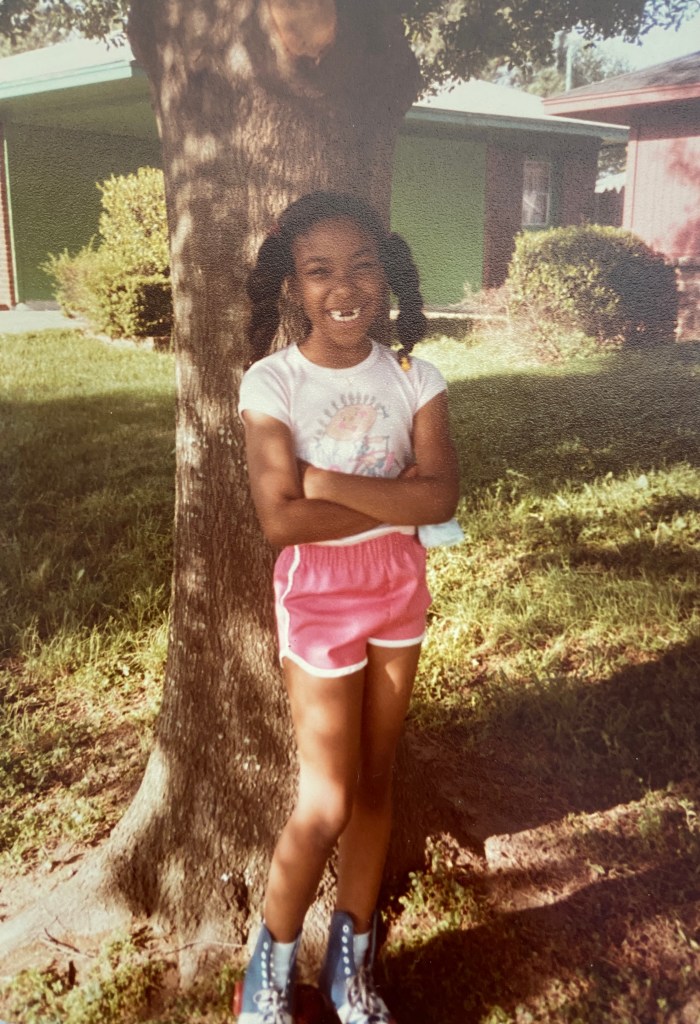
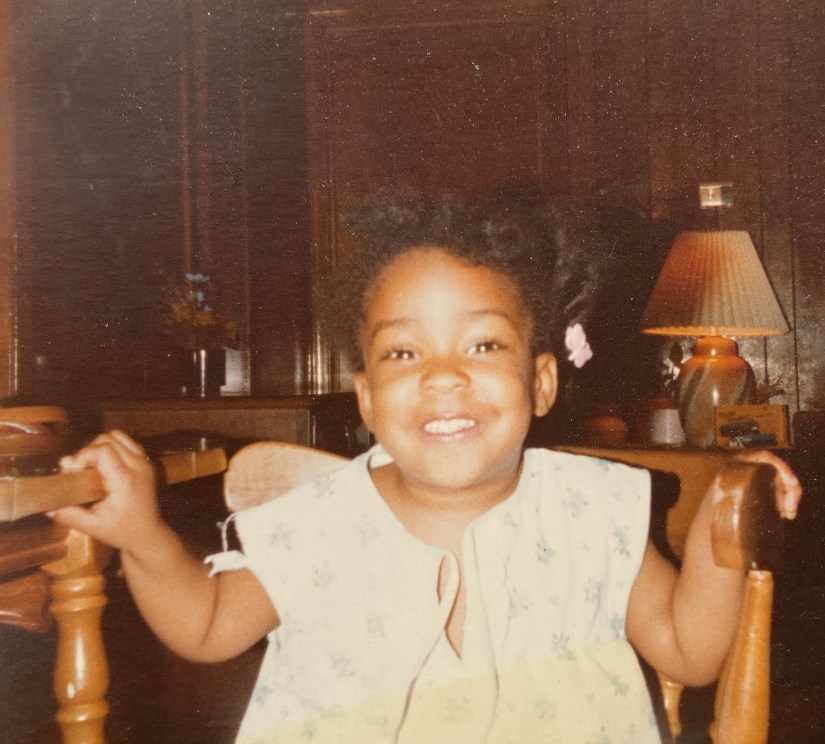


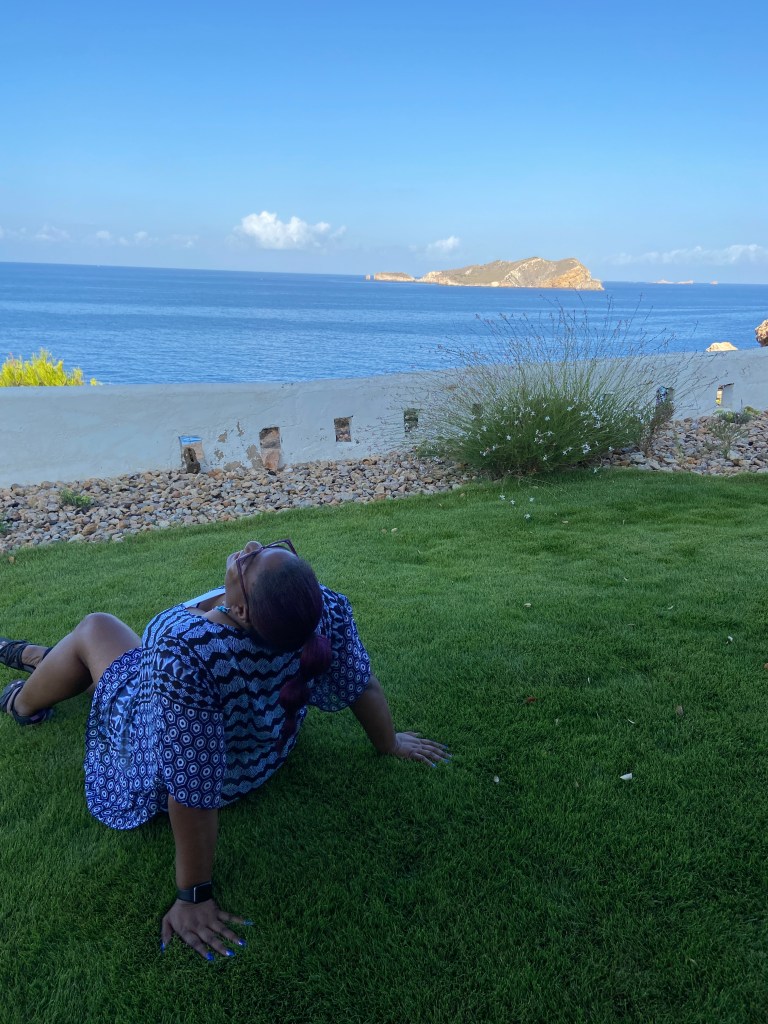

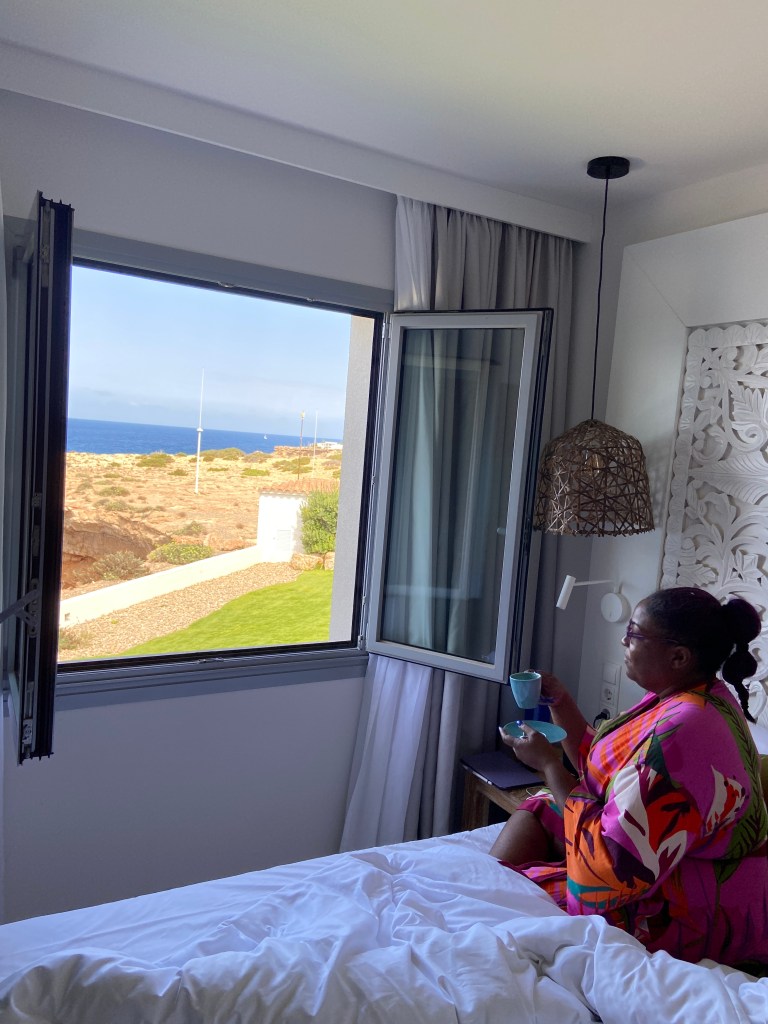
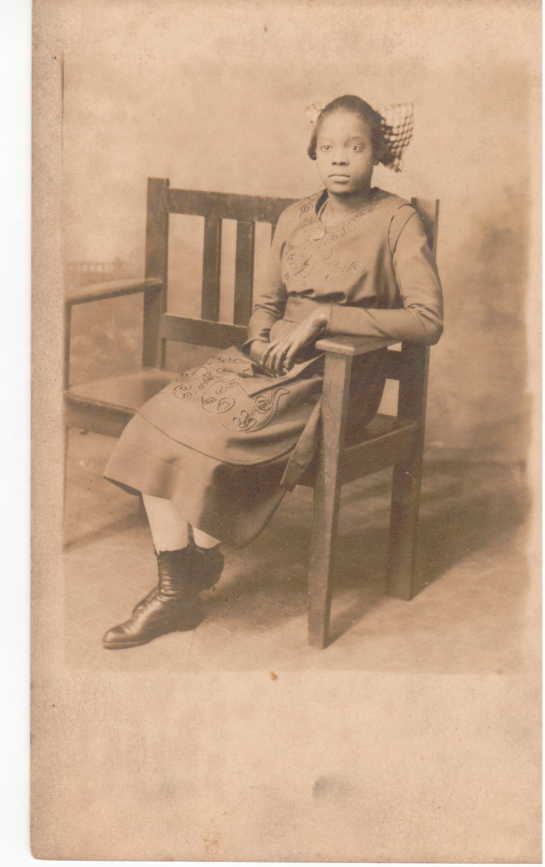
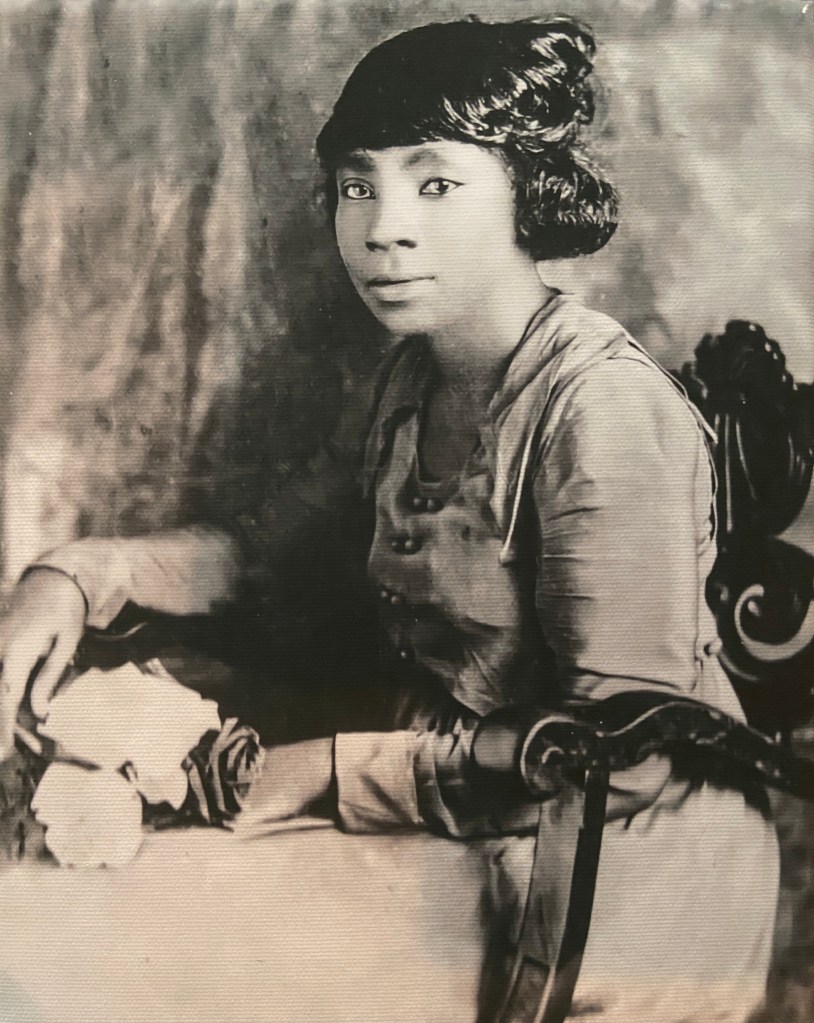
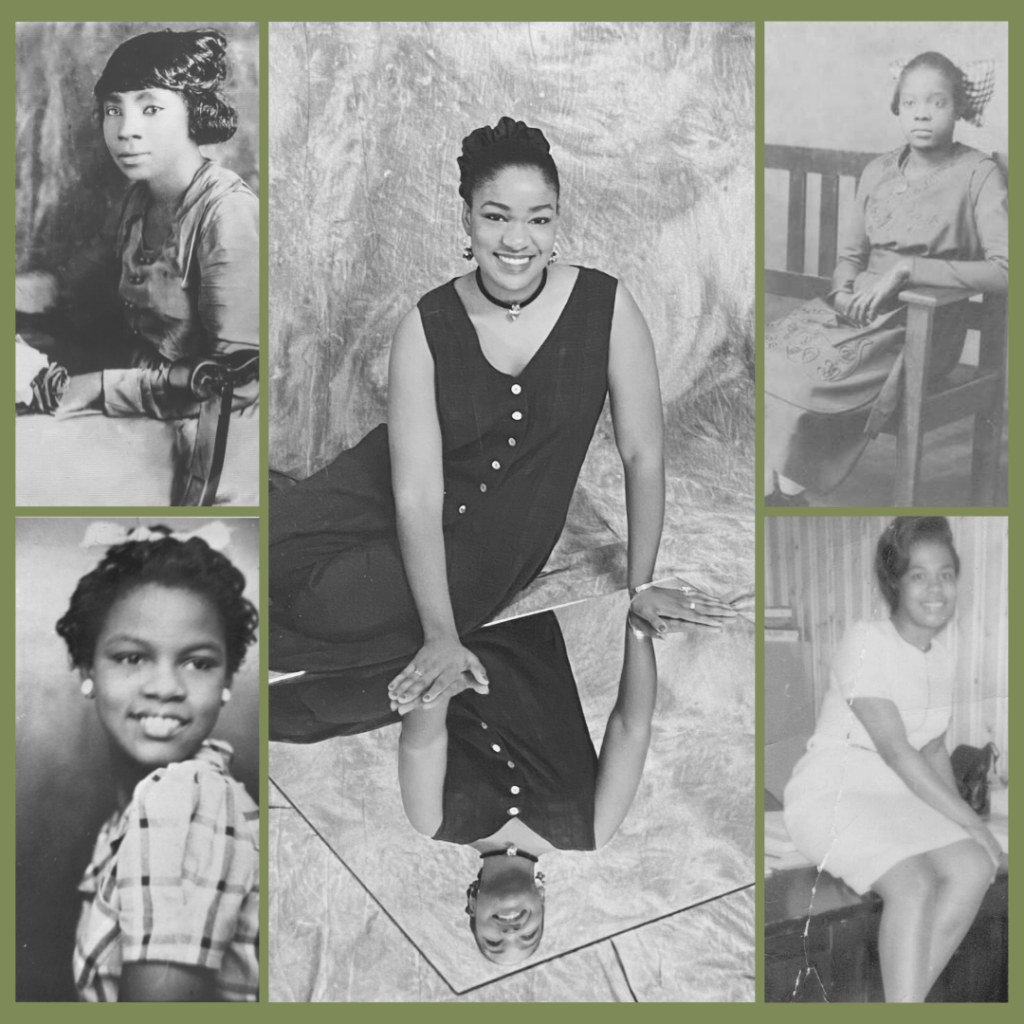
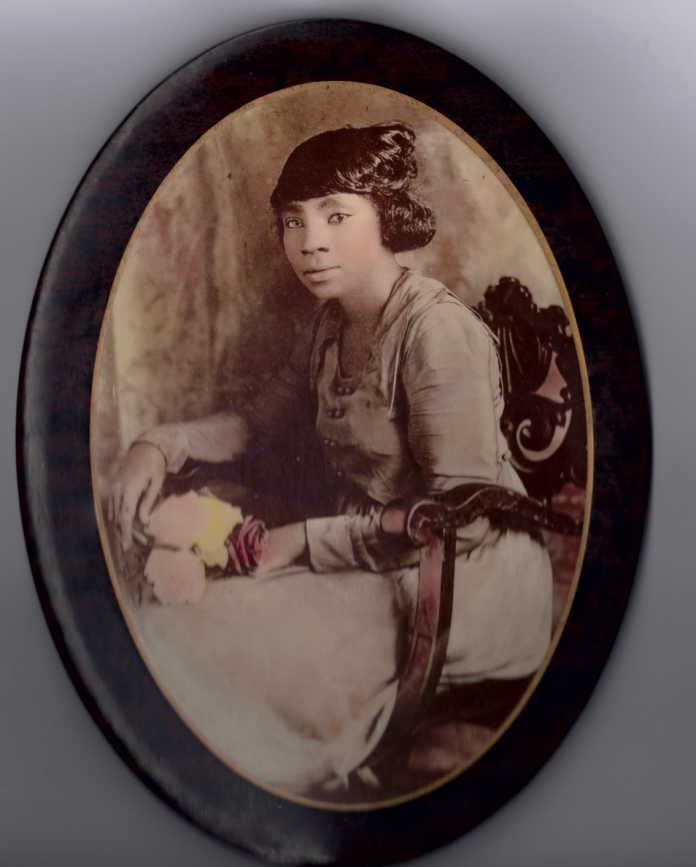
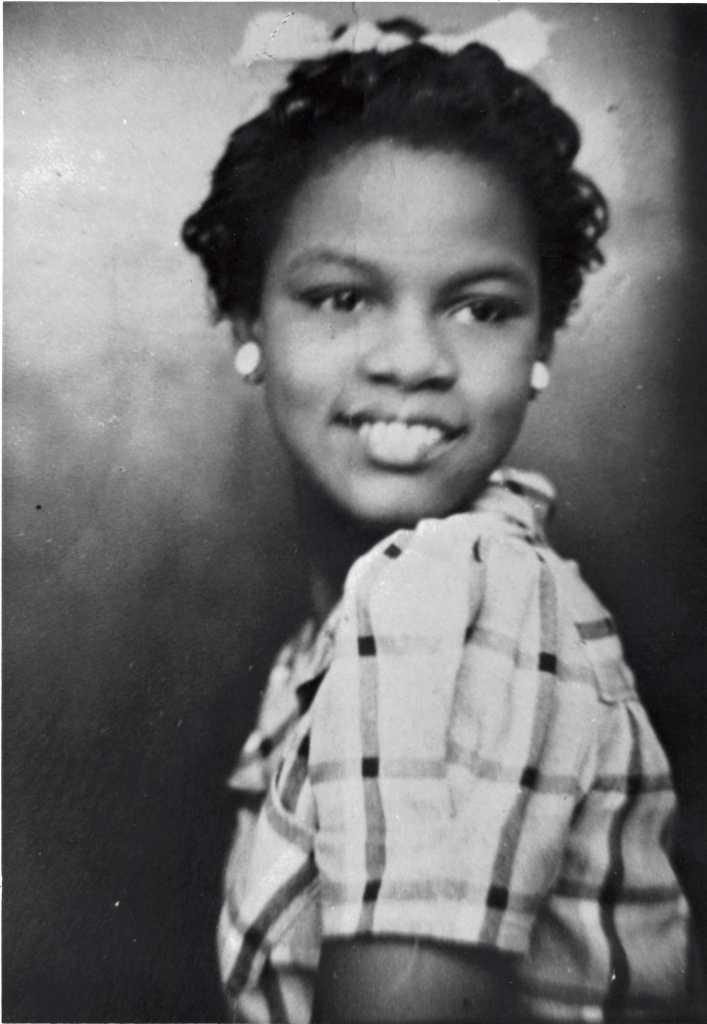
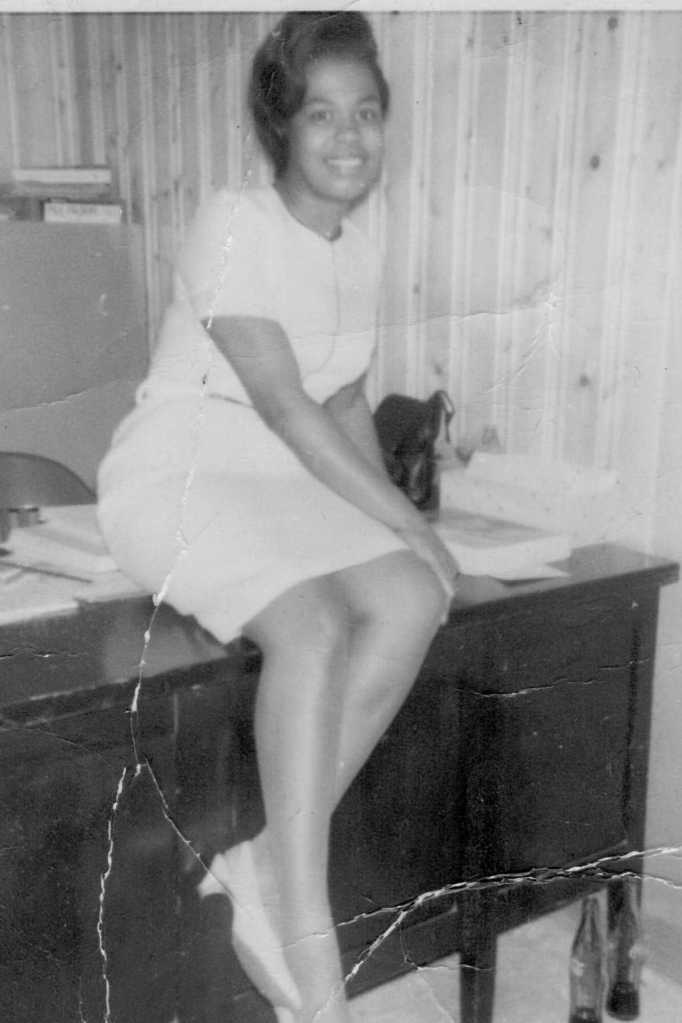
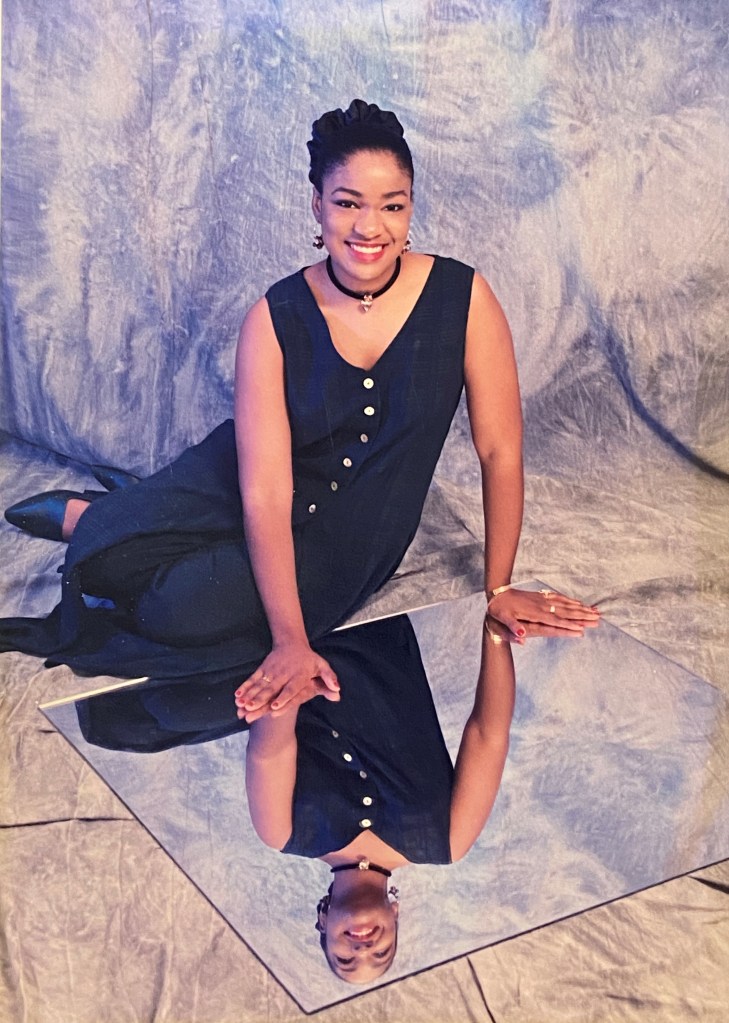
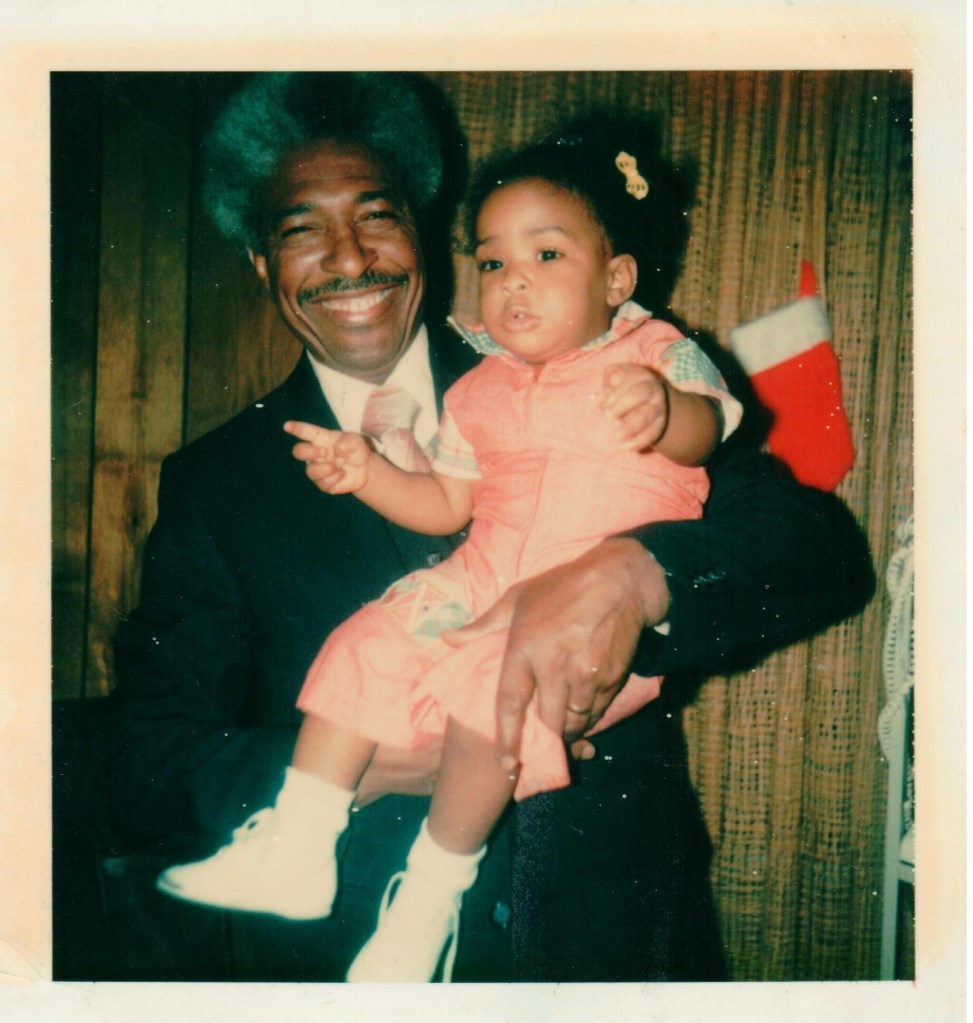

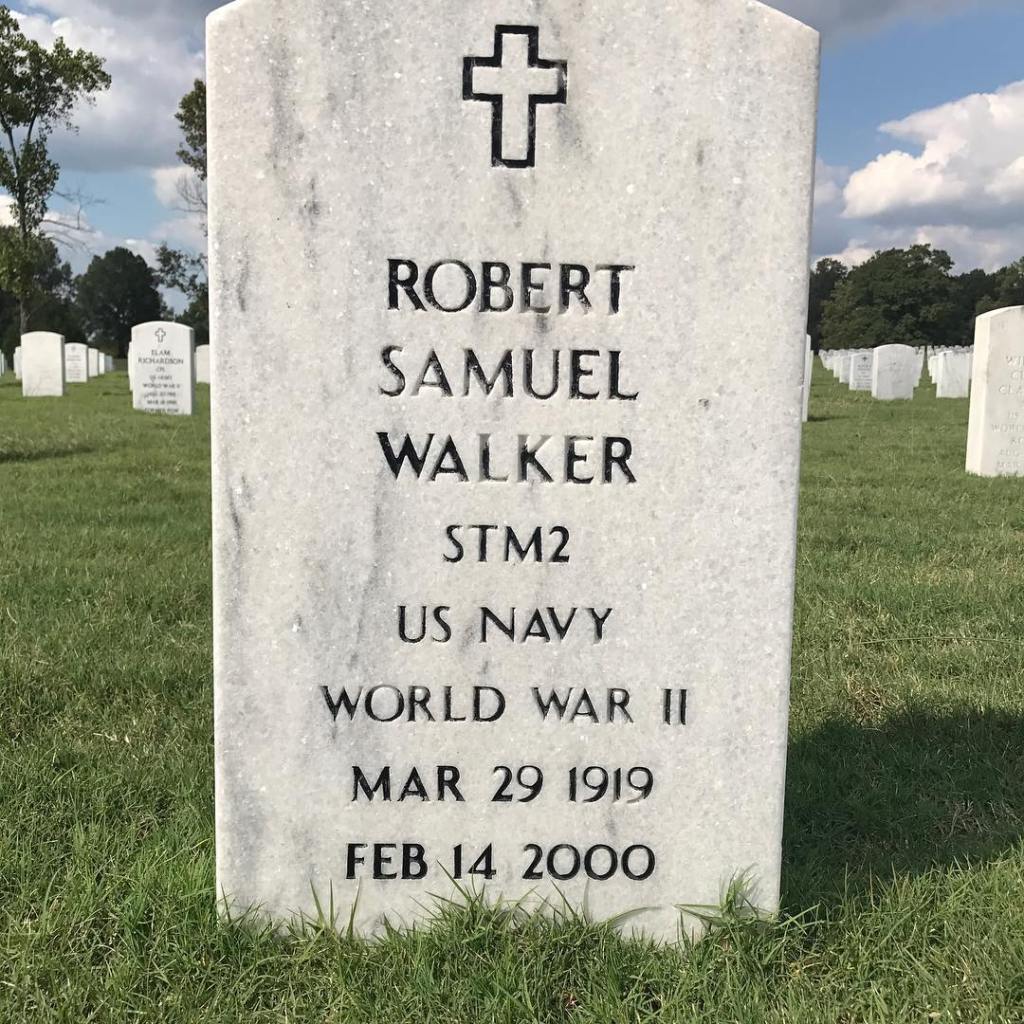


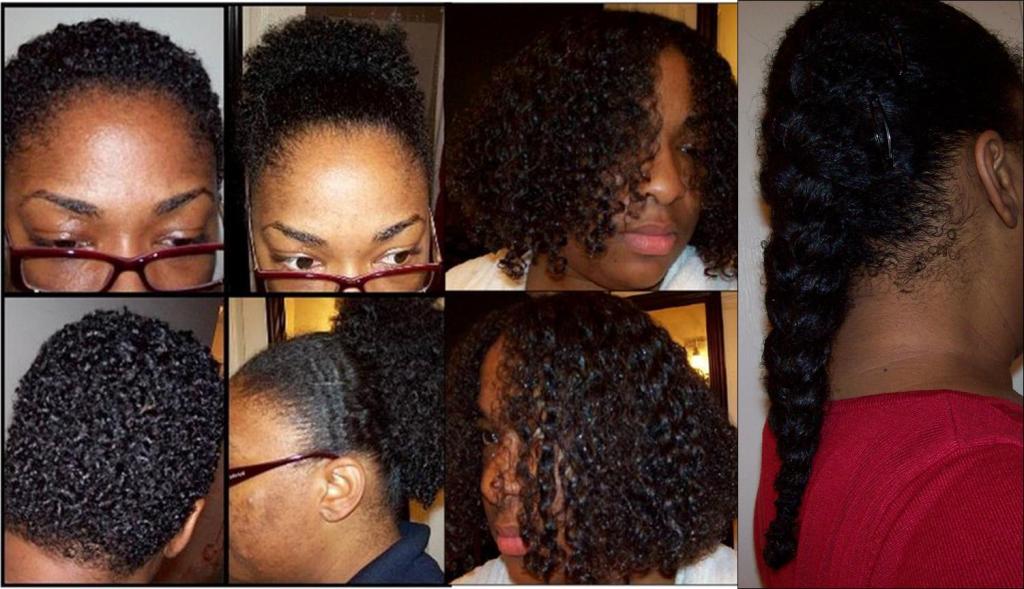


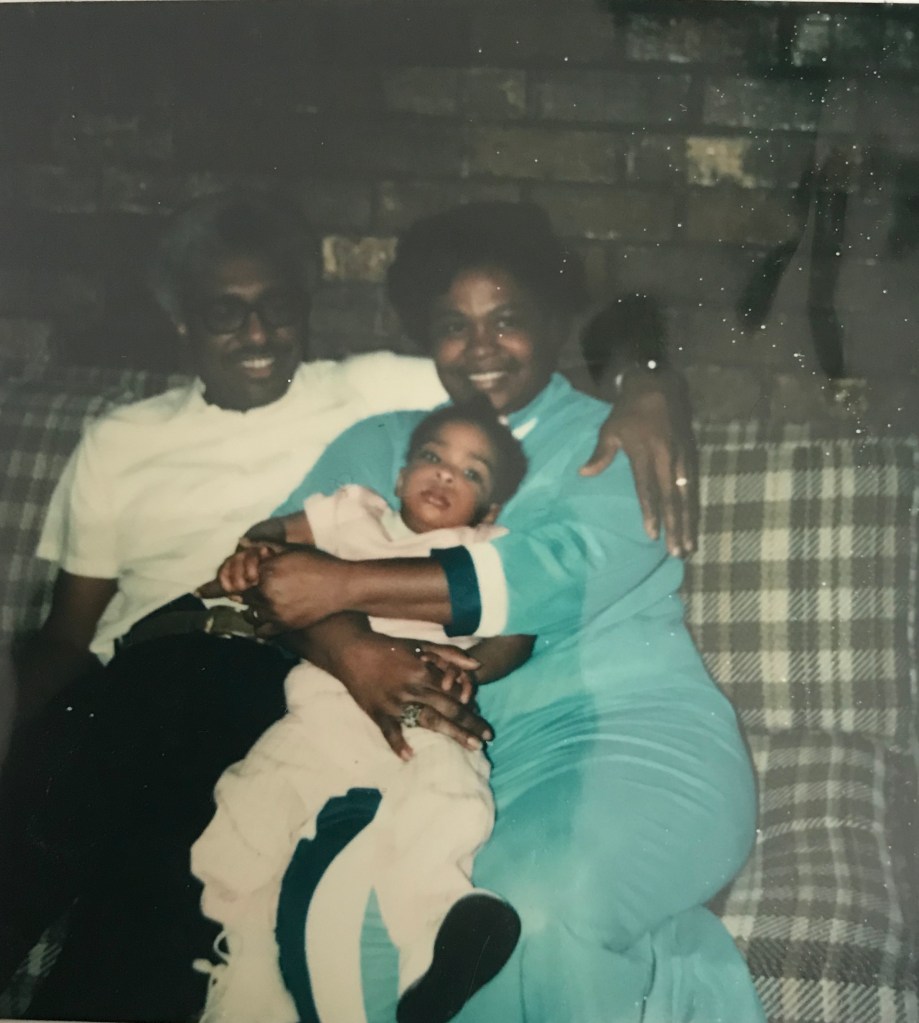

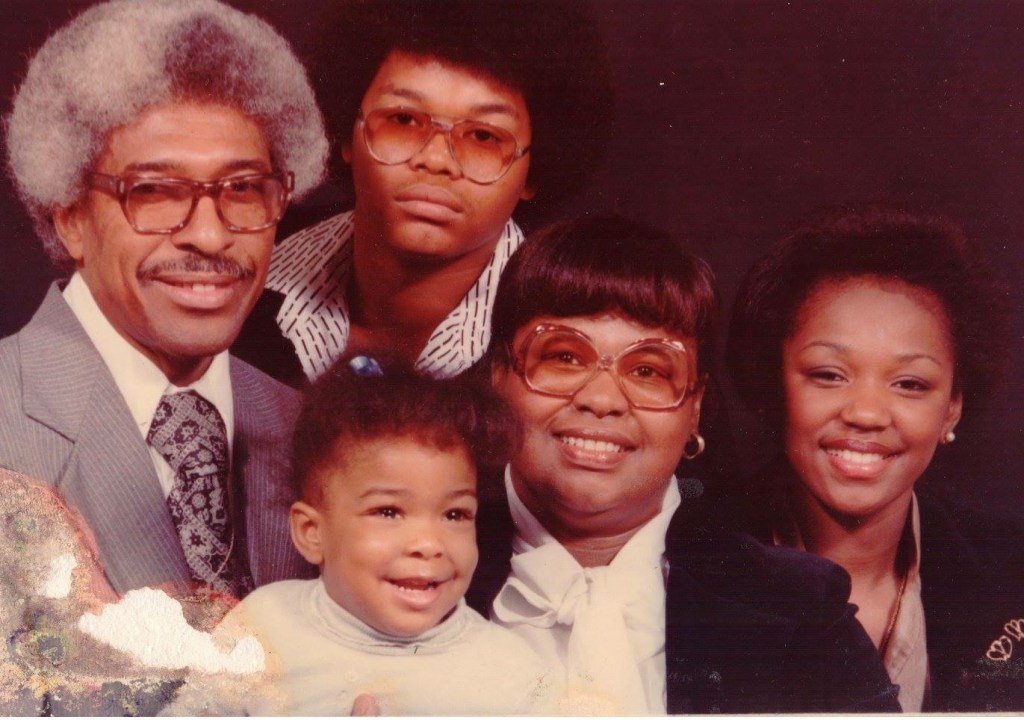

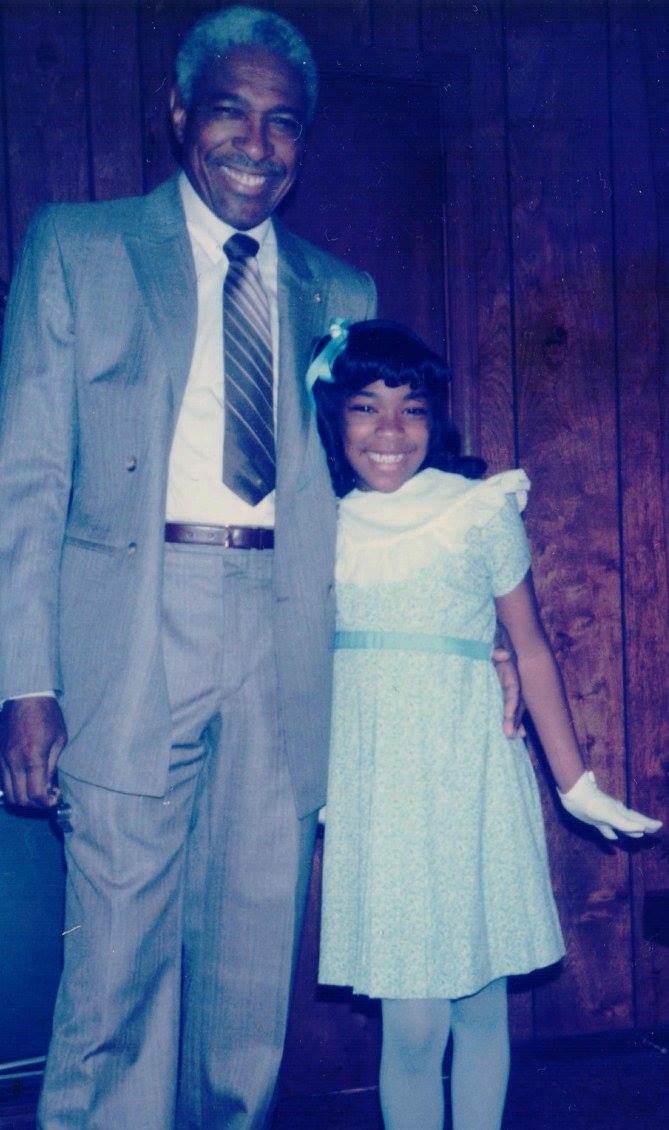

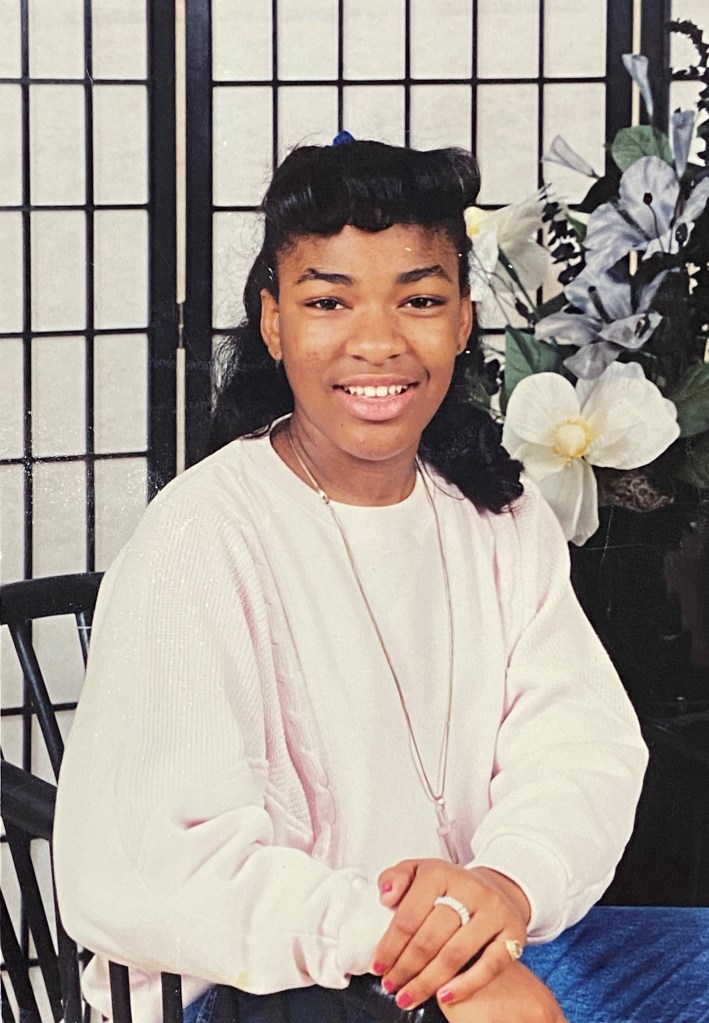


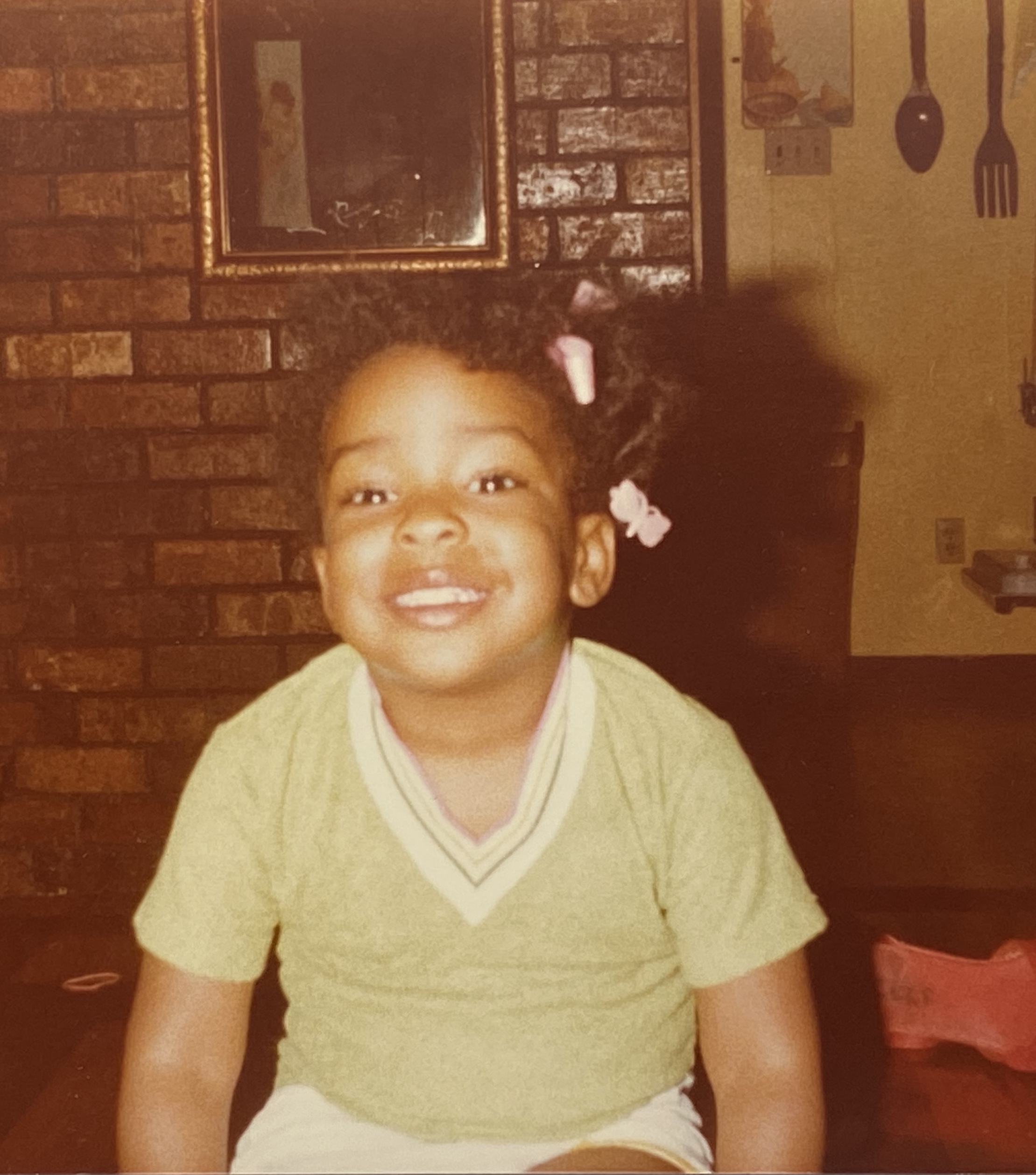

 I am Regina Lynette