10 Min Read, COVID, Donna Maria Thomas-Walker, I Am Not My Hair, Robert Samuel Walker, Smart and Pretty

I am Regina Lynette, the girl with unspectacular hair.

I can provide you a list of people who would disagree, some vehemently, that my hair is unspectacular. I can provide you a list of people who would agree with that statement. I like my hair. It’s coarse and curly, oily yet non-porous, and it is soft and shiny. It’s thick and grows relatively quickly with little breakage and requires very little product to do what it wants to do – which is be free.

The first thing said about my hair was when I was born and Mommy said to Daddy, “Oh, Bob, she has your hair.” She was happy that I had hair like the Walker side of my family because she found it beautiful. Based on my paternal grandmother and her children and grandchildren, our hair is coarse but soft to the touch; it’s curly when we’re younger and loosens into waves when older; we begin to gray young (usually stark white); and men keep it short while women keep it long (unofficial rules). My mother’s hair was very coarse and relatively thick. Her hair started turning gray at a relatively young age – she kept it colored so I don’t know when it started. And she kept it short – above the shoulder – and kept going shorter. I don’t know the reason behind the length, so I don’t know if it had anything to do with the hair growth itself.

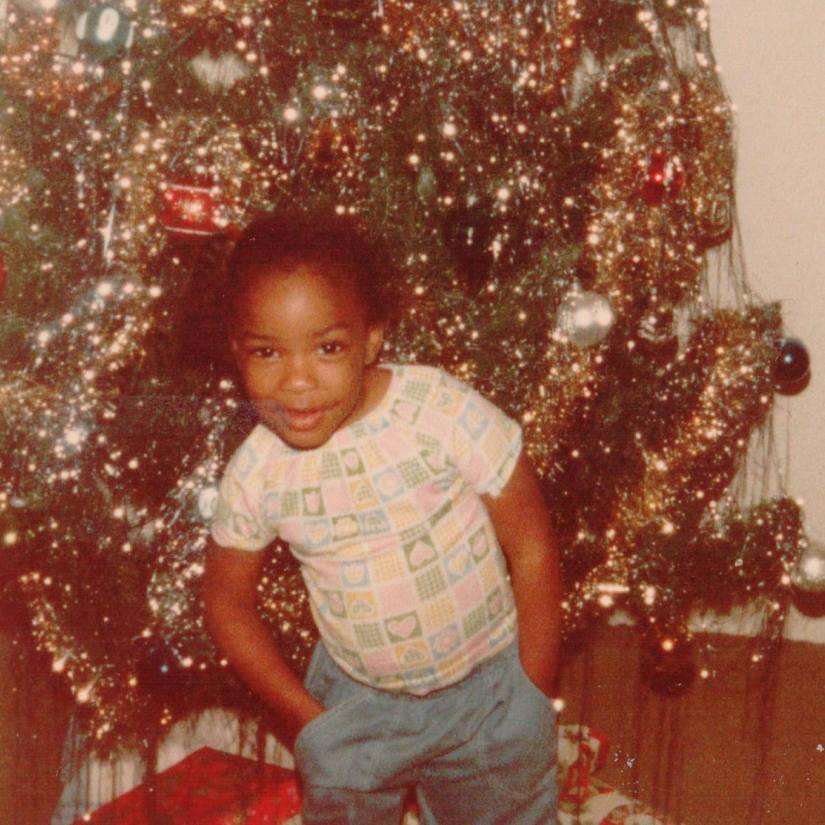
Just months old, Mama had to tape ribbons in my hair – no velcro available in my day.

I’m grateful that the combination of my genes totals what I have today. Daddy would tell me how pretty my hair was first thing in the morning, before it had been combed and styled for the day. I asked him what he meant because my hair was wild and fuzzy, and he said that the hair in and of itself was what he found beautiful. Mommy would style it in plaits or ring curls, and I was to show it off to Daddy when she was done for him to say how pretty it was, loud enough for her to hear. People at church made complimenting my hair a part of the greeting. And whenever my kiddie hairstyle wasn’t quite what someone expected, it was voiced, quite pointedly, that Mommy needed to go back to the standard plaits or ring curls and never waiver again. And what I learned in third grade was that the plaits were supposed to be free to swing. My assistant principal asked if my mom tied my plaits together in the back because she didn’t want them to fly away when really they were connected because it required finding fewer matching barrettes. He was being silly but the element of truth in his joke was that he noticed I’d been wearing the same style a very long time and felt the need to comment. And the culmination of years of peoples’ opinions during my childhood taught me that my hair was part of my overall value.

Ring curls for Easter Sunday – EVERY Easter Sunday

I was not allowed to cut my hair before I turned 18. And when I turned 18, I cut my hair into a chin length bob. I cried. I loved it but I couldn’t stand looking at all the hair that was piled on the floor. And I didn’t touch it much at first – it was so strange not to have enough hair to pull into a ponytail. My stylist wouldn’t do the cut until she received express approval from Daddy. I tried for years to convince a stylist into cutting my hair and just risking whatever punishment I might get but not one of them would do it. And he gave approval because it was promised, not because he thought cutting my hair was okay. And while it wasn’t specifically stated that bob was truly the shortest I would have been allowed to go.

Cutting my hair then, for me, was about looking more mature. I thought a ponytail was for the young. Cutting my hair then, to Daddy, was part of my “wandering spirit”. It was something to experience because I could, and he fully believed I would prefer to return to wearing my hair long. Cutting my hair to this one old lady from my church was a sin and I was on my way to hell along with my parents who allowed it and my stylist who did it. Cutting my hair to other people was wrong because there are women in the world who cannot grow their hair long.

A chin-length bob has always been the shortest length acceptable to Daddy and many of his relatives.

As an adult, I took interest in learning to take care of my hair so that I would have the freedom to wear it however I felt. In college I considered going relaxer-free for the first time. I did it without any education or planning so it wasn’t successful. When I started transitioning, I wore my hair in two braids a lot and sometimes in a bun. After giving up and getting a relaxer touch-up because I truly had no direction, I was scolded for having waited so long before getting a relaxer and was told to never do that again. After trying different cuts and different hair colors I hit a sweet spot with tri-color highlights and long layers on relaxed hair. I was so excited to have found what I judged the perfect style. Unfortunately, it was not maintained by the perfect stylist and a combination of too many chemicals and trying to exercise outdoors in triple-digit temps with no hat created breakage in my crown. Breakage in the crown meant a significant cut so I took some time to figure out what I wanted to do.

A timely visit to my father’s family made me wonder if I had what they had – I’d worn my hair chemically straightened since I was nine so I didn’t know what my curls or waves would look like twenty years later. So I decided to cut off all the chemically treated hair and go completely natural. I literally went to three shops, including a barber shop, and literally no one would cut my hair. I didn’t necessarily want a particular style, I just didn’t want it to look like it was cut with safety scissors and edged with a butter knife. And they all refused. I made my way to a natural hair salon and during my consultation she told me that the front of my hair should grow a little longer for the cut to look good and to wait three or four months before cutting. I kept it in a protective style for those months and I did the big chop as soon as I could. I had a teeny-weeny afro with tighter curls than I imagined, and I absolutely loved what was on my head. And I learned how to take care of it, and I focused on the care and treatment of my hair intensely. I didn’t necessarily show off my new cut – especially to my father’s family – because I wasn’t interested in anyone’s opinion. But that doesn’t stop people from saying what they want to say. I was told that it was unattractive and to never cut it that short again by relatives on both sides. I was told by people I worked with that it made me look thinner. And I was approached everywhere I went by other black women who asked me about my stylist and products I used.
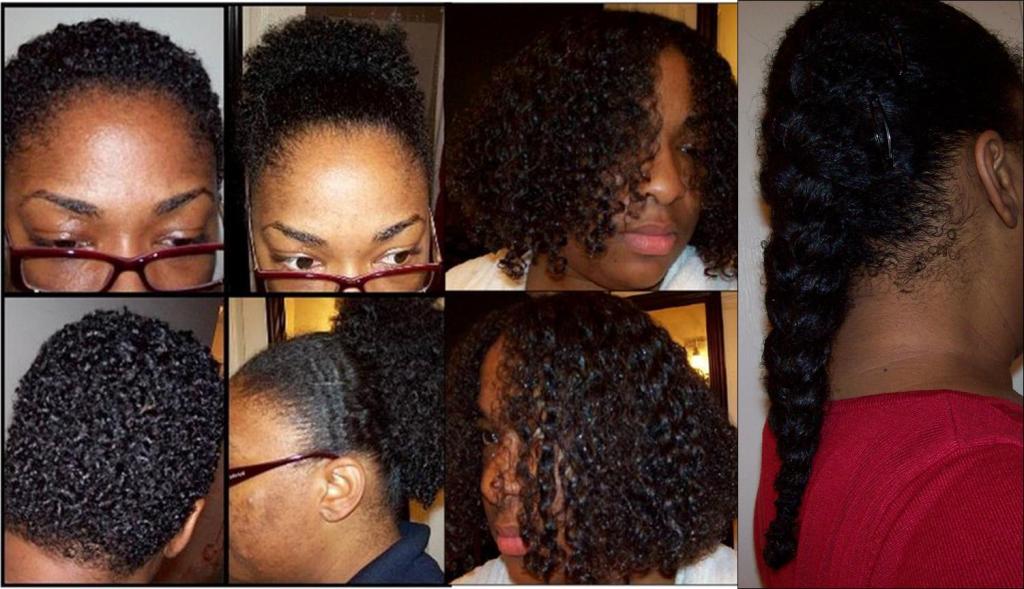
The first four years chemical free starting with my Big Chop. I didn’t even put any heat on it during that time other than a blow-out in the first year for trimming and to check out my ‘fro.

Cutting my hair then for me was a change I made primarily because it was damaged, and I wanted to try something new. Cutting my hair then for my relatives was just a temporary solution to a problem and something to endure until it was long and straight again. Cutting my hair then for “society” was a statement of my blackness and my woman-ness and my American-ness. I wish I could have photographed the faces of all the people who had made various assumptions about me based on my hair the moment they learned they had me all wrong. And it’s funny that out of all the misconceptions, no one had the same misconception. Cutting my hair then had nothing to do with me as a person. It was the first time I didn’t think my hair was part of my overall value and I was irritated when other people continued to push that message (and burden) onto me.

Along the way, in addition to releasing the idea that my hair was somehow associated with my value as a person, I realized the significance of changing your hair after certain life events. I know there are many cultures who cut their hair after deaths and other losses and to symbolize new beginnings of all kinds. I was only ever advised to never cut my hair. No one told me that the urge to cut that man out of my hair after a breakup was primal and a wonderful release. And when I gave in to that urge, just wow! And no one told me that the urge to go red was a sign of strength – whether you are strong or need to be strong, red hair can embolden you for anything that comes your way. After I graduated college, my sister called me “Rebel Gina” because I was angry and saying “no” to everything I’d ever been taught in life. The hair during that time? Short, red, and wild.

This is NOT “Rebel Gina” but this is a short and red phase of life. It just so happens I regretted this cut myself, but I loved the color.

But just like when I was looking for that fat girl in old childhood pictures, I looked for the girl whose hair was supposedly spectacular. I looked for the girl who was identified in a crowd because of her hair. I searched out the girl who was somehow made better because she had something regarded unique on her head. And all I can see is that there were many other people around me who had hair that was significantly more spectacular than mine. I saw nothing particularly special about my hair. And I have the courage to admit it, the freedom to accept it – my hair is utterly unspectacular. But I understand that when it’s viewed through the lenses of others who don’t have the same kind of flexibility of styling that my coarse, curly, shiny, graying hair allows me that it appears to have some additional value. I no longer internalize that view because it says nothing about me and everything about them. My hair is not a part of what makes me valuable and I’d go as far as to say my hair has nothing to do with my identity. Sure, I can see where I inherited what I have from my ancestors, but apart from genetics, it has nothing to do with my identity. I use it as an expression of something or an accessory sometimes but it’s no more spectacular than my earrings and graphic tees.

Fourth Grade, Oakshire Elementary School – Memphis, Tennessee

Thank you, everyone, who has complimented my hair. I feel good when you agree with me that what I have on my head allows me to be free. And it’s okay if you don’t like the style I’ve chosen – you don’t have to remind me of better styles or try to drill it in my head that you don’t like my choice. Sometimes I don’t like my choice either. All of that is good but there is no value, uniqueness, nor importance in my hair.

March 30, 2020 – Just before my city went to COVID related Safer-at-Home orders. And I miss my stylist!

I am Regina Lynette, the girl with unspectacular hair.
3 Min Read, COVID, grief, Mental Health, Parenting

DIY Stress Kits Are Necessary

I’m a crybaby. It’s one identifier that I’ve accepted even though it’s used as an insult. Angry, enraged, pissed off, I cry. Happy, laughing, in awe of something beautiful, I cry. Scared, startled, fearful, I cry. A cold, the flu, allergies, I cry. Depressed, sad, grieving, I cry. I even cry when someone else is crying. Thus, I embrace being a crybaby because my default expression of most emotions is to cry.

Once I went to a professional development conference and attended a session on stress management. At the start of the session the leader asked us to all take a deep breath. I took a deep breath and exhaled in tears, sobbing really. Once I had a confrontation with an abusive supervisor – with HR in attendance but offering no assistance – and was grateful that it was over the phone because I cried, wept really. Once I had an allergy attack during an interview for an internship and had to quickly explain the tears streaming down while answering questions about why I wanted to work with them. And the worst – believe it or not – was when I cried silently during a staff meeting. It was the worst because there was no provocation. My home life was particularly stressful at the time and I was okay as long as I was moving around and working but sitting still for two seconds was too much time with my thoughts. Embracing being a crybaby does not mean I embrace crying at work for any reason at all.

After crying during the stress session and the supervisor confrontation, I quit those jobs. After crying during the interview, I got the job, one of the best I’ve ever had. After crying during the staff meeting, I went to a counselor.

This wasn’t my first time seeking a professional mental health provider. In college I sought help for sexual abuse from a counselor. After college I was diagnosed with a mental health disorder managed by a psychiatrist. I sought grief counseling from a psychotherapist. I recognized that I needed help and had the courage to find it. Thankfully, as part of my benefits at that job, I had access to six free counseling sessions – designed to refer you to more permanent situation – that were located walking distance from my office. I made an appointment that I was able to take on my lunch break.

I had 30 minutes with this counselor, so I took over the session from the start, speaking as quickly as possible, listing all the stressors going on in my life. This guy tightened his face with every situation I mentioned and at the end of my list I thought he was going to crumble. Then I told him that I wasn’t looking to deal with all of those issues right away, but that I just needed not to cry during staff meetings anymore. He audibly sighed his relief and gave me a list of self-soothing activities to try. He told me to keep a container with some tools in my car, at home, and at work, to use whenever the stress proved overwhelming. I called them stress kits.

I read the list on my way back to the office and then thought about the best way to approach this stress kit. Reflecting on the simple moments of bliss in my past, I set out to include items from those moments. I added a mug (for tea), a small jigsaw puzzle, and an Ella Fitzgerald CD. On my two 15-minute breaks and during lunch at work, I hid away in a small conference room that I could lock. I made jasmine green tea, listened to Ella Fitzgerald’s Love Songs: Best of the Song Books, and worked a small Thomas Kinkade puzzle. I kept to an actual schedule for a couple of weeks and it helped significantly. There was no more crying at work. After a couple of weeks, I skipped the lunchtime stress break and soon I didn’t use the kits preemptively but as needed to combat anxiety and stress.

The last year has been taxing for the entire world. Surprisingly, I managed the confinement relatively well. The public displays of the brutal murders of my people, reminding me of just how little our lives mean to some, made things more intense but I was still managing fairly well. The deaths of major civil rights activists were hard, but I was hanging in there. I had to confront the fact that I needed to search for a job – something I knew I should have been doing for a long time but didn’t have the energy nor mental space to start – because I am running out of time to make sure there is no gap in employment, but I have a plan and a backup plan and an emergency plan and some last resort plans. Then the election hit and boom – regular anxiety attacks.

I have prescription meds to help manage my anxiety, but I only have to take half a dose and that rarely. During the election, I found I needed a full dose almost daily. I believe in taking medication to help the body recover whether it’s healing an ailment or managing symptoms. But I also have a subconscious belief in spite of education that all medication is temporary, and I try to avoid taking anything that can be habit forming or that has to be increased over time for effectiveness. My doctors have actually encouraged me to take more anxiety meds than I’m willing to take. After a week of taking pills I remembered my DIY stress kits.

With more education on stress relief and more tools at my disposal, I made a more robust kit. I made sure to pay attention to the senses – sight, taste, touch, sound, and smell. And two more senses I’ve recently learned about – vestibular/movement and proprioceptive/comforting pressure have been addressed in this kit. I still have Ella Fitzgerald as part of the kit because her voice has literally lowered my blood pressure from high to normal within a two-minute period. And I still have tea, but I use my fancy tea kettles and cups instead of a mug. In addition to jigsaw puzzles, I have coloring books. I incorporate incense and candles – usually something spicy. I either take a brief walk or rock in a swing. And I have a weighted blanket that I keep nearby to lay under for up to half an hour.

10 Min Read, COVID, Fasting, Holidays, Spirituality

I am fasting in a time of feast.

When I experience emotional pain, I build a fort around myself in an attempt to feel safe. I don’t generally respond this way for sudden and traumatic experiences that cause pain but in response to the microaggressions, sarcastic and sardonic remarks, insults delivered with kind tones, and all the other little pin pricks that wear away at your resolve on a daily basis. For me, this fort manifests in different ways. To keep myself safe from my own thoughts I keep the television on as much as possible, only turning it off to focus on a game that requires little skill but keeps the mind engaged. To be safe from people coming too physically close, I allow clutter to accumulate, not only making it an unappealing space to share but also literally leaving no space for anyone to get close. To avoid spending time with people who don’t treat me with respect, I get deeply involved in secret projects where I have to deny invites with cryptic excuses and sometimes outright lies.

When the fort I build around myself becomes a prison – junky rooms, mountains of paper on my desk, isolation and loneliness – I have to begin to deal with the pain in more constructive ways. I have to allow myself room to think which means having some quiet time – no listening to anything, no talking to anyone. I have to clean up and organize the chaos and mess. I have to stand up for myself and demand respect when necessary as well as give of myself to others who value and love me and let them in.

Along with the entire world, I thought that COVID-related challenges would be temporary. I never believed that we’d close down for two weeks and resume business as usual as many people talked about just before April 3, 2020 – the start of confinement where I live – but imagined it would be closer to two months and I was hoping that I was being overly pessimistic about that much time. Never could I have thought that I would be masking up seven months later with no end in sight. I found myself drinking too much because I mixed cocktails at home rather than going out to have one or two a month on average. My at-home pour is heavy and when I stepped back to look at monthly expenses, I couldn’t believe how much I was spending monthly on alcohol. I am now addicted to lemon pepper chicken wings and coffee. I eat bacon and eggs literally every day. And my grocery and eating out expenses have tripled. I have cancelled doctor appointments for anything preventative – I am at high risk for various cancers and have not had any regularly scheduled preventative screenings. I haven’t had professional dental cleaning and x-rays. I haven’t had my hair professionally styled. I look and feel a whole mess. And my confinement is showing symptoms of agoraphobia.

I refuse to enter 2021 in this weakened state, so I am taking a 40-day fast from November 22nd through December 31st.  

I don’t typically fast during the end of the year winter holidays because it is a time for feasting – October: candy; November: Thanksgiving; December: my birthday, Christmas, and New Year’s Eve. It’s a time to enjoy extended family and indulge in mac-n-cheese, brown liquor, and pound cake. It’s a time to watch holiday movies and catch winter finales of my favorite series. Holiday music is a constant soundtrack of the season. And it’s a time to dismiss the insensitive remarks from family and friends for the sake of creating pleasant memories.

Because I have no idea what the holidays will bring – I forgot when Halloween happened until I looked at the date on that day and we totally forgot that Thanksgiving is upon us – I am doing a modified fast. While I’m not missing out on my sister’s mac-n-cheese and tropical pound cake that only makes an appearance twice a year, I have a list of foods that have become a comfort and a crutch that I will be abstaining from during this time. I’m limiting my television time to one news show, one feature length film, and one hour of sitcoms a day – I will not miss out on my annual viewing of Miracle on 34th Street, This Christmas, The Preacher’s Wife and It’s A Wonderful Life.

Since there will be no travel or visitors during the holidays, I will be completing several declutter challenges to get my space in order, and thus get my life together. My holiday decorating will be limited to my Advent calendar, turning on the birch trees that stay up all year, and glimmer strings in my lanterns and on my shelves – which means the only thing I’m pulling out of storage will be 4 DVDs and my Advent calendar. I also have some organization projects related to work that I will be tackling during this time – I look forward to seeing the top of my standing desk and emptying the storage bins where I dumped things I haven’t sorted.

I won’t have to make a lot of time to avoid people and have meaningful times of silence due to COVID-related restrictions, but I will be making some strides against the cabin fever and agoraphobic-ish reactions that are becoming harmful to my spirit and mental stability.

Every day I will get outside for some movement – temps where I live are like Spring and Fall with very little rain so I have no excuses there. Every day I will run an errand using the necessary precautions versus having everything delivered. And I plan to go to the beach at least once a week, likely on Sundays for some quiet time in nature and time to write.

With these sacrifices, I expect to tear down my fort of safety and the self-made prison so that I can receive spiritual rejuvenation and answered prayers that will bolster my resolve and give me strength to tackle 2021 come what may.