10 Min Read, Family, grief, Mental Health, Parenting, Re-parenting, Relationships, Spirituality, The Mothers

I am Regina Lynette, granddaughter of Dorothy Lee.

Dorothy Lee Thomas was born on October 31, 1925. I’ve only ever heard her called Dorothy, so I’ve only ever called her Dorothy because no one ever corrected me. I wouldn’t dare attempt anything southern like Mee-Maw, but I don’t think anything modern like G-Momma is quite right either. I think I would have called her Grandmother should we have had a relationship. So, as of October 31, 2021, I call her Grandmother.

I feel somewhat lucky to have not made any memories of spending time with Dorothy Lee. It sounds illogical because I also feel tremendous loss from not knowing her. Here is the reason I find myself so lucky. Dorothy Lee’s actions caused many people who knew her a lot of pain and confusion. Should I have known her in the natural during the first nine years of my life I might be stuck with terrible memories and anger and grief as well. But as I get to know her as an ancestor, I get to see the impossibility of Dorothy Lee and can love her from a spiritual place. I can love her from a place where she’s eternal.

The first big thing that happened to Dorothy Lee after she was born was that she lost her place as the baby of the family when her mother gave birth to her third daughter in not even as many years. Now Dorothy was the middle child of a trio of infant girls. Before she could begin to learn what that meant for her, and just as she made peace with the idea of sharing her parents with her sisters, she lost her baby sister. And no one helped her with her grief because no one believed a 19-month-old toddler knew to grieve her baby sister. And no one helped her with her grief because everyone else was grieving a 6-month-old baby. And no one ever believed Dorothy could possibly feel any residual pain of her own from losing her baby sister. But I know she did. She absolutely had to feel it. I have one memory from my life between birth and 36 months old. It’s probably more of a blend of multiple events morphed into one trauma – there are some connectors missing and mismatched details – but it was a memory of something that affected my behavior, shaped my attitudes, and kept me in a loop of abuse and misuse for twenty years before I asked my family if there was such a secret. I saw the pain on their faces and could see that they were reliving, to a degree, the painful event that they swore to secrecy because they believed I couldn’t possibly remember it. And I saw that in order to protect themselves they would have projected that pain on each other. Because the point of my inquiry was to know what was true so that I could begin to move forward and break the loop of abuse and misuse, I left them out of it and continued seeking help to navigate those painful memories. I maintain that my life would have been better if my pain had been considered at the time it happened and I had been taught how to move forward in life from that trauma. But, unlike Dorothy Lee, I was able to get good help years later of my own volition. Grandmother would have been comforted and encouraged by her family as a child through her grief of her baby sister rather than be left to her own toddler devices. And Grandmother would have told my mother to talk to me about what happened to me as a child rather than trying and failing to protect my feelings. Grandmother would have shown Mommy that she was leaving me to my own toddler devices to process and live through the terrible things that happened. Grandmother would have held me and my mother both as she talked to me – boldly speaking to a toddler about things that are too heavy for some adults to carry, empowering me along the way.
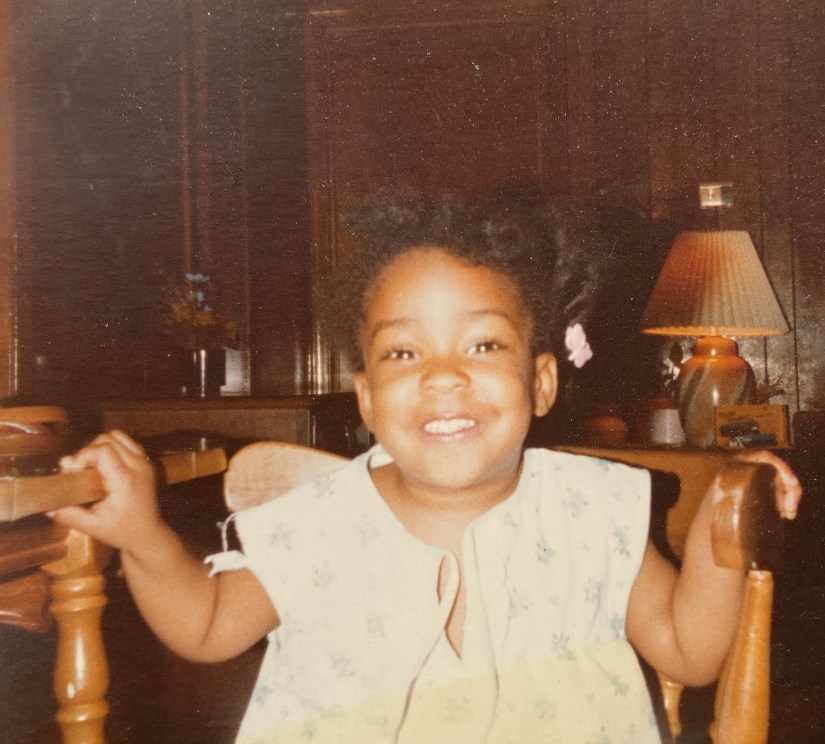
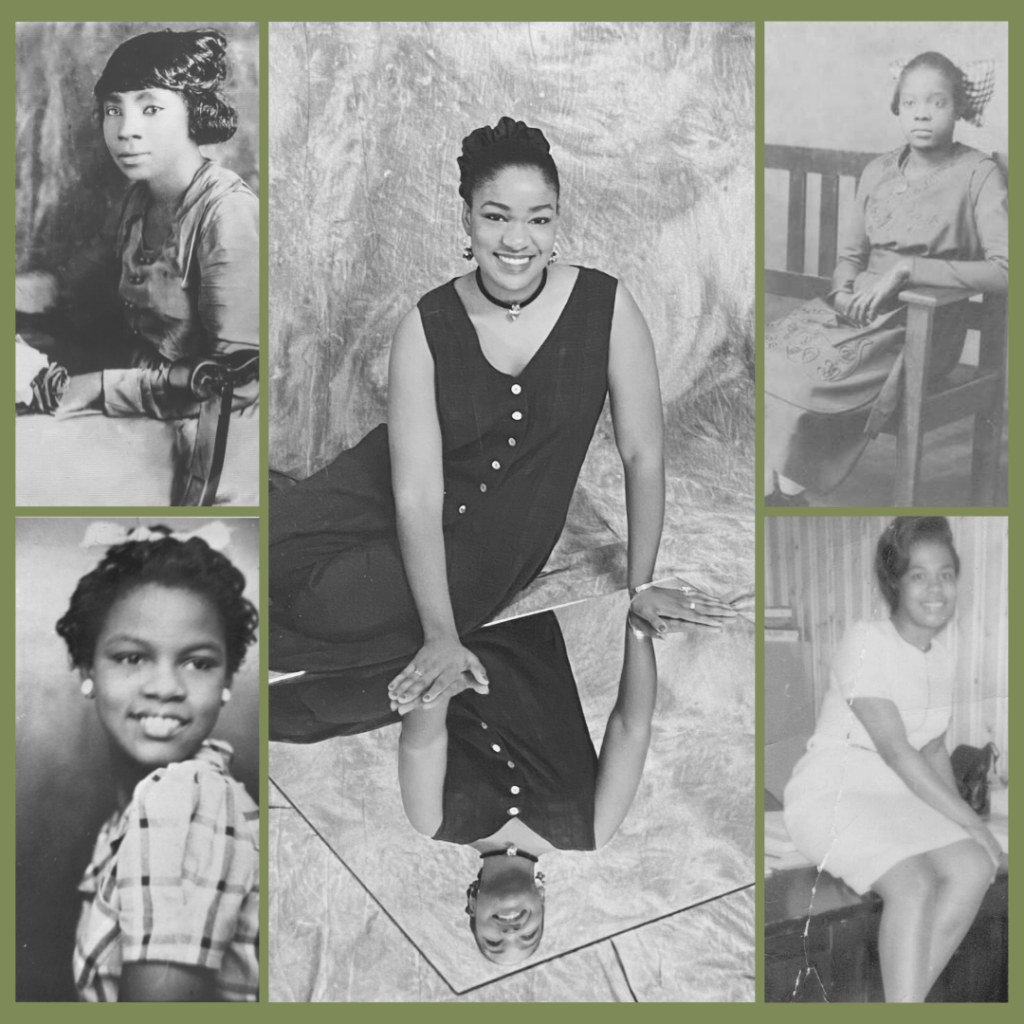
Within the first 36 months, Gina needed Grandmother.

The second big thing that happened to Dorothy was that her parents separated. I don’t know the reason nor the length of time of separation – nothing was documented as a divorce at any time, but Dorothy, her sister and her mother were listed on one census record with her maternal grandparents while Dorothy, her sister and her father were listed on another with her father’s auntie. This is also the year of a few family deaths, none more significant than Dorothy’s mother. Dorothy was just 14 years old when she lost her mother. I know two things about losing your mother as a teenager. First, no one in the world can explain what it is like to be the baby girl of the family and to lose your mother just as you are becoming a lady unless it happened to you. Second, grief is just as unique as the person who is experiencing it and no two people grieve alike. Dorothy was going through a second loss that I know no one helped her through. Worst case scenario she was a burden to be ignored or passed off. Best case scenario, everyone was so busy making sure she was provided for and had care that no one had time to care for her. But Grandmother, who got the help she needed from losing her mother, was by my side when I lost mine. She was the voice, yet again, telling the family how to look out for me and how to get me back up to a place of functionality so that I wouldn’t have to wait until I was an adult to get treatment for grief and trauma. Grandmother would hold me in her arms and let me sob in her chest until my head throbbed and I fell asleep from exhaustion. And then she would tell me that I was the strongest person she knew, that my tender-heart was the strongest part of me. She would say that it was beautiful that I was able to fall apart into her arms, having the courage to both feel and express my pain and to be able to trust her with my most vulnerable parts. I can feel Grandmother’s hands around my face, cupping the tears that fell from my chin and letting them roll down the insides of her wrists. Smiling through her own tears and wiping away my fresh tears with her thumbs, Grandmother would look into my eyes for my silent questions, and she would wait until she could see I got the answers from looking into her eyes.

Dorothy had a baby girl and got married as a teenager and her husband left four months later to serve in World War II. I don’t have a lot of answers about that period of time and maybe that’s something that will be made clear at another time. But Grandmother is who I would have talked to about my teenage relationships and the one person’s advice I would have trusted implicitly. Grandmother would tell me all about my biological grandfather, what the family thought of him, why she didn’t get married until a month after my mother was born, what it was like for her husband to leave for war, and how the relationship ended. I would have made the same teenager decisions I made for the same reasons I made them, but I wouldn’t have made myself sick with doubt and grief prolonging the closing season for those teenage relationships. Then I would have walked hand in hand with Grandmother in places where the grass was lush and green while she beamed at me with pride, knowing I was moving forward courageously, unconcerned that I would have all the relationships I needed along the way.

Teenage Regina needed Grandmother.

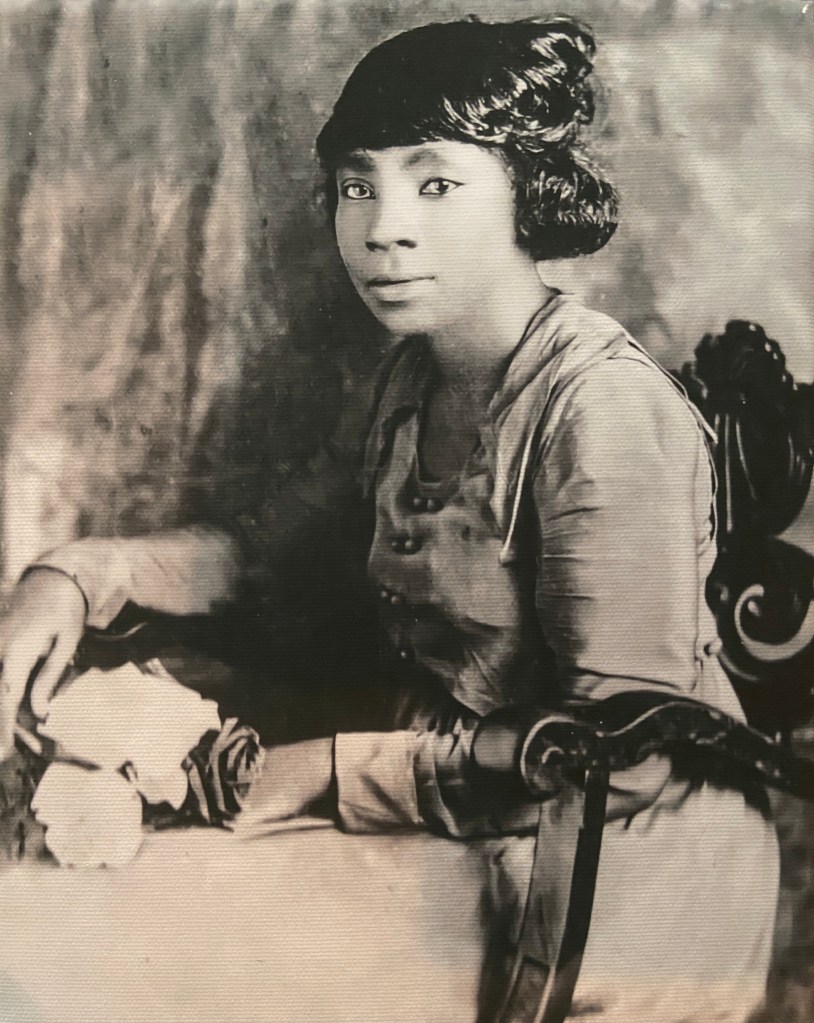
Dorothy had a boyfriend who was just as, if not more, significant than my biological grandfather in some ways. This boyfriend saw her talent, shared her talent, and made her an offer she wouldn’t have refused. Her father stood in between her and this dream. I believe this act – one I am certain was made out of love and the best intentions – was the beginning of a horrible downfall provoking Dorothy to lash out, causing regrettable and significant harm to her loved ones. So, because I can know Dorothy as the Grandmother who sang in talent shows and with doo-wop groups, I can spend time with the Grandmother who tells me that I can have everything I’ve ever dreamed of and more. Grandmother calls me her “partner” – because she can see so much of herself in me. I am the one who drives her everywhere she needs to go while we sing every song on the radio at the top of our lungs together. We spend Saturdays together, sitting on the floor in a small room where her phonograph (that still works fine) is stored, listening to records. When it’s my turn to choose songs, I select some vinyl that makes her smile and then choose some things from my iPhone that I know she’ll absolutely love to hate. We’ll sing together and I’ll read liner notes to her while we listen to music for hours exchanging fun facts about the musicians. And she’ll have a couple fingers of something brown and smooth while teasing me for preferring something pink with bubbles. When I see she’s getting sleepy, I begin to put away the records with the same care she taught me when I was very little. When we’ve played our last song for the night, I walk her to her bed and tuck her in just before kissing her cheek. Grandmother knows I can’t sing for shit but loves the way I sing with my whole heart. She laughs at me when I screech out the high notes and when I ask why she’s laughing, she tells me that she laughs when she’s happy.

Dorothy Lee wrote on the back of this photo that she was too flabby and that this was her real hair. She would write addresses and stories on the back of photos that she sent but never the date.

This is the Grandmother with whom I spent last Halloween. October 31, 1925 was Grandmother’s 96th birthday. She didn’t grow up in a perfect world – life dealt its blows often leaving her heartbroken – but she lived with all of her needs met, whether physical, emotional, or spiritual. She tells stories of love and loved ones lost, of dreams deferred and changed, and how to find the beautiful things in a world of ugliness. She smiles at me with her eyes and her heart, knowing that she walked the path she did so that I would have someone holding my hand while I walked the path destined for me to walk. She is happy to do it because with everything I go through, she gets to advise me from a place of experience. When she recalls wondering why such terrible things happened to her when she was younger, it all makes sense when she sees me.   

I am Regina Lynette, granddaughter of Dorothy Lee.
5 Min Read, Brothers And Sisters, Donna Maria Thomas-Walker, Family, Holidays, Parenting, Robert Samuel Walker

Christmases to Remember

The end-of-year holidays always drove me into a frenzy as a child that my teachers, siblings, and parents all overlooked, and I am grateful they did. It was a frenzy, but it was joy filled. My siblings who lived at home with me had been away at college, returning for Thanksgiving break. Nearly every conversation in the house started with “When the kids get home…” Even I called them “The Kids” despite their being old enough (biologically) to be my parents. I found joy in every little thing – the drafty house causing the windows to fog and condensation to run was one of the most ridiculous things to find joyful but was one of the happiest additions to the ambiance.

Even though Thanksgiving itself wasn’t particularly my favorite holiday, I enjoyed certain aspects and it was always a good time overall. My siblings coming home was the best part, the marshmallows on that nasty sweet potato thing Mommy made was second, and the mac-n-cheese was third. Outside of that I loved watching Mommy set out her mismatched China and fragile water glasses that she found at a yard sale and I loved how she enjoyed decorating her table and getting us to dress up for dinner. I love seeing those plates and glasses today for that same reason. Mommy’s dressing was pretty tasty as well and generally my soft-drink restriction was relaxed for the Thanksgiving meal.

But Thanksgiving was far too short for me and mostly just served as a defining line for when Christmas, the pinnacle of the year, could start. In between Thanksgiving and Christmas is my birthday, so it would be just a few days after Thanksgiving when I started writing a countdown to my birthday whenever I had to write the date. You know, I’d write my name and December 1st on my paper and then add “eleven days until my birthday”. I wasn’t exactly making an announcement, but my glee was just oozing out through my hand to my pencil and onto the paper. My teachers sometimes commented, and it seemed they understood the level of excitement demonstrated by that simple act. I can recall that at the height of reaching my birthday, I often sat on top of my desk – if I sat at all – and for whatever reason, my teachers had patience with me. The threshold for consequences was lowered for me universally during that time. Finally, about a week later we’d go on Christmas break and “The Kids” would be coming home soon again.

Christmas was always my favorite holiday, and being the only young kid in my household, Christmas was all about me, myself, and I. We went through the basic rules of magic – Santa only came if I was good and at night when I went to sleep – and I would wake up to a glorious toy-filled room at which I was front and center.

One year Daddy was going to have to work on Christmas morning, so this once Mommy decided we’d exchange gifts early on Christmas Eve at 2PM in the afternoon. It was the only time in my entire life that opening presents early was allowed. That Christmas Eve I was entirely out of control from the moment I opened my eyes until the moment we started opening presents. I had developed a special kind of impatience just for the occasion and thankfully I had a significantly lower threshold for when inappropriate behavior was punished. At some point in the day when I reached a particularly unattractive level of unreasonableness, Mommy suggested that I pass the time by cleaning out a toybox. Who the heck wants to clean? Even as a distraction I thought she was really stretching it. But then she insisted that I find a few specific toys and play with them. It was a step up from cleaning, but I wasn’t exactly thrilled playing with old toys when shiny new ones were under the tree waiting on me to open them. But I did it because even though that discipline threshold was low, it was not inexistent, and Mommy was not one to be played with – I truly believed everything under that tree might be taken away if she deemed necessary.

While I was playing with those old toys, 2PM made its way around and we opened presents. I felt a little ashamed by my behavior by the time we opened the gifts. Why was I losing my mind when I knew exactly the time of day I’d be in that bliss? And we were opening gifts a whole day earlier than usual so why was I lamenting the wait? And when I opened the biggest gift, it had everything to do with those toys she made me find and play with. And I was a little more embarrassed. And for some reason – I guess the moments of introspection, that year was the first time I really noticed how the adults exchanged presents and that they were excited by their big gifts, too. There was a world outside of mine on Christmas and it looked pretty nice. I was further embarrassed by my behavior, and I looked out the window into the backyard to let my thoughts wash over me (staring out of windows was something I learned to do because Mommy did it whenever she was thinking). And while I was thinking, it started snowing! Yes, it was Memphis so snowing meant some little flurries that never even stuck were floating around the air, but it was technically snowing. And since we were doing Christmas at that moment, I declared it my first ever White Christmas. And I grew up just a little bit that year. It would be an extremely slow growth, but it started that Christmas.

I don’t remember the toys in question or the gifts I received that Christmas. I remember that I saw myself as selfish and impatient and rude and decided I wanted to be more generous, more patient, and kinder. And I could see that not only did Mommy plan out every detail for a great and magical Christmas, but she had taken into account that I was going to be a restless spoiled brat up until the moments I got everything I wanted.

10 Min Read, Donna Maria Thomas-Walker, Family, The Mothers

Looking for Odetta and Peoria, I’ve found almost nothing.

I am Regina Lynette, daughter of Donna Maria, daughter of Dorothy Lee, daughter of Odetta, daughter of Peoria. And I have been searching for myself in my mothers’ gardens. But what do I do when all I know is a name, some basic statistics, and a cause of death? I wish I knew if one of them had these ankles – they’re hereditary and I’ll never forgive the ancestor who passed them on to me. They skipped over my parents and none of my siblings got them so I can’t track them down.

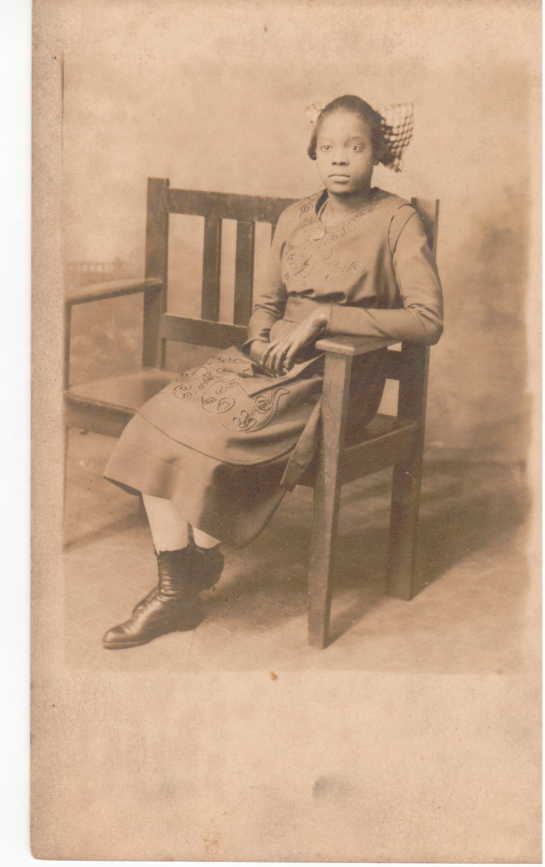
Odetta (Cox) Thomas, my great-grandmother, is practically just a name and possibly a photograph along with a death certificate and a few census records to me. She was my great-grandfather’s first wife and together they had three daughters, including my grandmother. She stayed barefoot and pregnant having all three daughters in the span of about 3 years but lost the last of those daughters at just 6 months old. She married young, probably about 14 years old and died young at 31 years old. She died from paralysis and apoplexy (presumably a stroke) due to interstitial nephritis according to her death certificate (it only took me years to decipher the handwriting on the certificate). With this information, I can’t guarantee that she had these ankles.

The last census taken during her life, one year before she died, shows that she was divorced from my great-grandfather, but her death certificate shows she was married when she died, and no name was listed for her husband. She is listed with my great-grandfather’s name on her death certificate, and he is noted as a widower before his second marriage. What’s for certain is that she was not living with him nor her children – at the time, she was a roomer in a house with her parents. Somewhere between 1920 and 1930, my great-grandparents had some kind of separation – an undocumented/unfiled divorce – and I’m left with far too many ideas of why she wasn’t living with her children. I cannot confirm where my great- grandfather and his daughters were living that year.

Without one single family story about Odetta, it’s difficult for me to even make assumptions about the way life treated her. Even though she married at such a young age, it wasn’t atypical for the time. All signs point to her death being sudden and unexpected – her age and her immediate cause of death support that assumption. She has been laid to rest in Mt Carmel cemetery in Memphis. We visited this cemetery with little hope of finding her or my other relatives buried there. The cemetery has become an “eyesore” because the company that owned it and another cemetery where prominent black people of Memphis are laid to rest went bankrupt. There was a local group who worked to clean it up some back in 2014, but as of 2017 it was still a mess. There are broken headstones, those that are now illegible, and of course I had no access to anything with a locater for the graves. As I walked through the areas that I had enough courage to enter, I thought of Alice Walker describing her experience in seeking out Zora Neale Hurston’s resting place. I had hoped to feel the souls of my ancestors there, but I can’t say that I did. What I did recall though was Mommy lamenting that she didn’t take good care of the graves – tending to them and making sure they had fresh flowers regularly – and based on what I know now she must have meant those in Mt Carmel. She believed she wouldn’t have been able to find them.

This photo post card was found in my mother’s things and based on what was written on the back of the photo, I assume this to be Odetta Cox Thomas. I want desperately to see myself in her face and in her eyes. And I really want to know about those ankles. Where is my great-grandmother’s garden and what was in it for me? At least I know her name and her mother’s name. Perhaps in speaking her name I will find her.

Peoria Cox is my 2nd great-grandmother and I know even less about her than of Odetta. Peoria’s parents remain unknown to me except that her mother was born in Mississippi, but without any name for her mother or even Peoria’s maiden name, it is difficult to find them. Even if I did find a couple with a daughter named Odetta (and possibly a sister named Mary), I couldn’t confirm them. But if she passed on these ankles, skipping generations, I will never forgive her.

My 2nd great-grandmother was born in Arkansas and I assume she moved to Memphis with her husband and children when they were young. But the earliest address I find for her is in Memphis where she had two children, including my great-grandmother. Her daughter lived with her, likely until her marriage, and then for some time before her death. Mommy once told me that losing a child was the worst pain to suffer in the world. If that’s true, Peoria surviving her daughter also means she survived the worst pain in the world. Peoria died about 5 years after her daughter. The first census after Odetta died – the last one of Peoria’s life – listed Odetta’s daughters at two different locations. The girls obviously split their time between their maternal grandparents and their father and his aunt. Peoria died when my grandmother was a young woman and Mommy was a toddler, so I also like to think that Mommy spent some time in Peoria’s arms. If Mommy’s arms ever hugged Peoria’s neck, then those same arms cradled me and by association I have been touched by all of my known mothers.

Peoria’s immediate cause of death was cerebral hemorrhage from unknown causes – another sudden and unexpected death. She lays in the same cemetery as Odetta – Mt Carmel in Memphis. We weren’t able to find her in 2017 either.

This photo hung in my childhood home, and I know I asked Mommy who she was, but I cannot remember which relative she said. Based on the information I have I am making a guess that this is truly Peoria.  I want desperately to see myself in her face and in her eyes. And I really want to know about those ankles. Where is my 2nd great-grandmother’s garden and what was in it for me? At least I know her name and her mother’s birthplace. Perhaps in speaking her name I will find her.

DNA testing identifies us with the Bamileke Tribe of the Cameroonian peoples. This testing goes back along the line of mothers, so I like to think that Peoria passed down some traditions, recipes, and rituals from Cameroon even if the daughters didn’t know the origins. I understand that many things have interrupted the passing on of our culture – Peoria is listed as mulatto on at least one piece of documentation suggesting that one of her parents was white; slavery and colonialism worked against the passing on of anything sacred; and divorce, death, and moves across country left young girls without the ones who would have passed down anything of cultural significance. But there is always something that remains imprinted on our DNA and there is a such thing as blood memory that keeps our hearts beating to the original drums. And our souls are always looking to return to our first homes – our mothers.

I am Regina Lynette, daughter of Donna Maria, daughter of Dorothy Lee, daughter of Odetta, daughter of Peoria.