10 Min Read, COVID, Donna Maria Thomas-Walker, I Am Not My Hair, Robert Samuel Walker, Smart and Pretty

I am Regina Lynette, the girl with unspectacular hair.

I can provide you a list of people who would disagree, some vehemently, that my hair is unspectacular. I can provide you a list of people who would agree with that statement. I like my hair. Itโ€™s coarse and curly, oily yet non-porous, and it is soft and shiny. Itโ€™s thick and grows relatively quickly with little breakage and requires very little product to do what it wants to do โ€“ which is be free.

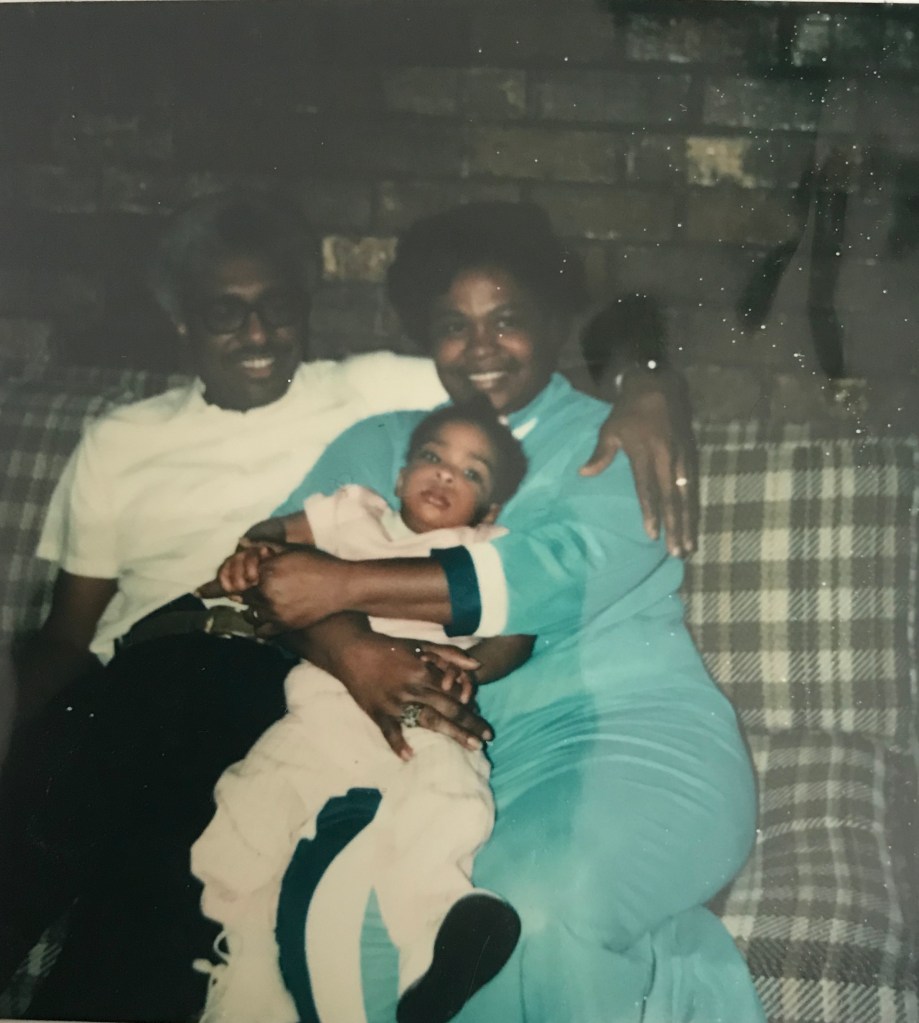
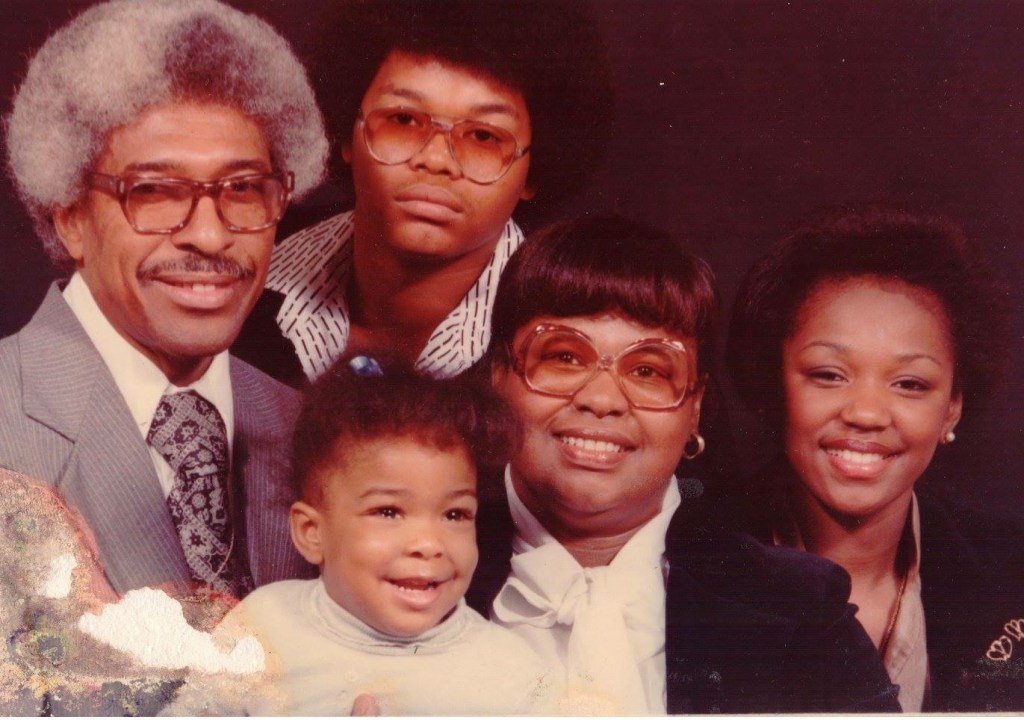
The first thing said about my hair was when I was born and Mommy said to Daddy, โ€œOh, Bob, she has your hair.โ€ She was happy that I had hair like the Walker side of my family because she found it beautiful. Based on my paternal grandmother and her children and grandchildren, our hair is coarse but soft to the touch; itโ€™s curly when weโ€™re younger and loosens into waves when older; we begin to gray young (usually stark white); and men keep it short while women keep it long (unofficial rules). My motherโ€™s hair was very coarse and relatively thick. Her hair started turning gray at a relatively young age โ€“ she kept it colored so I donโ€™t know when it started. And she kept it short โ€“ above the shoulder โ€“ and kept going shorter. I donโ€™t know the reason behind the length, so I donโ€™t know if it had anything to do with the hair growth itself.

Just months old, Mama had to tape ribbons in my hair – no velcro available in my day.

Iโ€™m grateful that the combination of my genes totals what I have today. Daddy would tell me how pretty my hair was first thing in the morning, before it had been combed and styled for the day. I asked him what he meant because my hair was wild and fuzzy, and he said that the hair in and of itself was what he found beautiful. Mommy would style it in plaits or ring curls, and I was to show it off to Daddy when she was done for him to say how pretty it was, loud enough for her to hear. People at church made complimenting my hair a part of the greeting. And whenever my kiddie hairstyle wasnโ€™t quite what someone expected, it was voiced, quite pointedly, that Mommy needed to go back to the standard plaits or ring curls and never waiver again. And what I learned in third grade was that the plaits were supposed to be free to swing. My assistant principal asked if my mom tied my plaits together in the back because she didnโ€™t want them to fly away when really they were connected because it required finding fewer matching barrettes. He was being silly but the element of truth in his joke was that he noticed Iโ€™d been wearing the same style a very long time and felt the need to comment. And the culmination of years of peoplesโ€™ opinions during my childhood taught me that my hair was part of my overall value.

Ring curls for Easter Sunday – EVERY Easter Sunday

I was not allowed to cut my hair before I turned 18. And when I turned 18, I cut my hair into a chin length bob. I cried. I loved it but I couldnโ€™t stand looking at all the hair that was piled on the floor. And I didnโ€™t touch it much at first โ€“ it was so strange not to have enough hair to pull into a ponytail. My stylist wouldnโ€™t do the cut until she received express approval from Daddy. I tried for years to convince a stylist into cutting my hair and just risking whatever punishment I might get but not one of them would do it. And he gave approval because it was promised, not because he thought cutting my hair was okay. And while it wasnโ€™t specifically stated that bob was truly the shortest I would have been allowed to go.

Cutting my hair then, for me, was about looking more mature. I thought a ponytail was for the young. Cutting my hair then, to Daddy, was part of my โ€œwandering spiritโ€. It was something to experience because I could, and he fully believed I would prefer to return to wearing my hair long. Cutting my hair to this one old lady from my church was a sin and I was on my way to hell along with my parents who allowed it and my stylist who did it. Cutting my hair to other people was wrong because there are women in the world who cannot grow their hair long.

A chin-length bob has always been the shortest length acceptable to Daddy and many of his relatives.

As an adult, I took interest in learning to take care of my hair so that I would have the freedom to wear it however I felt. In college I considered going relaxer-free for the first time. I did it without any education or planning so it wasnโ€™t successful. When I started transitioning, I wore my hair in two braids a lot and sometimes in a bun. After giving up and getting a relaxer touch-up because I truly had no direction, I was scolded for having waited so long before getting a relaxer and was told to never do that again. After trying different cuts and different hair colors I hit a sweet spot with tri-color highlights and long layers on relaxed hair. I was so excited to have found what I judged the perfect style. Unfortunately, it was not maintained by the perfect stylist and a combination of too many chemicals and trying to exercise outdoors in triple-digit temps with no hat created breakage in my crown. Breakage in the crown meant a significant cut so I took some time to figure out what I wanted to do.

A timely visit to my fatherโ€™s family made me wonder if I had what they had โ€“ Iโ€™d worn my hair chemically straightened since I was nine so I didnโ€™t know what my curls or waves would look like twenty years later. So I decided to cut off all the chemically treated hair and go completely natural. I literally went to three shops, including a barber shop, and literally no one would cut my hair. I didnโ€™t necessarily want a particular style, I just didnโ€™t want it to look like it was cut with safety scissors and edged with a butter knife. And they all refused. I made my way to a natural hair salon and during my consultation she told me that the front of my hair should grow a little longer for the cut to look good and to wait three or four months before cutting. I kept it in a protective style for those months and I did the big chop as soon as I could. I had a teeny-weeny afro with tighter curls than I imagined, and I absolutely loved what was on my head. And I learned how to take care of it, and I focused on the care and treatment of my hair intensely. I didnโ€™t necessarily show off my new cut โ€“ especially to my fatherโ€™s family – because I wasnโ€™t interested in anyoneโ€™s opinion. But that doesnโ€™t stop people from saying what they want to say. I was told that it was unattractive and to never cut it that short again by relatives on both sides. I was told by people I worked with that it made me look thinner. And I was approached everywhere I went by other black women who asked me about my stylist and products I used.
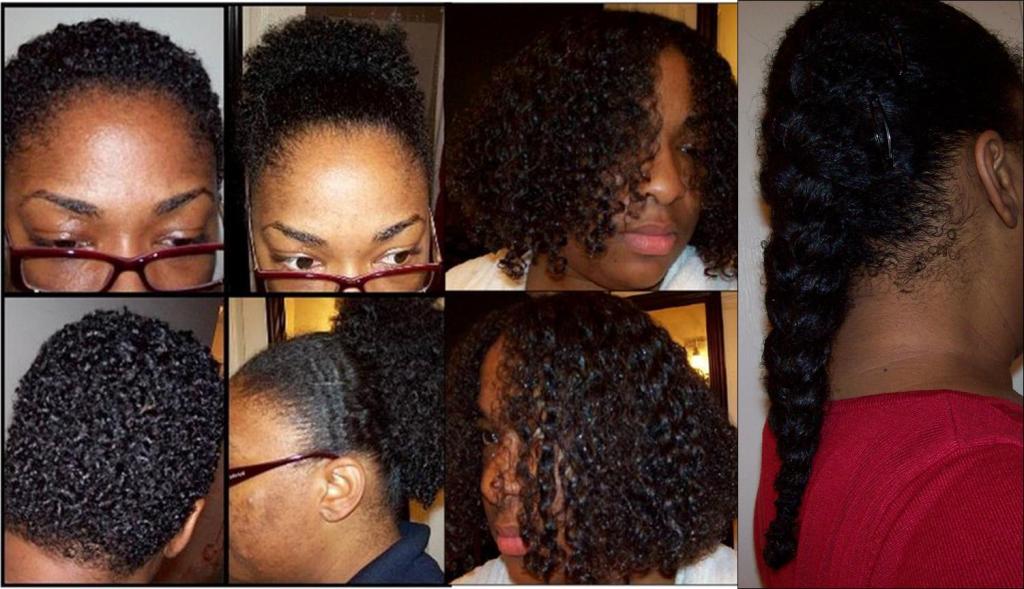
The first four years chemical free starting with my Big Chop. I didn’t even put any heat on it during that time other than a blow-out in the first year for trimming and to check out my ‘fro.

Cutting my hair then for me was a change I made primarily because it was damaged, and I wanted to try something new. Cutting my hair then for my relatives was just a temporary solution to a problem and something to endure until it was long and straight again. Cutting my hair then for โ€œsocietyโ€ was a statement of my blackness and my woman-ness and my American-ness. I wish I could have photographed the faces of all the people who had made various assumptions about me based on my hair the moment they learned they had me all wrong. And it’s funny that out of all the misconceptions, no one had the same misconception. Cutting my hair then had nothing to do with me as a person. It was the first time I didnโ€™t think my hair was part of my overall value and I was irritated when other people continued to push that message (and burden) onto me.

Along the way, in addition to releasing the idea that my hair was somehow associated with my value as a person, I realized the significance of changing your hair after certain life events. I know there are many cultures who cut their hair after deaths and other losses and to symbolize new beginnings of all kinds. I was only ever advised to never cut my hair. No one told me that the urge to cut that man out of my hair after a breakup was primal and a wonderful release. And when I gave in to that urge, just wow! And no one told me that the urge to go red was a sign of strength โ€“ whether you are strong or need to be strong, red hair can embolden you for anything that comes your way. After I graduated college, my sister called me โ€œRebel Ginaโ€ because I was angry and saying โ€œnoโ€ to everything Iโ€™d ever been taught in life. The hair during that time? Short, red, and wild.

This is NOT “Rebel Gina” but this is a short and red phase of life. It just so happens I regretted this cut myself, but I loved the color.

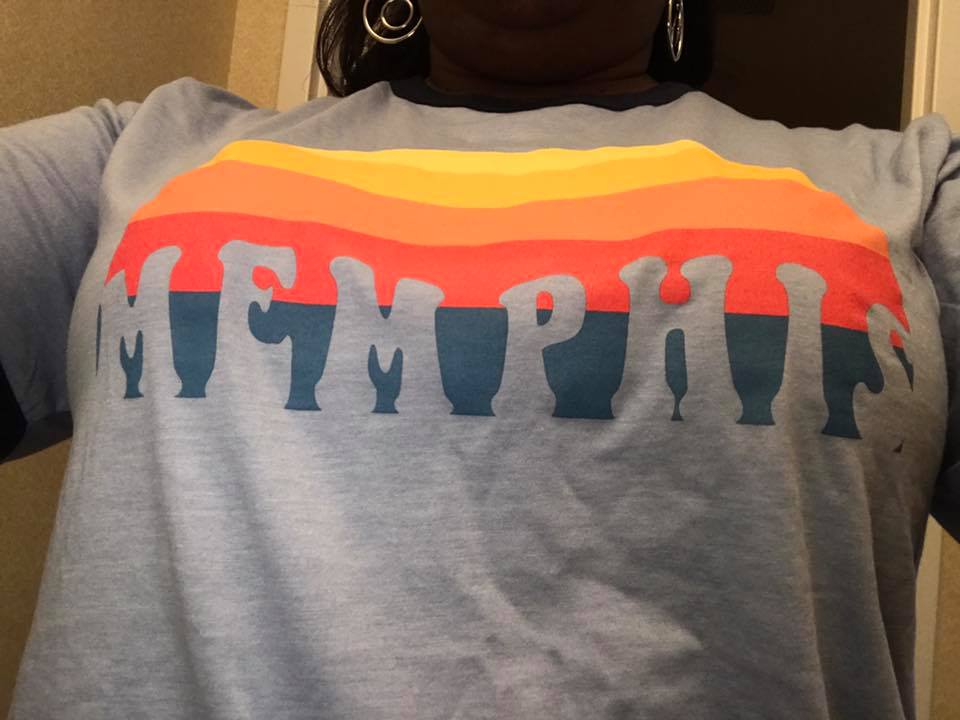
But just like when I was looking for that fat girl in old childhood pictures, I looked for the girl whose hair was supposedly spectacular. I looked for the girl who was identified in a crowd because of her hair. I searched out the girl who was somehow made better because she had something regarded unique on her head. And all I can see is that there were many other people around me who had hair that was significantly more spectacular than mine. I saw nothing particularly special about my hair. And I have the courage to admit it, the freedom to accept it โ€“ my hair is utterly unspectacular. But I understand that when itโ€™s viewed through the lenses of others who donโ€™t have the same kind of flexibility of styling that my coarse, curly, shiny, graying hair allows me that it appears to have some additional value. I no longer internalize that view because it says nothing about me and everything about them. My hair is not a part of what makes me valuable and Iโ€™d go as far as to say my hair has nothing to do with my identity. Sure, I can see where I inherited what I have from my ancestors, but apart from genetics, it has nothing to do with my identity. I use it as an expression of something or an accessory sometimes but itโ€™s no more spectacular than my earrings and graphic tees.

Fourth Grade, Oakshire Elementary School – Memphis, Tennessee

Thank you, everyone, who has complimented my hair. I feel good when you agree with me that what I have on my head allows me to be free. And itโ€™s okay if you donโ€™t like the style Iโ€™ve chosen โ€“ you donโ€™t have to remind me of better styles or try to drill it in my head that you donโ€™t like my choice. Sometimes I donโ€™t like my choice either. All of that is good but there is no value, uniqueness, nor importance in my hair.

March 30, 2020 – Just before my city went to COVID related Safer-at-Home orders. And I miss my stylist!

I am Regina Lynette, the girl with unspectacular hair.

5 Min Read, Mental Health

I love my therapist.

I am a black American Christian woman who believes in having a full-on mental health team. I also know that while I am not the only one, I know that itโ€™s not exactly commonplace yet for my demographic. Since I began my mental health journey in college, I have kept my path pretty quiet, sharing information only with people I deemed either safe spaces or emergency contacts. But I think the time has come to say more and say it publicly. This is another reason I decided to do this blog in this manner. Part of who I am includes details about my mental health journey. But you not gonna get the juicy stuff today. Today, I celebrate my current therapist.

I am a black American Christian woman who has a white American woman in charge of her *talk-therapy. And I love my therapist. This year, while watching horrific news about white people killing black people, I found myself in a mental state about racism Iโ€™d never been in before. I simply didnโ€™t want to talk to white people about anything and I didnโ€™t want white people to talk to me about anything, simply because they were white people. I didnโ€™t want apologies. I didnโ€™t want questions. I didnโ€™t want greetings or terms of endearment. I turned my nose up at the idea that a white person had words to say. And about a week before my next therapy appointment โ€“ the one that came after I realized my sensitivities to white people just because they were white – I needed to decide how I was going to talk to my white therapist. Other than the awareness of her being a white person, I didnโ€™t feel the same animosity or angst about talking to this particular white person and I tried to unpack that some before my session. I didnโ€™t do a great job.

My therapist has an artistic background, has lived in other countries, and has lived in large American cities known for diversity as well as smaller southern cities known for lack of diversity and that was enough to remind me that she was a safe space. During that session I told her that I do not want to talk to white people. She paused the session to make sure she understood what I was saying โ€“ because sheโ€™s a white person and I was talking to her. Then I tried to say I still felt she was a safe person despite my current feelings about white people and hoped I wasnโ€™t offensive. A few weeks later she reached out to me to ask if Iโ€™d heard about a therapeutic product made specifically for people of color designed by an African-American therapist.  I thanked her for seeing my color. This was summer 2020. She is still my therapist and I still love my therapist.

That anecdote says nothing about how Iโ€™ve come to love my therapist, nor does it specifically promote therapy. But that anecdote is the demonstration that a therapist to love is a therapist who is right for you and your needs. A therapist to love is one who can handle what life throws you both and can still guide you through those challenging times. A therapist to love is one who sees you clearly and respects you completely. And my therapist is a therapist to love.

When I met this therapist, I was having complications and my chronic mental illness was out of remission leaving me unstable. She was referred to me by my psychiatrist along with a nutritionist. Having had therapy for more than 20 years, I had long developed a process to make sure I got the most out of my sessions. This included self-awareness of issues that surfaced, recognition of things that just werenโ€™t working, and an acknowledgement of the level of disfunction my illness caused versus the level of disfunction my unresolved issues caused (which means I had to accept that sometimes I needed a pill and not only behavior changes).

There were a couple of problems immediately apparent to me in the first few sessions with this therapist. First, I wasnโ€™t going to be in control of this process in the way I had been with previous therapists. Second, I didnโ€™t have the energy, courage, nor foresight to take the reins of this process in the way I had done with previous therapists. Bumping up against that those first few sessions made me reconsider being under her care. I always had an introductory session or consultation before choosing a therapist and could establish my needs at that time. I just made an appointment with this therapist based on my chosen psychiatristโ€™s referral. But I decided to continue because in this case, my psychiatrist, talk-therapist, and nutritionist โ€“ my mental health team โ€“ all knew each other and could discuss my progress together and I wanted to see the benefits of that arrangement. So, I decided to โ€œlet goโ€ (which ended up being the focus for at least a year) and stopped planning for my sessions. I would just show up and follow her lead. I found that the sessions where I had absolutely nothing planned to discuss were the best sessions. We were still getting to know each other, and I wasnโ€™t really giving her much to work with โ€“ I wasnโ€™t showing up and presenting myself to her in the sessions but was open enough to let her sort of rummage around and see what we could work on. And in time, she got to know me. She got to know the characters in my life. She knew when to pause a long time because she could see me thinking. She learned when to either re-direct or end the session because it was just too much to handle. And she learned how to check in with me at the start of each session to see how to best direct our time. Now she has a better handle on me than I have on myself in some ways and I trust her with my everything. Thatโ€™s a therapist to love. And I love my therapist.

Only you know what you need from a therapist and only you know whatโ€™s most important to you in a therapist. However, when I am asked about what Iโ€™ve learned I need from a therapist and whatโ€™s important to me in a therapist, there is one thing that I consistently note first โ€“ the best professionals are artists. Creatives approach medicine with the idea that every human is different and that every human may respond differently to therapy โ€“ both techniques and medications. They understand that the patient knows more about their body and mind than anyone else and therefore require that a partnership be forged to determine a treatment plan (youโ€™ll see this in the agreements in your intake paperwork or it will be discussed during your consultation and/or first appointment). Artists use their passionate natures to fuel their progress. And the patients of creative and artistic medical professionals benefit from getting a partner who holds their hand along the very customized treatment plan to reach the pinnacle of the individualโ€™s health. They lay out a plan based on their education and experience and then stand back and look with admiration and pride at the mixed bag of tricks that the plan actually incorporates as itโ€™s executed. My first artistic doctor beamed with pride with every success I had โ€“ we had. He fought to the death my insurance companies and got pissed at the pharmaceutical companies when they caused problems with getting my prescriptions filled. He was very invested in me and taught me to be very invested in my health.

I just wanted to tell the world that I love my therapist. And I know that it is critical that African-Americans seek therapy, and that African-American issues can often only be understood well by African-American therapists โ€“ so much so that I want to acknowledge it as fact. And Iโ€™ve had both black and white therapists and had positive experiences with both. Have the courage to seek the right therapist for you whether itโ€™s gender, race, color, or any other identifiers and experiences.

I love my therapist.

*I use the term talk-therapy to refer to the sessions provided by my medical professional that rely mostly on talking. There are many different kinds of health professionals who take on this role so I use a broader term to focus on the process rather than the person’s credentials. When I use this term, usually I am separating doctors who prescribe medications from other medical health professionals who focus on a myriad of other techniques.

3 Min Read, Donna Maria Thomas-Walker, Parenting, Relationships, Robert Samuel Walker

The Elevator Story

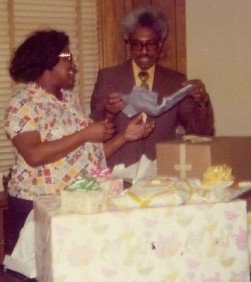
My parents met on my motherโ€™s first day of work for the Lincoln American Life Insurance Company in Memphis, Tennessee, somewhere around 1965. The story of their first meeting โ€“ literally the first time they laid eyes on each other and spoke to one another โ€“ has a little bit of fame in my family. Eyebrows raise, smiles slide across faces, sometimes thereโ€™s a little side-eye or maybe a little sneer whenever The Elevator Story is mentioned. I am fuzzy on details and the order of events but basically, there was some flirting โ€“ Daddy was being a little mannish and Mommy was being a little fast โ€“ and then we jump to a courtship, marriage, and the pleasant surprise that was me.

For me, my parentsโ€™ meet-cute is the height of romance. And I cannot tell you how happy I am that the building where they met has been declared an Historical Landmark and they have preserved the look of the elevator lobby. I feel like I get to go back to the moment in history where I first became a possibility whenever I want! For others, my parentsโ€™ meeting was not so much romantic as it was destructive.

My mother was the first Black woman hired in a professional position at Lincoln American. My father already worked there, but in a professional role. My father saw her in the lobby on her first day and got into the elevator with her. Some of the flirting involved my mother declaring that all the handsome men are already married when she noticed his wedding ring. I remember what my fatherโ€™s response was to that but whatever it was, a relationship started pretty quickly between the two and the idea of his already being married became an inconvenience to deal with many years later.

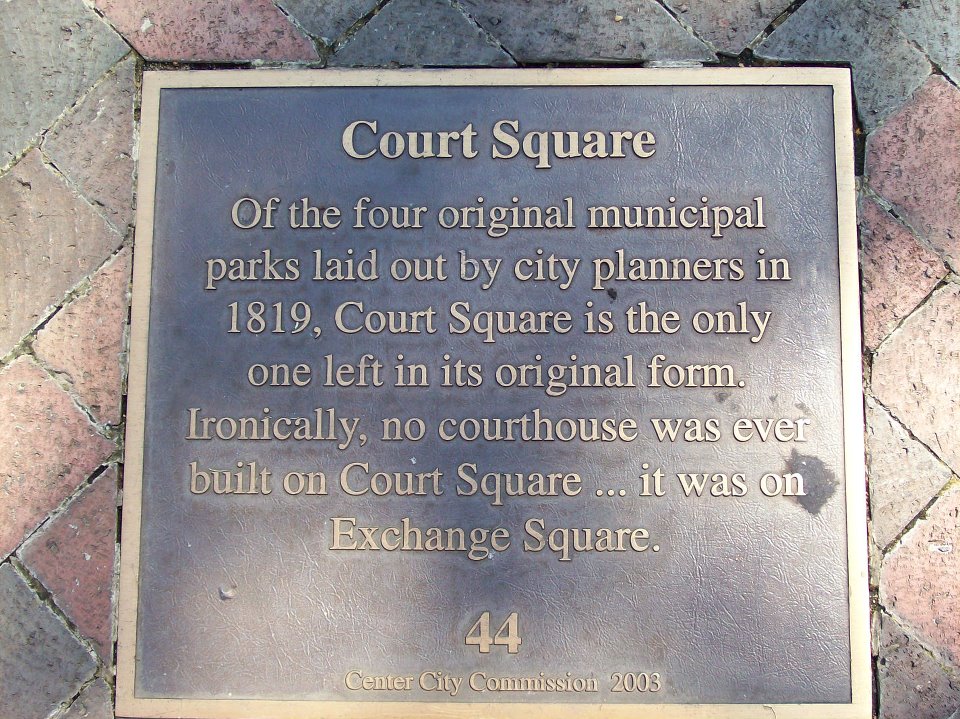
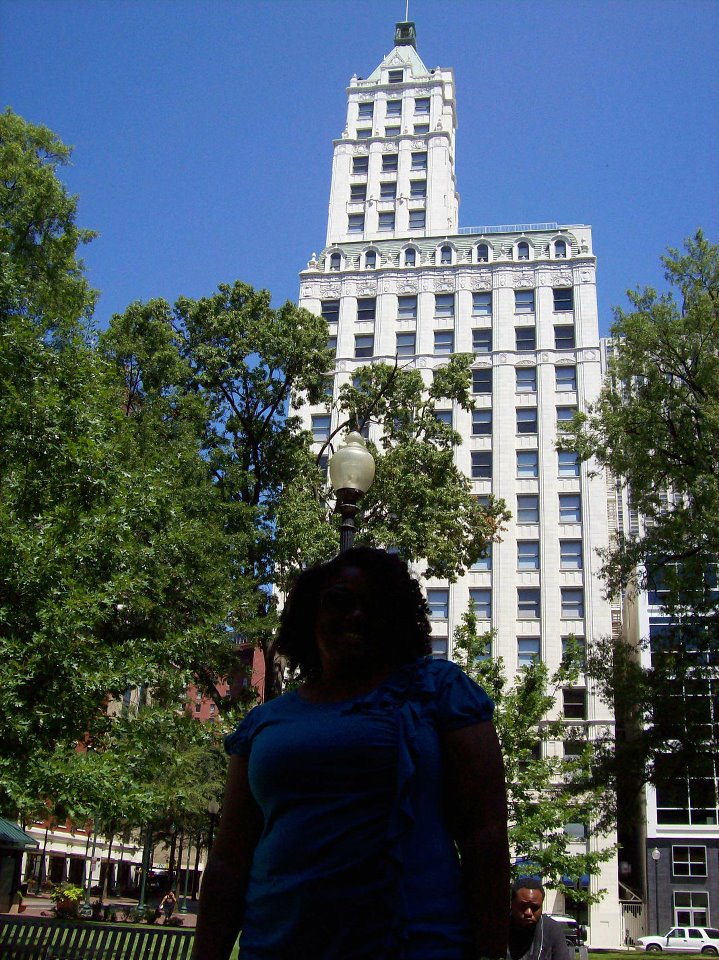
My parents worked together in the same building and saw each other on weekdays. They started spending lunch hours together and they were so in love they didnโ€™t need food โ€“ they literally made out on a bench for their lunch hour somewhere around Court Square park. They wrote letters to each other that my father kept in a box that I was never allowed to see.

My father was diagnosed with colon cancer sometime during their on-again-off-again courtship. This marked a crossroads in my parentsโ€™ lives and is one of the milestones that affected their familiesโ€™ lives. The short of it is that mommy was concerned for her man and wanted to be with him and take care of him while my fatherโ€™s wife and children believed this was a time for family, of which she was not.

Somewhere in this mix other people became concerned when they knew my parents were pursuing a serious romantic relationship which was no secret to anyone after this event. My motherโ€™s grandfather thought he was a dirty old man. Maybe because my father was closer in age to my great-grandfather than to my mother. Maybe because he was married with grown children, the oldest very close in age to my mother. My fatherโ€™s church had reservations about his ministry, particularly with his choice to recuperate at home with my mother. Some of my fatherโ€™s nephews and brothers were disappointed but were able to come around to his side very quickly.

But getting back to the fairy-tale, they had so much love between them that they shared a special hug and the love overflowed into a baby. Daddy had to get divorced and married pretty quickly. And on May 27, 1976, my mother went to work Donna Maria Thomas and returned from lunch as Donna Maria Walker. They went to the courthouse on their lunch hour and got married. They moved into a little red house in Whitehaven and had a little baby girl.

Iโ€™ve always believed my parents were soulmates. A lot of people think I feel that way because they were my parents. And several people cite the unhappy days of their marriage as proof they werenโ€™t really in love. But I was there for the little things. Itโ€™s sometimes in the way a person says your name โ€“ thatโ€™s often the first time I realize when someone is in love. Itโ€™s always in the eyes โ€“ even when you are so pissed that you donโ€™t want to look at them, when you lock eyes with your forever person, for a moment nothing else matters. And when you have so much love that it pours over and makes a baby, you spend time pointing out the things in that baby that belong to the both of you, admiring what your love has made. I believe that with therapy and patience everyone would have believed that they were truly meant to be just as I do.

10 Min Read, Brothers And Sisters, Donna Maria Thomas-Walker, Parenting

I am Regina Lynette. My parents loved me.

When I was in grammar school, standing in the school lunch line was the closest equivalent to the water-cooler conversations you could have as a child. Even though we werenโ€™t supposed to talk, we did.

I remember practicing the latest snaps from the “Men on Film” skit on In Living Color. We talked about The Cosby Show episodes. I remember having debates that included everything from the way to pronounce the words milk and pickle โ€“ I said milk and she said murk; I said pickle and she said purckel โ€“ to scriptures โ€“ I told her God is a jealous God and she swore He wasnโ€™t.

But one conversation where we shared our tips and tricks to manipulate our parents to indulge us sticks in my mind significantly, because it was the first time that I paid close attention to the fact that my parents loved me.

One of the tricks one of my friends shared with me was to pretend to cry and say โ€œYou donโ€™t love me anymoreโ€ to a negative response. It was the only trick left on the table that I hadnโ€™t tried and even though I really didnโ€™t think it would work, I held on to it planning to try it out when all else had failed. I knew Mommy wouldnโ€™t even go for it โ€“ pulling on heartstrings wasnโ€™t the way to get what I wanted from her. But Daddy was all emotion with me, so he was my target. Besides, he said โ€œnoโ€ less often than Mommy, so my odds were already increased.

The day came when Daddy was being unreasonable and not giving in to my every demand and I decided to pull out the last arrow in my quiver. I turned my mouth upside down, puckered my lips, willed tears to form, and drooped my head. I said, โ€œYou donโ€™t love me anymore.โ€ And before I could even put the period on the sentence I burst into laughter.

I tried to compose myself as I listened to my father, extremely offended and dumbfounded, telling me that he knew that I knew that he loved me. I put my hand up in surrender and between muffled guffaws, I told him I knew he loved me and that I was sorry. He told me never to say that again and I agreed. The idea that my father didnโ€™t love me was so absurd that I couldnโ€™t even pretend that he didnโ€™t.


I was born at 9:01AM in the 901 (Memphisโ€™ area code) on a Sunday morning. The story of that day is like a fairy-tale in my mind โ€“ even all these years later. I have combined my parentsโ€™ stories and tell the story with the same sweet tones Mommy used and the glimmer in Daddyโ€™s eyes.

Once upon a cold Sunday morning, a beautiful girl-child would be born. It snowed for the first time that year on her birthday, making for a picture-perfect wintry scene. Laying in a hospital bed, under rosy pink bed sheets, Mommy laid all tucked in and warm. When it was time for the little princess to be born, the doctors came in, opened Mommyโ€™s tummy, and gently lifted her up and out of the womb. Mommy and Daddy were so proud of their perfect baby girl and beamed when they admired her every little detail. She had all her fingers and toes and weighed 8 pounds and 11 ounces. Mommy said, โ€œOh Bob, she has your hair.โ€  Then they passed her on to the family friends who came by to witness the birth of this little girl-child. One of those gentlemen held her and commented, โ€œShe looks just like a little Indian!โ€ and then the baby sneezed on him. Mommy had to stay in the hospital longer than was necessary for her youngest daughter, so she spent time recovering in the hospital holding her newborn and feeding her from a bottle.

At the end of their story โ€“ along with the embellishments from my very active, creative, and detailed imagination โ€“ I felt like the entire world rejoiced at my presence. My youngest sister insisted that my birthday be celebrated separately from the Christmas holiday because I was born almost 2 weeks before Christmas. My youngest brother rescued me from all the love that just gushed out of my familyโ€™s hearts in the form of hugs and kisses when my introverted self could take no more. And I had made life special for everyone because they had been blessed with the opportunity to spoil me. There is no way I could feel that way except that my parents made me feel that way โ€“ because the story I just told you was loosely based on short answers given to an inquisitive child.

As an adult I heard other events of that day and better understand some of the details. Snow in Memphis wasnโ€™t exactly uncommon in that time, but snow in Memphis was seldom a Winter Wonderland. And if it was, the whole city shut down and that would be a major inconvenience in trying to get to and from the hospital. I was a rather large baby and it would be dangerous for Mommy to give birth naturally so she needed a c-section. And since they recommended the c-section, she decided it was time to officially close shop and have those tubes tied. Have you seen the way doctors yank babies from their mothersโ€™ wombs during a c-section? I have. Itโ€™s not glorious nor gentle. Mommy was on morphine for pain after her surgery. She said it made everything beautiful. One time while feeding me from a bottle, she fell asleep. When she woke up, I wasnโ€™t there. She very nervously looked over the sides of the bed to see if I had fallen to the floor โ€“ and I guess died if I wasnโ€™t crying, right? But then the nurse brought me back and fussed at Mommy (gently) for falling asleep with me in her arms, telling her to be sure to call the nurse if she felt sleepy while holding me. And when the doctors asked if she wanted a prescription for the morphine when she was released, she refused it. Because it made everything so beautiful she decided it was dangerous and didnโ€™t want to risk a habit forming. And my sister, the one so insistent about how I should be treated, was looking for her boyfriend who happened to be in the hospital while I was being born. I have never heard a thing about what my brother was doing on that day. His recollection of my going to him to get away from everyone else was likely after I was walking โ€“ or at least crawling โ€“ because, though precocious and smart, I donโ€™t believe I was able to communicate a need to be taken to my brother to be left unbothered the day I was born. I was swollen on my birthday and Mommy was disappointed that whoever was involved in having my picture taken at the hospital didnโ€™t lift me up high enough for my eyes to open more โ€“ they had to know I was swollen and if I was to have a good picture, I needed to be arranged properly.

All the characters in this story. This is posted without their permission so don’t tell them.

The โ€œrealโ€ story isnโ€™t exactly like a picture book tale, but itโ€™s still beautiful. The most important part of that story isnโ€™t in the details of either version. My parents loved me. And I knew it without any shadow of a doubt. That love would take me through the years that Mommy was not present because she suffered from undiagnosed depression. That love carried me through the years that my father abandoned me emotionally because of a mistake he made when trying to give me what he thought I needed. That love is why I know when someone is lying to me about love or being manipulative citing love as the reason for bad behavior. I know real and true love. And because I have known it forever, I have no idea how to explain it. In all my relationships, despite any personโ€™s missteps, I know what it feels like to be loved and I reject anything less from those who proclaim love.

I am Regina Lynette. My parents loved me. (I use past tense because they are both deceased.)

10 Min Read, Bookish, Donna Maria Thomas-Walker

I am Regina Lynette. And I am a proud Book Lover.

I grew up in a family of readers. My parents invested heavily โ€“ with their own sweat equity โ€“ in my reading and education. I was reading by age three and no matter what word I was facing, they insisted that I knew how to read and refused to accept my asking what a word was or telling them I didnโ€™t know it. I began to believe them. I approached everything with the attitude that I knew how to read and therefore I knew how to read all the words. What they obviously wanted me to do was try on my own, develop my own understanding of phonics, and extrapolate my learning independently. Because when I read Chevrolet starting with a ch- like in cheese and ending with a hard t sound, they corrected me quickly with a laugh. And they corrected my mispronunciation of Arkansas โ€“ I just stuck an ar- sound in front of the Kansas – with a tone that I understood to communicate that they were proud of me.

I was in kindergarten the first time I saw any library. Once a week we went to the school library as a class to select a book to read for the week. Mommy was very excited by this prospect and when she asked me about my experience it was with the energy of a little girl opening a present on Christmas morning. She couldnโ€™t wait to hear about it and to see the book I selected and expected to be bathed in a euphoria of hope for her child. Unfortunately, she was very disappointed. I explained to her that we were assigned a table with about five children or so, that had a stack of five books or so in the middle to choose from. We could begin reading our books at the table and then weโ€™d do it all again the following week. Mommy was not only disappointed in the book I chose but in the whole system. But she figured if I selected the biggest and hardest book on the table, we could still get to whatever it was she expected would result from my reading and going to the library. That following week, she was more disappointed to see what the hardest book on the table was and gave me a new directive. I was to ask the librarian if I could select my own books from the shelves and this met with a quick no from the librarian. I wonder if itโ€™s important to note that the first time I saw the quote โ€œIgnorance is blissโ€ was on a poster hanging on this librarianโ€™s desk. Anyway, Mommy took matters into her own hands that very evening โ€“ we went to the nearest public library to get my first library card.

The very beginnings of my bibliomania started the first day I entered a public library. The library was not far from our house, but we headed there with haste because they would be closing soon. The goal was to get a library card and then to learn how to pick books to read. Weโ€™d return the following Saturday to actually pick books. I have audibly gasped entering two buildings in my life. The second was in 2018 at Basilique Du Sacrรฉ-Cล“ur de Monmartre in Paris, France. The first was the Whitehaven Public Library in Memphis, Tennessee in 1981.

Iโ€™ll be describing my experience from the perspective of that five-year-old girl in 1981 entering her first public library going forward. Itโ€™s important that I explain that because if you know the Whitehaven Public Library (or ever visit it โ€“ if itโ€™s still there) you will be perplexed by my description.

When we flung open the doors to the library, I gasped in awe, and Mommy was so pleased. There were books EVERYWHERE! And there were people โ€“ and by people I mean children my age โ€“ looking at books and there were just so many! Who knew there were so many books in the world just for children? The sections for childrenโ€™s books seemed larger than the entirety of my school library. I was about to explode. Mommy calmed me and we walked over to the desk to request our library card. I couldnโ€™t look away from the world of books that was about to be all mine.

The second thing that happened that would change my life was Mommy asked that the library card be in my name. Oh that woman โ€“ actually both women, my Mommy and the librarian โ€“ became good fairies when they insisted I have my own library card. I never had anything in my own name before and surely this thing would give me immeasurable power. And then she took us on a tour to show me all the sections of books that were available to me. All three of us beamed that evening.

I got my card and I couldnโ€™t resist taking a few books home so I filled my arms as quickly as I could until Mommy stopped me and we checked out. To my disbelief, I would have these books for what felt like an eternity. That these guardians of wonderful books trusted me to care for them, read them, and return them in that much time โ€“ I was dumbfounded. And a book enthusiast had found her happy place at just five years old.

Forget that little school library because it wasnโ€™t for people like me. It was for people who werenโ€™t as intimately involved with the written word as people like me and still needed to be gently introduced to the world of reading and of books. Iโ€™d also found my people and the best part about my fellow bibliophiles was that there was no age restriction in this group. For the first time in my life children were regarded with the same respect as adults and I felt empowered.

The last time I visited the Whitehaven Public Library was while in high school. I felt like there was barely room for three books and it looked quite small and sad. I stopped going inside because I didnโ€™t want it to lose the grandeur Iโ€™d projected onto it as a five-year-old. And it will forever be sacred to me.

I am Regina Lynette. I am a book lover.

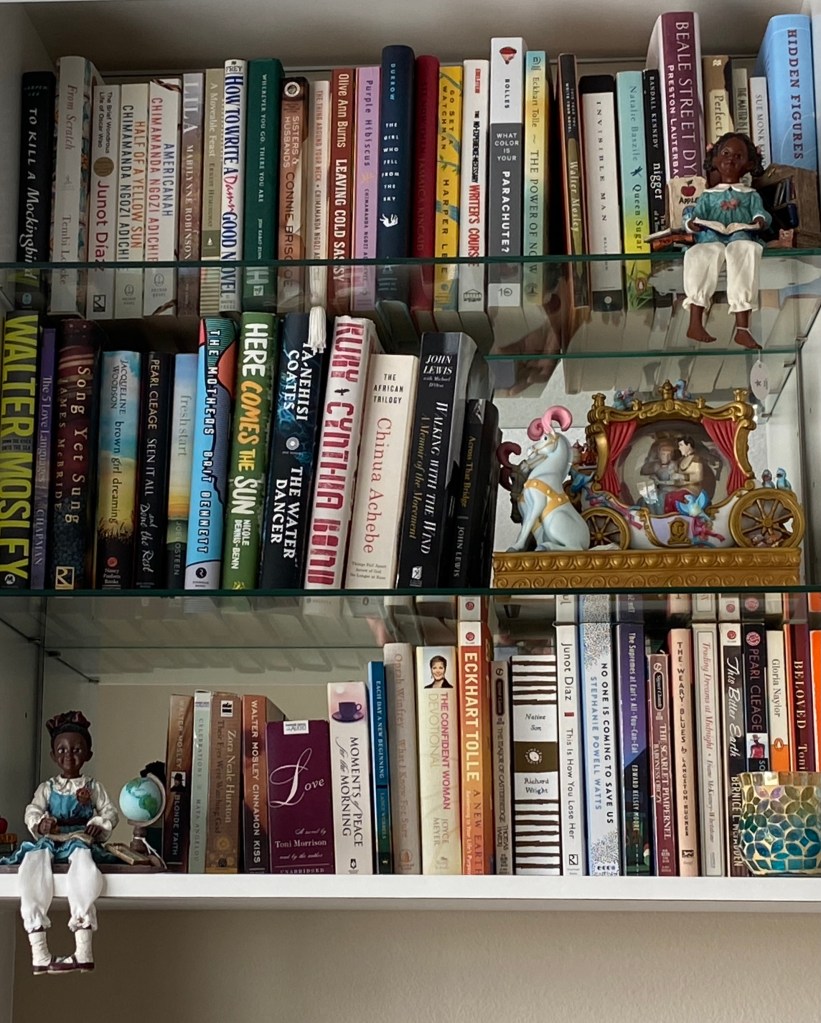
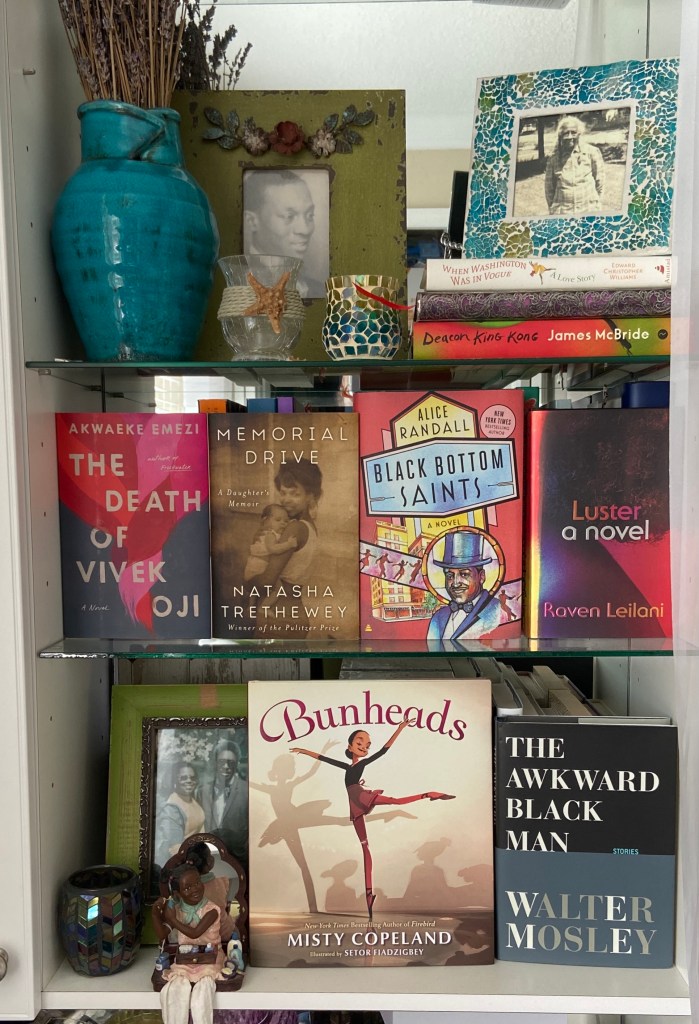
* I’ve curated a Bookshop storefront where you can shop titles from my shelves. Click the Bookshop link above or click HERE to see the books I’ve purchased and read for 2020. I am an affiliate of Bookshop.org and I will earn a commission if you click through and make a purchase.