5 Min Read, Brothers And Sisters, Donna Maria Thomas-Walker, Mental Health, My Body, Parenting, Robert Samuel Walker, Smart and Pretty

I am a Fat Woman. And I don’t love that Fat Woman.

The women in my life during those tender years when a baby girl starts imagining what she will become when she’s older were my mother and her second child (Sissy). Mommy was 34 years old when I was born, and I was her third child. And in the end she found I had stolen her girlish figure and threw it in the trash when she wasn’t looking. To little girls imagining what she will become when she’s older, a person who hates her own body is not the person you want to become. So this little girl looked to her older sister.

Sissy was 14 years old when I was born. And what I didn’t know then but would soon realize, God didn’t design me to be my sister’s twin. And to make sure I was never confused about His intention, in His infinite wisdom and with His ultimate creative self He made us opposites in nearly every way but gender and race.
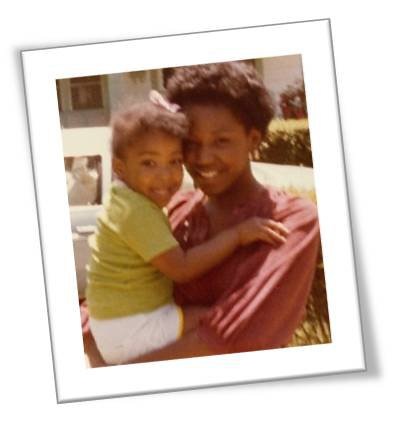
Me and Sissy

When I could see that I was already “curvier” than Sissy somewhere around age 5 (19 for her) I wanted to start dieting. Mommy was forever on a diet so I wanted to get started early so I could make sure I grew up to look like Sissy and not Mommy. Well, I don’t know what you tell a mother who understands exactly why her 5-year-old little girl wants to diet – the world was still calling her “healthy” – and also knows that it’s completely unreasonable for her 5-year-old little girl to go on a diet. It would take a couple years but unfortunately, Mommy eventually gave me her blessing and we dieted together well before my first signs of puberty. She was careful to monitor my dieting and modified it according to whatever standards she thought best and we added intentional exercise to the regular roller skating, bike riding, and running I did while playing with my friends. And I always managed to lose some weight but never in the places I wanted and never enough to keep me from being called “healthy”.

Me and Sissy

God was also constantly reminding me that I was not created in the image of Sissy. To really hammer it in that I was not her twin, He showed me just how different we would forever be. She was pregnant when I was 12 years old. In her early pregnancy, you know those weeks where your clothes are just starting not to fit but you’re not quite ready for maternity wear, was the first step toward my resignation of my fat-girl destiny. My clothes were the clothes she borrowed when her own were too tight. In case you didn’t catch it, at 12 years old, my 26-year-old pregnant sister needed to borrow my clothes. My 12-year-old clothes were maternity clothes for my 26-year-old sister. I blamed this one on God even though I was angry at the entire world around me. It just wasn’t fair.

Me and Sissy

Just before I went away to college I weighed myself and started accepting my fate as a fat-girl with less anger. I was what I judged too close to my father’s weight at the time. And then my only goal became to always weigh less than he – a man 4 inches taller than me and slim with long limbs. The day I outweighed him, I went to the “fat-girl” shops to find something large enough to drape my sow-shaped body and found little solace in the fact that the smallest sizes were too large. I was struggling to find my size – how could I be fat at Lerner New York and skinny at Lane Bryant? I couldn’t understand it and hated my body more. I resorted to what I’d done my entire life – diet and exercise and lose a few pounds, giving up after not losing enough weight and not in the right places.
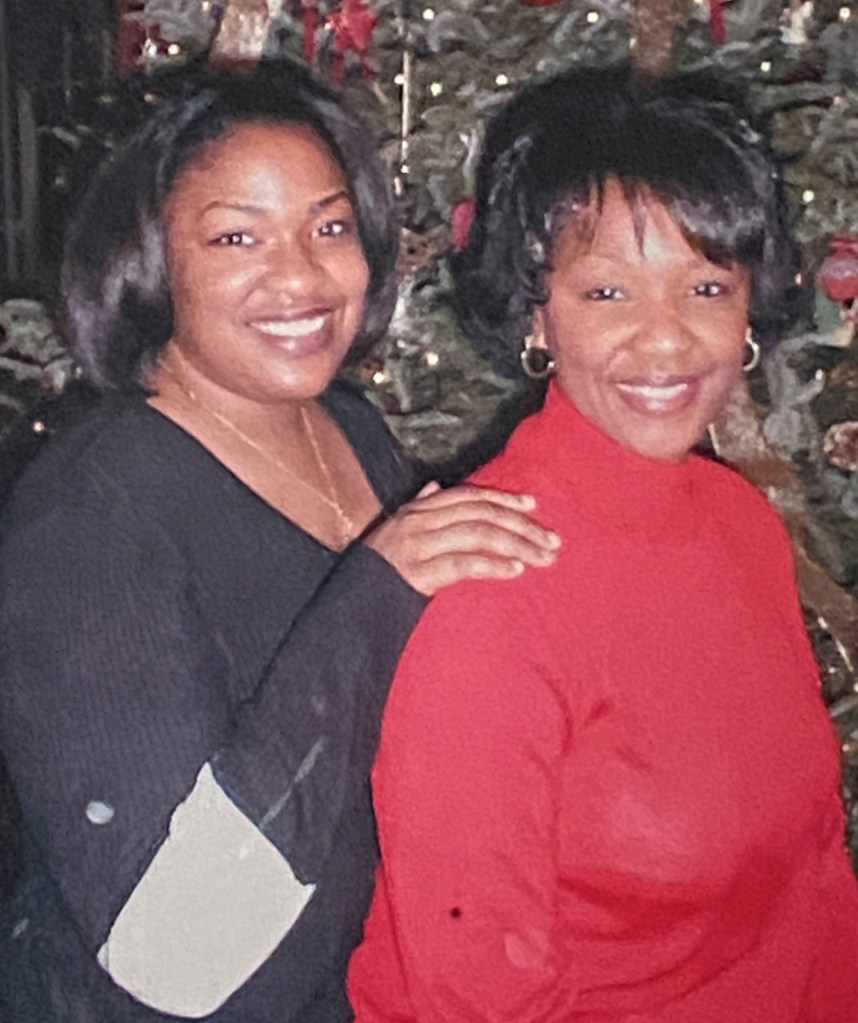
Me and Sissy

I would repeat this cycle until 7 years ago when I just gave up. I don’t imagine I’ve given up forever, but I am still stuck in the give up. Just before I gave up I had lost over 40 pounds and was very excited about my progress. The first blow was that my bloodwork didn’t show enough improvement to match the effort I was putting in. The second blow was when I looked back on some photos of me as a kid and I didn’t see a fat girl looking back at me. I felt betrayed by all the people who had called me “healthy” when I was a perfectly average little girl. It was enough to push me over the edge into a depression that would take nearly a year to climb out of (with medication and talk therapy) having regained all but ten pounds of the weight I’d lost.

Me and Sissy

I had always believed that I was a fat girl. But I also had always been told (and believed) that I could fight it and become what I’d always wanted anyway – slim. And I am not sure if we’re in the middle of that story or the end.

I am a Fat Woman. And I don’t love that Fat Woman.

5 Min Read, Mental Health

I love my therapist.

I am a black American Christian woman who believes in having a full-on mental health team. I also know that while I am not the only one, I know that it’s not exactly commonplace yet for my demographic. Since I began my mental health journey in college, I have kept my path pretty quiet, sharing information only with people I deemed either safe spaces or emergency contacts. But I think the time has come to say more and say it publicly. This is another reason I decided to do this blog in this manner. Part of who I am includes details about my mental health journey. But you not gonna get the juicy stuff today. Today, I celebrate my current therapist.

I am a black American Christian woman who has a white American woman in charge of her *talk-therapy. And I love my therapist. This year, while watching horrific news about white people killing black people, I found myself in a mental state about racism I’d never been in before. I simply didn’t want to talk to white people about anything and I didn’t want white people to talk to me about anything, simply because they were white people. I didn’t want apologies. I didn’t want questions. I didn’t want greetings or terms of endearment. I turned my nose up at the idea that a white person had words to say. And about a week before my next therapy appointment – the one that came after I realized my sensitivities to white people just because they were white – I needed to decide how I was going to talk to my white therapist. Other than the awareness of her being a white person, I didn’t feel the same animosity or angst about talking to this particular white person and I tried to unpack that some before my session. I didn’t do a great job.

My therapist has an artistic background, has lived in other countries, and has lived in large American cities known for diversity as well as smaller southern cities known for lack of diversity and that was enough to remind me that she was a safe space. During that session I told her that I do not want to talk to white people. She paused the session to make sure she understood what I was saying – because she’s a white person and I was talking to her. Then I tried to say I still felt she was a safe person despite my current feelings about white people and hoped I wasn’t offensive. A few weeks later she reached out to me to ask if I’d heard about a therapeutic product made specifically for people of color designed by an African-American therapist.  I thanked her for seeing my color. This was summer 2020. She is still my therapist and I still love my therapist.

That anecdote says nothing about how I’ve come to love my therapist, nor does it specifically promote therapy. But that anecdote is the demonstration that a therapist to love is a therapist who is right for you and your needs. A therapist to love is one who can handle what life throws you both and can still guide you through those challenging times. A therapist to love is one who sees you clearly and respects you completely. And my therapist is a therapist to love.

When I met this therapist, I was having complications and my chronic mental illness was out of remission leaving me unstable. She was referred to me by my psychiatrist along with a nutritionist. Having had therapy for more than 20 years, I had long developed a process to make sure I got the most out of my sessions. This included self-awareness of issues that surfaced, recognition of things that just weren’t working, and an acknowledgement of the level of disfunction my illness caused versus the level of disfunction my unresolved issues caused (which means I had to accept that sometimes I needed a pill and not only behavior changes).

There were a couple of problems immediately apparent to me in the first few sessions with this therapist. First, I wasn’t going to be in control of this process in the way I had been with previous therapists. Second, I didn’t have the energy, courage, nor foresight to take the reins of this process in the way I had done with previous therapists. Bumping up against that those first few sessions made me reconsider being under her care. I always had an introductory session or consultation before choosing a therapist and could establish my needs at that time. I just made an appointment with this therapist based on my chosen psychiatrist’s referral. But I decided to continue because in this case, my psychiatrist, talk-therapist, and nutritionist – my mental health team – all knew each other and could discuss my progress together and I wanted to see the benefits of that arrangement. So, I decided to “let go” (which ended up being the focus for at least a year) and stopped planning for my sessions. I would just show up and follow her lead. I found that the sessions where I had absolutely nothing planned to discuss were the best sessions. We were still getting to know each other, and I wasn’t really giving her much to work with – I wasn’t showing up and presenting myself to her in the sessions but was open enough to let her sort of rummage around and see what we could work on. And in time, she got to know me. She got to know the characters in my life. She knew when to pause a long time because she could see me thinking. She learned when to either re-direct or end the session because it was just too much to handle. And she learned how to check in with me at the start of each session to see how to best direct our time. Now she has a better handle on me than I have on myself in some ways and I trust her with my everything. That’s a therapist to love. And I love my therapist.

Only you know what you need from a therapist and only you know what’s most important to you in a therapist. However, when I am asked about what I’ve learned I need from a therapist and what’s important to me in a therapist, there is one thing that I consistently note first – the best professionals are artists. Creatives approach medicine with the idea that every human is different and that every human may respond differently to therapy – both techniques and medications. They understand that the patient knows more about their body and mind than anyone else and therefore require that a partnership be forged to determine a treatment plan (you’ll see this in the agreements in your intake paperwork or it will be discussed during your consultation and/or first appointment). Artists use their passionate natures to fuel their progress. And the patients of creative and artistic medical professionals benefit from getting a partner who holds their hand along the very customized treatment plan to reach the pinnacle of the individual’s health. They lay out a plan based on their education and experience and then stand back and look with admiration and pride at the mixed bag of tricks that the plan actually incorporates as it’s executed. My first artistic doctor beamed with pride with every success I had – we had. He fought to the death my insurance companies and got pissed at the pharmaceutical companies when they caused problems with getting my prescriptions filled. He was very invested in me and taught me to be very invested in my health.

I just wanted to tell the world that I love my therapist. And I know that it is critical that African-Americans seek therapy, and that African-American issues can often only be understood well by African-American therapists – so much so that I want to acknowledge it as fact. And I’ve had both black and white therapists and had positive experiences with both. Have the courage to seek the right therapist for you whether it’s gender, race, color, or any other identifiers and experiences.

I love my therapist.

*I use the term talk-therapy to refer to the sessions provided by my medical professional that rely mostly on talking. There are many different kinds of health professionals who take on this role so I use a broader term to focus on the process rather than the person’s credentials. When I use this term, usually I am separating doctors who prescribe medications from other medical health professionals who focus on a myriad of other techniques.

3 Min Read, COVID, grief, Mental Health, Parenting

DIY Stress Kits Are Necessary

I’m a crybaby. It’s one identifier that I’ve accepted even though it’s used as an insult. Angry, enraged, pissed off, I cry. Happy, laughing, in awe of something beautiful, I cry. Scared, startled, fearful, I cry. A cold, the flu, allergies, I cry. Depressed, sad, grieving, I cry. I even cry when someone else is crying. Thus, I embrace being a crybaby because my default expression of most emotions is to cry.

Once I went to a professional development conference and attended a session on stress management. At the start of the session the leader asked us to all take a deep breath. I took a deep breath and exhaled in tears, sobbing really. Once I had a confrontation with an abusive supervisor – with HR in attendance but offering no assistance – and was grateful that it was over the phone because I cried, wept really. Once I had an allergy attack during an interview for an internship and had to quickly explain the tears streaming down while answering questions about why I wanted to work with them. And the worst – believe it or not – was when I cried silently during a staff meeting. It was the worst because there was no provocation. My home life was particularly stressful at the time and I was okay as long as I was moving around and working but sitting still for two seconds was too much time with my thoughts. Embracing being a crybaby does not mean I embrace crying at work for any reason at all.

After crying during the stress session and the supervisor confrontation, I quit those jobs. After crying during the interview, I got the job, one of the best I’ve ever had. After crying during the staff meeting, I went to a counselor.

This wasn’t my first time seeking a professional mental health provider. In college I sought help for sexual abuse from a counselor. After college I was diagnosed with a mental health disorder managed by a psychiatrist. I sought grief counseling from a psychotherapist. I recognized that I needed help and had the courage to find it. Thankfully, as part of my benefits at that job, I had access to six free counseling sessions – designed to refer you to more permanent situation – that were located walking distance from my office. I made an appointment that I was able to take on my lunch break.

I had 30 minutes with this counselor, so I took over the session from the start, speaking as quickly as possible, listing all the stressors going on in my life. This guy tightened his face with every situation I mentioned and at the end of my list I thought he was going to crumble. Then I told him that I wasn’t looking to deal with all of those issues right away, but that I just needed not to cry during staff meetings anymore. He audibly sighed his relief and gave me a list of self-soothing activities to try. He told me to keep a container with some tools in my car, at home, and at work, to use whenever the stress proved overwhelming. I called them stress kits.

I read the list on my way back to the office and then thought about the best way to approach this stress kit. Reflecting on the simple moments of bliss in my past, I set out to include items from those moments. I added a mug (for tea), a small jigsaw puzzle, and an Ella Fitzgerald CD. On my two 15-minute breaks and during lunch at work, I hid away in a small conference room that I could lock. I made jasmine green tea, listened to Ella Fitzgerald’s Love Songs: Best of the Song Books, and worked a small Thomas Kinkade puzzle. I kept to an actual schedule for a couple of weeks and it helped significantly. There was no more crying at work. After a couple of weeks, I skipped the lunchtime stress break and soon I didn’t use the kits preemptively but as needed to combat anxiety and stress.

The last year has been taxing for the entire world. Surprisingly, I managed the confinement relatively well. The public displays of the brutal murders of my people, reminding me of just how little our lives mean to some, made things more intense but I was still managing fairly well. The deaths of major civil rights activists were hard, but I was hanging in there. I had to confront the fact that I needed to search for a job – something I knew I should have been doing for a long time but didn’t have the energy nor mental space to start – because I am running out of time to make sure there is no gap in employment, but I have a plan and a backup plan and an emergency plan and some last resort plans. Then the election hit and boom – regular anxiety attacks.

I have prescription meds to help manage my anxiety, but I only have to take half a dose and that rarely. During the election, I found I needed a full dose almost daily. I believe in taking medication to help the body recover whether it’s healing an ailment or managing symptoms. But I also have a subconscious belief in spite of education that all medication is temporary, and I try to avoid taking anything that can be habit forming or that has to be increased over time for effectiveness. My doctors have actually encouraged me to take more anxiety meds than I’m willing to take. After a week of taking pills I remembered my DIY stress kits.

With more education on stress relief and more tools at my disposal, I made a more robust kit. I made sure to pay attention to the senses – sight, taste, touch, sound, and smell. And two more senses I’ve recently learned about – vestibular/movement and proprioceptive/comforting pressure have been addressed in this kit. I still have Ella Fitzgerald as part of the kit because her voice has literally lowered my blood pressure from high to normal within a two-minute period. And I still have tea, but I use my fancy tea kettles and cups instead of a mug. In addition to jigsaw puzzles, I have coloring books. I incorporate incense and candles – usually something spicy. I either take a brief walk or rock in a swing. And I have a weighted blanket that I keep nearby to lay under for up to half an hour.