10 Min Read, Donna Maria Thomas-Walker, Family, grief, Holidays, Mental Health, Parenting, Relationships, Robert Samuel Walker

I hate Mother’s Day.

As a child Mother’s Day was not a huge deal to me specifically. It was always hot that Sunday. I would usually have a new shorts ensemble. I don’t think it was a “ring curls” event but I can’t really remember and for some reason I can’t find a single photograph from Mother’s Day. And as a motherless child with a dream of parenting deferred, it was hell and now it’s just unpleasant. But I remain slightly melodramatic and declare I hate Mother’s Day.

At my church – the place where I was baptized and a member until my last year of high school, Mother’s Day events happened for my family mostly on the Sunday and Saturday before. We still attended whatever rehearsal or practice or meeting that was scheduled even though we weren’t going to be in town on that Sunday. And at the end of either the Sunday before Mother’s Day or on that Saturday just before the day, we’d go to the ladies with the trays of corsages – carnations made from tissues – in red and white. I can’t be certain, and it doesn’t seem quite right, but in my mind the ladies were selling these faux carnations. We received 3 – white for Daddy and red for me and Mommy. Remembering this transaction means this memory happened only a couple years but they were obviously poignant years. It was after Grandmommy died and before Dorothy died. (Mommy’s mother was always identified by her first name instead of any version of Grand Mother.)

And for a period of time, I remember the 3 carnations – one white and 2 red – carried a little bit of pride and a little bit of sadness. I was sad that Daddy had to wear a white carnation, but he seemed to wear it proudly. And I took on that emotion and carried it as if it were my own. I was sad that Mommy wore a red flower and as she pinned it on her left side she’d always say, “I don’t know if my mother is dead or alive so I will wear red. I hope she’s still alive.” She was sad, but hopeful to some degree and I took on that emotion, added it to Daddy’s, and carried it as if it were my own. And then she pinned my red flower on my left side, and I was proud. My mommy was still alive, and I saw her every day and I knew for sure that she loved me. I chose to put my feelings in my back pocket, carrying my parents’ emotions as an expression of loyalty. Even though she received the tissue carnations from the church ladies, we usually wore a different faux flower, a pretty one that Mommy bought, to go to Mississippi.

If my memories are accurate, we went to Corinth and Rienzi in Mississippi – the place Daddy always called home – every Mother’s Day until I graduated high school. I don’t remember the years before Grandmommy’s death vividly – just little flashes of only her like when she saved me from a grasshopper and would have to call me out to come and greet her because I was too shy to just jump in and hug her when we got to her trailer on my uncle’s land. I’d hang outside the door or against a wall, maybe hiding behind Daddy’s leg until she asked about me.

We dressed in our Sunday best, I remember Daddy wearing his clergy collar and I felt like it made him royalty for a Sunday. We’d get into the car and drive toward the country. We would make one stop before heading to church – the church I always believed my entire family for generations belonged, even though truthfully I don’t know for sure how many generations before my father’s attended that church.  We’d stop where Grandmommy was buried, beside the grandfather I never knew and Daddy would go alone. Then we were off to Mount Pleasant Missionary Baptist Church. On the way to finding a seat we’d speak to everyone – I told you I felt like Daddy was royalty that day, greeting all of the parishioners who seemed so excited to see him. I determined after all those greetings that we were related to no less than half of the congregants. Daddy preached the sermon. My aunties and cousins sang in the choir. My uncle was a deacon and usually led devotion. After the service was over we spoke to the people we missed or who arrived late. This is when I tried to figure out how I was going to ride to my uncle’s house with my uncle. Most of the time that meant finding his wife, my auntie, because she always just told me I was going with them. There was no asking permission and no risk of hearing “no”. Uncle would always call me his “pretty little niece” when we greeted and for some reason my braids and shoes didn’t feel so tight anymore. We’d head to my uncle’s house where I’d change into my shorts ensemble to play with my cousins. Sometimes we ate at my auntie’s house in Corinth and sometimes she came to my uncle’s house in Rienzi. The fried chicken – Grandmommy’s recipe – was the star of the meal for me. After filling up on dinner and getting to have sodas – pops – without permission (carbonated water irritated my system so they were off limits) I spent the rest of the day playing with my cousins. We’d return to the city (Memphis), and we’d do it all again in one year’s time. Nothing about that day meant Mother’s Day to me. It might as well have been called Mississippi Day.

When I was 6 or 7 years old, Dorothy surfaced. She was dying of cancer and the family who had been estranged to Mommy for what seemed my entire life were calling her to California. After what felt like an eternity of Mommy sitting at her mother’s bedside, she came back home to me. But Dorothy took another turn without Mommy with her, was refusing to obey some doctor’s order – like eat or something – and was calling for Mommy to return to her. I wanted to go but she was going for an indefinite period of time and I had school. Dorothy died a few days after she returned to California and it ended up being about 2 weeks from the time she returned to California, Dorothy died and was cremated, and Mommy returned home to me. The next 4 or 5 Mother’s Days, mommy wore a white flower. Even though she seemed sad, she also seemed relieved to a degree. She would shed a couple tears, but I think just knowing for certain whether Dorothy was dead or alive was enough. I also think whatever happened in Dorothy’s last days allowed Mommy some closure if not a repair of over 40 years of a challenging mother-daughter relationship and she could more easily wear that white flower.

Two weeks after my 13th birthday, I lost my own mother. That first Sunday going to Mississippi the only assertion of my own rights (as opposed to unspoken rules) was to wear a white corsage, one that chose and found beautiful, and I wore a white dress. Even though I had been sitting alone at church services for about 5 months, that Sunday felt particularly lonely. And it was the last time I would wear a white flower. The main reason was because that white flower served no purpose to me and all it did was made me angry. But the secondary reason was because people – I think Daddy was one of them – told me to wear a red flower because I had a step-monster the next year. I hated the entire system of red and white flowers and determined to leave Mother’s Day on the calendar as simply the 2nd Sunday of May and Mississippi Day. Who the hell thought I was supposed to replace my white flower with a red one because of a step-monster? Did no one see that it meant replacing my mother and dismissing that she ever existed? Why didn’t anyone think of at least saying I should wear 2 flowers to represent both women? I wouldn’t have but at least they wouldn’t be suggesting that I erase my mother completely and embrace the monster that my father married in her place.

I tried to pass on some love for Mother’s Day to the other “mothers” in my life. I tried to come up with something to honor Sissy because she was a mother. I always made sure to tell Ms. Bell because she loved me with a mother’s heart and hand, but she was gone I believe just about two years after my mother. But it soon felt that acknowledging other mothers meant dismissing my mother further. It highlighted her absence and was painful. I would be in my 20s before I realized I needed help for my grief and I was going to have to find it for myself – professional help. Until then whenever I remembered Mommy, I felt the exact same trauma and pain that I felt the moment I found her. Once I had been alive longer than I had had her in my life, I determined the pain should have lessened over the years and that it was a problem.

After finding more peace with the loss of my mother and dealing with the associated trauma, I still found I hated Mother’s Day. For at least a week prior, everyone from the checkout counters in stores to the man who detailed my car, wished me a Happy Mother’s Day. And people who knew I wasn’t a mother came up with a list of reasons I should still be recognized as a mother – aunties and sisters and nearly all women were recognized as a mother for Mother’s Day. And in addition to highlighting the fact that Mommy was gone, I was reminded that years were ticking by that I imagined I would have had my own kids. And then I’d approached the age where I’d decided that I would give up on biological children and began grieving my children who didn’t exist and a dream I’d had since I was 11 years old. So, I started staying indoors on Mother’s Day avoiding social media, heartsick.

What happens to a dream deferred? Hope deferred makes the heart sick, But when desire is fulfilled, it is a tree of life. (Langston Hughes, Harlem plus Proverbs 13:12 AMP)

The only joy I find is knowing that my niece and nephew make sure to celebrate and honor Sissy. I hate carnations and sometimes have peonies in a vase on the day for myself – my favorite flower. I celebrate Mommy’s birthday as Mother’s Day, my Mother’s Day, instead of the 2nd Sunday of May with cupcakes and champagne and tulips – her favorite flower – when I can find them (her birthday is in fall). And I wish the mothers in my family a Happy Mother’s Day on the Monday after.

I hate Mother’s Day.

10 Min Read, COVID, Donna Maria Thomas-Walker, I Am Not My Hair, Robert Samuel Walker, Smart and Pretty

I am Regina Lynette, the girl with unspectacular hair.

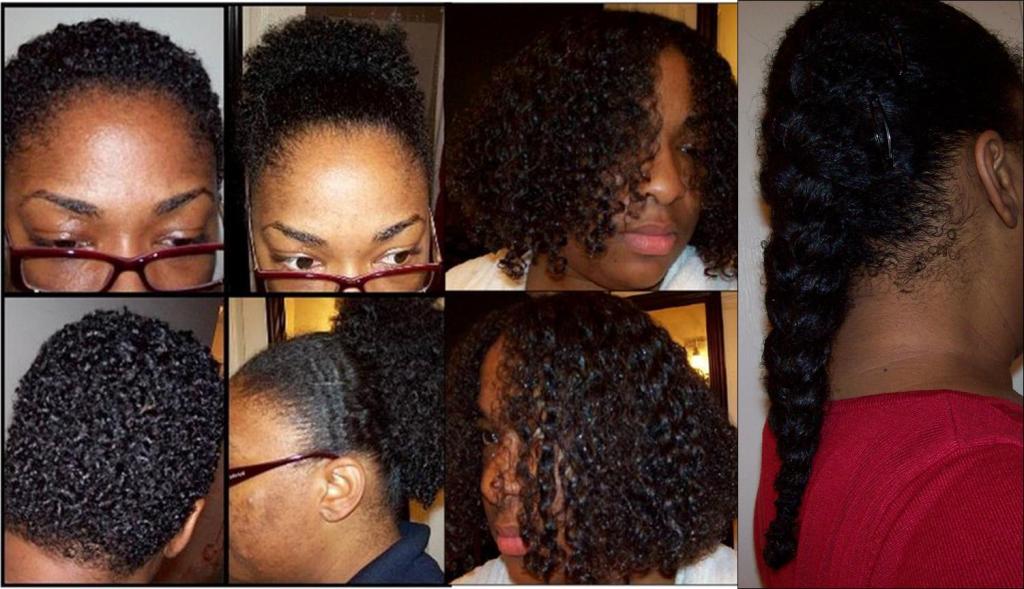
I can provide you a list of people who would disagree, some vehemently, that my hair is unspectacular. I can provide you a list of people who would agree with that statement. I like my hair. It’s coarse and curly, oily yet non-porous, and it is soft and shiny. It’s thick and grows relatively quickly with little breakage and requires very little product to do what it wants to do – which is be free.

The first thing said about my hair was when I was born and Mommy said to Daddy, “Oh, Bob, she has your hair.” She was happy that I had hair like the Walker side of my family because she found it beautiful. Based on my paternal grandmother and her children and grandchildren, our hair is coarse but soft to the touch; it’s curly when we’re younger and loosens into waves when older; we begin to gray young (usually stark white); and men keep it short while women keep it long (unofficial rules). My mother’s hair was very coarse and relatively thick. Her hair started turning gray at a relatively young age – she kept it colored so I don’t know when it started. And she kept it short – above the shoulder – and kept going shorter. I don’t know the reason behind the length, so I don’t know if it had anything to do with the hair growth itself.

Just months old, Mama had to tape ribbons in my hair – no velcro available in my day.

I’m grateful that the combination of my genes totals what I have today. Daddy would tell me how pretty my hair was first thing in the morning, before it had been combed and styled for the day. I asked him what he meant because my hair was wild and fuzzy, and he said that the hair in and of itself was what he found beautiful. Mommy would style it in plaits or ring curls, and I was to show it off to Daddy when she was done for him to say how pretty it was, loud enough for her to hear. People at church made complimenting my hair a part of the greeting. And whenever my kiddie hairstyle wasn’t quite what someone expected, it was voiced, quite pointedly, that Mommy needed to go back to the standard plaits or ring curls and never waiver again. And what I learned in third grade was that the plaits were supposed to be free to swing. My assistant principal asked if my mom tied my plaits together in the back because she didn’t want them to fly away when really they were connected because it required finding fewer matching barrettes. He was being silly but the element of truth in his joke was that he noticed I’d been wearing the same style a very long time and felt the need to comment. And the culmination of years of peoples’ opinions during my childhood taught me that my hair was part of my overall value.

Ring curls for Easter Sunday – EVERY Easter Sunday

I was not allowed to cut my hair before I turned 18. And when I turned 18, I cut my hair into a chin length bob. I cried. I loved it but I couldn’t stand looking at all the hair that was piled on the floor. And I didn’t touch it much at first – it was so strange not to have enough hair to pull into a ponytail. My stylist wouldn’t do the cut until she received express approval from Daddy. I tried for years to convince a stylist into cutting my hair and just risking whatever punishment I might get but not one of them would do it. And he gave approval because it was promised, not because he thought cutting my hair was okay. And while it wasn’t specifically stated that bob was truly the shortest I would have been allowed to go.

Cutting my hair then, for me, was about looking more mature. I thought a ponytail was for the young. Cutting my hair then, to Daddy, was part of my “wandering spirit”. It was something to experience because I could, and he fully believed I would prefer to return to wearing my hair long. Cutting my hair to this one old lady from my church was a sin and I was on my way to hell along with my parents who allowed it and my stylist who did it. Cutting my hair to other people was wrong because there are women in the world who cannot grow their hair long.

A chin-length bob has always been the shortest length acceptable to Daddy and many of his relatives.

As an adult, I took interest in learning to take care of my hair so that I would have the freedom to wear it however I felt. In college I considered going relaxer-free for the first time. I did it without any education or planning so it wasn’t successful. When I started transitioning, I wore my hair in two braids a lot and sometimes in a bun. After giving up and getting a relaxer touch-up because I truly had no direction, I was scolded for having waited so long before getting a relaxer and was told to never do that again. After trying different cuts and different hair colors I hit a sweet spot with tri-color highlights and long layers on relaxed hair. I was so excited to have found what I judged the perfect style. Unfortunately, it was not maintained by the perfect stylist and a combination of too many chemicals and trying to exercise outdoors in triple-digit temps with no hat created breakage in my crown. Breakage in the crown meant a significant cut so I took some time to figure out what I wanted to do.

A timely visit to my father’s family made me wonder if I had what they had – I’d worn my hair chemically straightened since I was nine so I didn’t know what my curls or waves would look like twenty years later. So I decided to cut off all the chemically treated hair and go completely natural. I literally went to three shops, including a barber shop, and literally no one would cut my hair. I didn’t necessarily want a particular style, I just didn’t want it to look like it was cut with safety scissors and edged with a butter knife. And they all refused. I made my way to a natural hair salon and during my consultation she told me that the front of my hair should grow a little longer for the cut to look good and to wait three or four months before cutting. I kept it in a protective style for those months and I did the big chop as soon as I could. I had a teeny-weeny afro with tighter curls than I imagined, and I absolutely loved what was on my head. And I learned how to take care of it, and I focused on the care and treatment of my hair intensely. I didn’t necessarily show off my new cut – especially to my father’s family – because I wasn’t interested in anyone’s opinion. But that doesn’t stop people from saying what they want to say. I was told that it was unattractive and to never cut it that short again by relatives on both sides. I was told by people I worked with that it made me look thinner. And I was approached everywhere I went by other black women who asked me about my stylist and products I used.

The first four years chemical free starting with my Big Chop. I didn’t even put any heat on it during that time other than a blow-out in the first year for trimming and to check out my ‘fro.

Cutting my hair then for me was a change I made primarily because it was damaged, and I wanted to try something new. Cutting my hair then for my relatives was just a temporary solution to a problem and something to endure until it was long and straight again. Cutting my hair then for “society” was a statement of my blackness and my woman-ness and my American-ness. I wish I could have photographed the faces of all the people who had made various assumptions about me based on my hair the moment they learned they had me all wrong. And it’s funny that out of all the misconceptions, no one had the same misconception. Cutting my hair then had nothing to do with me as a person. It was the first time I didn’t think my hair was part of my overall value and I was irritated when other people continued to push that message (and burden) onto me.

Along the way, in addition to releasing the idea that my hair was somehow associated with my value as a person, I realized the significance of changing your hair after certain life events. I know there are many cultures who cut their hair after deaths and other losses and to symbolize new beginnings of all kinds. I was only ever advised to never cut my hair. No one told me that the urge to cut that man out of my hair after a breakup was primal and a wonderful release. And when I gave in to that urge, just wow! And no one told me that the urge to go red was a sign of strength – whether you are strong or need to be strong, red hair can embolden you for anything that comes your way. After I graduated college, my sister called me “Rebel Gina” because I was angry and saying “no” to everything I’d ever been taught in life. The hair during that time? Short, red, and wild.

This is NOT “Rebel Gina” but this is a short and red phase of life. It just so happens I regretted this cut myself, but I loved the color.

But just like when I was looking for that fat girl in old childhood pictures, I looked for the girl whose hair was supposedly spectacular. I looked for the girl who was identified in a crowd because of her hair. I searched out the girl who was somehow made better because she had something regarded unique on her head. And all I can see is that there were many other people around me who had hair that was significantly more spectacular than mine. I saw nothing particularly special about my hair. And I have the courage to admit it, the freedom to accept it – my hair is utterly unspectacular. But I understand that when it’s viewed through the lenses of others who don’t have the same kind of flexibility of styling that my coarse, curly, shiny, graying hair allows me that it appears to have some additional value. I no longer internalize that view because it says nothing about me and everything about them. My hair is not a part of what makes me valuable and I’d go as far as to say my hair has nothing to do with my identity. Sure, I can see where I inherited what I have from my ancestors, but apart from genetics, it has nothing to do with my identity. I use it as an expression of something or an accessory sometimes but it’s no more spectacular than my earrings and graphic tees.

Fourth Grade, Oakshire Elementary School – Memphis, Tennessee

Thank you, everyone, who has complimented my hair. I feel good when you agree with me that what I have on my head allows me to be free. And it’s okay if you don’t like the style I’ve chosen – you don’t have to remind me of better styles or try to drill it in my head that you don’t like my choice. Sometimes I don’t like my choice either. All of that is good but there is no value, uniqueness, nor importance in my hair.

March 30, 2020 – Just before my city went to COVID related Safer-at-Home orders. And I miss my stylist!

I am Regina Lynette, the girl with unspectacular hair.

5 Min Read, Mental Health

I love my therapist.

I am a black American Christian woman who believes in having a full-on mental health team. I also know that while I am not the only one, I know that it’s not exactly commonplace yet for my demographic. Since I began my mental health journey in college, I have kept my path pretty quiet, sharing information only with people I deemed either safe spaces or emergency contacts. But I think the time has come to say more and say it publicly. This is another reason I decided to do this blog in this manner. Part of who I am includes details about my mental health journey. But you not gonna get the juicy stuff today. Today, I celebrate my current therapist.

I am a black American Christian woman who has a white American woman in charge of her *talk-therapy. And I love my therapist. This year, while watching horrific news about white people killing black people, I found myself in a mental state about racism I’d never been in before. I simply didn’t want to talk to white people about anything and I didn’t want white people to talk to me about anything, simply because they were white people. I didn’t want apologies. I didn’t want questions. I didn’t want greetings or terms of endearment. I turned my nose up at the idea that a white person had words to say. And about a week before my next therapy appointment – the one that came after I realized my sensitivities to white people just because they were white – I needed to decide how I was going to talk to my white therapist. Other than the awareness of her being a white person, I didn’t feel the same animosity or angst about talking to this particular white person and I tried to unpack that some before my session. I didn’t do a great job.

My therapist has an artistic background, has lived in other countries, and has lived in large American cities known for diversity as well as smaller southern cities known for lack of diversity and that was enough to remind me that she was a safe space. During that session I told her that I do not want to talk to white people. She paused the session to make sure she understood what I was saying – because she’s a white person and I was talking to her. Then I tried to say I still felt she was a safe person despite my current feelings about white people and hoped I wasn’t offensive. A few weeks later she reached out to me to ask if I’d heard about a therapeutic product made specifically for people of color designed by an African-American therapist.  I thanked her for seeing my color. This was summer 2020. She is still my therapist and I still love my therapist.

That anecdote says nothing about how I’ve come to love my therapist, nor does it specifically promote therapy. But that anecdote is the demonstration that a therapist to love is a therapist who is right for you and your needs. A therapist to love is one who can handle what life throws you both and can still guide you through those challenging times. A therapist to love is one who sees you clearly and respects you completely. And my therapist is a therapist to love.

When I met this therapist, I was having complications and my chronic mental illness was out of remission leaving me unstable. She was referred to me by my psychiatrist along with a nutritionist. Having had therapy for more than 20 years, I had long developed a process to make sure I got the most out of my sessions. This included self-awareness of issues that surfaced, recognition of things that just weren’t working, and an acknowledgement of the level of disfunction my illness caused versus the level of disfunction my unresolved issues caused (which means I had to accept that sometimes I needed a pill and not only behavior changes).

There were a couple of problems immediately apparent to me in the first few sessions with this therapist. First, I wasn’t going to be in control of this process in the way I had been with previous therapists. Second, I didn’t have the energy, courage, nor foresight to take the reins of this process in the way I had done with previous therapists. Bumping up against that those first few sessions made me reconsider being under her care. I always had an introductory session or consultation before choosing a therapist and could establish my needs at that time. I just made an appointment with this therapist based on my chosen psychiatrist’s referral. But I decided to continue because in this case, my psychiatrist, talk-therapist, and nutritionist – my mental health team – all knew each other and could discuss my progress together and I wanted to see the benefits of that arrangement. So, I decided to “let go” (which ended up being the focus for at least a year) and stopped planning for my sessions. I would just show up and follow her lead. I found that the sessions where I had absolutely nothing planned to discuss were the best sessions. We were still getting to know each other, and I wasn’t really giving her much to work with – I wasn’t showing up and presenting myself to her in the sessions but was open enough to let her sort of rummage around and see what we could work on. And in time, she got to know me. She got to know the characters in my life. She knew when to pause a long time because she could see me thinking. She learned when to either re-direct or end the session because it was just too much to handle. And she learned how to check in with me at the start of each session to see how to best direct our time. Now she has a better handle on me than I have on myself in some ways and I trust her with my everything. That’s a therapist to love. And I love my therapist.

Only you know what you need from a therapist and only you know what’s most important to you in a therapist. However, when I am asked about what I’ve learned I need from a therapist and what’s important to me in a therapist, there is one thing that I consistently note first – the best professionals are artists. Creatives approach medicine with the idea that every human is different and that every human may respond differently to therapy – both techniques and medications. They understand that the patient knows more about their body and mind than anyone else and therefore require that a partnership be forged to determine a treatment plan (you’ll see this in the agreements in your intake paperwork or it will be discussed during your consultation and/or first appointment). Artists use their passionate natures to fuel their progress. And the patients of creative and artistic medical professionals benefit from getting a partner who holds their hand along the very customized treatment plan to reach the pinnacle of the individual’s health. They lay out a plan based on their education and experience and then stand back and look with admiration and pride at the mixed bag of tricks that the plan actually incorporates as it’s executed. My first artistic doctor beamed with pride with every success I had – we had. He fought to the death my insurance companies and got pissed at the pharmaceutical companies when they caused problems with getting my prescriptions filled. He was very invested in me and taught me to be very invested in my health.

I just wanted to tell the world that I love my therapist. And I know that it is critical that African-Americans seek therapy, and that African-American issues can often only be understood well by African-American therapists – so much so that I want to acknowledge it as fact. And I’ve had both black and white therapists and had positive experiences with both. Have the courage to seek the right therapist for you whether it’s gender, race, color, or any other identifiers and experiences.

I love my therapist.

*I use the term talk-therapy to refer to the sessions provided by my medical professional that rely mostly on talking. There are many different kinds of health professionals who take on this role so I use a broader term to focus on the process rather than the person’s credentials. When I use this term, usually I am separating doctors who prescribe medications from other medical health professionals who focus on a myriad of other techniques.