When I decided to explore my identity publicly via this blog I decided to include a photograph of myself with each post. This makes me extremely uncomfortable but I thought it was an important part of my identity – the entire topic of the blog. And I believed it would be a way to become more comfortable with my appearance and photographs.
I didn’t always hate having my picture taken. When I was a kid I photo-bombed as much as possible before it was a thing. I can remember actually crying real tears when Mommy was taking pictures of someone outside in the backyard and wouldn’t take one of me. She had one shot left on the roll of film when she finished and allowed me to pose. Did she save me the last one? Was it by chance? All of that is irrelevant because I loved the photo in my sundress, arms up and out (which seems to be my favorite pose, even now).
Above: Some of my favorite photo bombs – back when you didn’t know what you had for weeks while you waited for your film to be developed. My height worked against me but I still tried to get in there.
Below: I managed to dry those tears real quick, throw my hands in the air and work the camera.
Mommy’s insistence that I smile a certain way and pose a certain way grew old. School photos became a source of mild anxiety. If my hair was not the same as it was when I left the house that morning she didn’t understand why my teachers didn’t fix it. If I didn’t smile quite right she didn’t understand why I made that face. If flaws were shown – snaggle teeth or squinty eyes – she told me what I needed to do to correct or hide them. It sounds horrible, and it felt that way, but I do understand fully what she was trying to do. You had one shot to get a beautiful picture when using film and she believed I was beautiful. She just wanted the camera to capture what she saw.
Then as I gained weight and became a fat woman, I hated documenting that in pictures. And when I lost weight I still saw that fat woman in photographs and that was usually the end of whatever diet I was trying because why work hard if I couldn’t achieve what I wanted. And today I hate to wear makeup having struggled with acne since I’m 9, contact lenses mostly because pollen and an astigmatism, and anything other than destructed denim and graphic tees for comfort. I wear sneakers everyday and fight to cover my fast-growing gray hair that cruelly started along my hairline, impossible to disguise. I don’t like taking pictures, but I take them for one reason only – family memories. Mommy reached a point in life where she hated having her picture taken, too, and we regret not having enough photos of her to show people documentation of our memories. I know that photos are your source of remembering life events and that it’s important to have them no matter what you look like at the time.
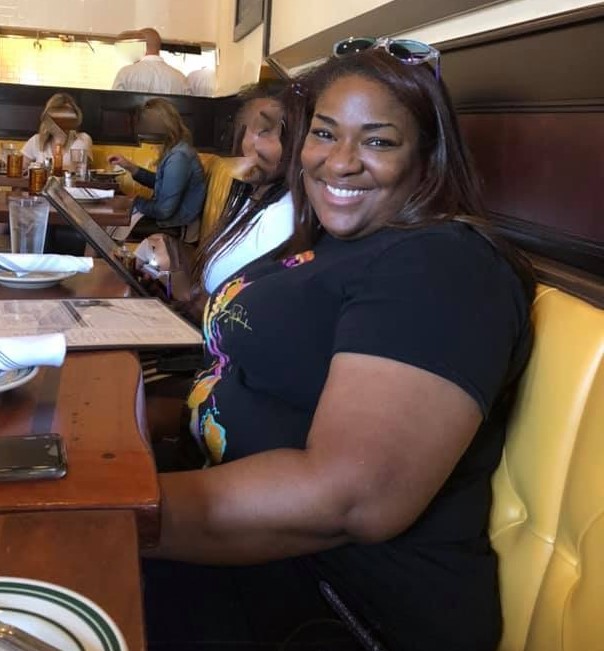
After seeing this photo, I was literally disgusted at the sight of myself. But I didn’t demand a re-take because we were making travel memories (a family member is the blurred and deleted image beside me). And no re-takes were going to make me look smaller. And I was already convinced I could never look better.
I hope to stop avoiding the camera during this phase of peeling back the layers to expose my true self. I hope that I can ignore whatever I consider flawed and begin to embrace the things that are the charm of me. And I hope that I can look back on photos and remember the joy of celebrations, the enlightenment of travels, and the love among loved ones and close ones. For now, the way that I am working on that is by posting as many photographs as I can find and take of myself (click here for the gallery updated often) while I talk about who I truly am as a whole person. It won’t be me in every post but I’ll make a significant appearance.
I can provide you a list of people who would disagree, some vehemently, that my hair is unspectacular. I can provide you a list of people who would agree with that statement. I like my hair. It’s coarse and curly, oily yet non-porous, and it is soft and shiny. It’s thick and grows relatively quickly with little breakage and requires very little product to do what it wants to do – which is be free.
The first thing said about my hair was when I was born and Mommy said to Daddy, “Oh, Bob, she has your hair.” She was happy that I had hair like the Walker side of my family because she found it beautiful. Based on my paternal grandmother and her children and grandchildren, our hair is coarse but soft to the touch; it’s curly when we’re younger and loosens into waves when older; we begin to gray young (usually stark white); and men keep it short while women keep it long (unofficial rules). My mother’s hair was very coarse and relatively thick. Her hair started turning gray at a relatively young age – she kept it colored so I don’t know when it started. And she kept it short – above the shoulder – and kept going shorter. I don’t know the reason behind the length, so I don’t know if it had anything to do with the hair growth itself.
Just months old, Mama had to tape ribbons in my hair – no velcro available in my day.
I’m grateful that the combination of my genes totals what I have today. Daddy would tell me how pretty my hair was first thing in the morning, before it had been combed and styled for the day. I asked him what he meant because my hair was wild and fuzzy, and he said that the hair in and of itself was what he found beautiful. Mommy would style it in plaits or ring curls, and I was to show it off to Daddy when she was done for him to say how pretty it was, loud enough for her to hear. People at church made complimenting my hair a part of the greeting. And whenever my kiddie hairstyle wasn’t quite what someone expected, it was voiced, quite pointedly, that Mommy needed to go back to the standard plaits or ring curls and never waiver again. And what I learned in third grade was that the plaits were supposed to be free to swing. My assistant principal asked if my mom tied my plaits together in the back because she didn’t want them to fly away when really they were connected because it required finding fewer matching barrettes. He was being silly but the element of truth in his joke was that he noticed I’d been wearing the same style a very long time and felt the need to comment. And the culmination of years of peoples’ opinions during my childhood taught me that my hair was part of my overall value.
Ring curls for Easter Sunday – EVERY Easter Sunday
I was not allowed to cut my hair before I turned 18. And when I turned 18, I cut my hair into a chin length bob. I cried. I loved it but I couldn’t stand looking at all the hair that was piled on the floor. And I didn’t touch it much at first – it was so strange not to have enough hair to pull into a ponytail. My stylist wouldn’t do the cut until she received express approval from Daddy. I tried for years to convince a stylist into cutting my hair and just risking whatever punishment I might get but not one of them would do it. And he gave approval because it was promised, not because he thought cutting my hair was okay. And while it wasn’t specifically stated that bob was truly the shortest I would have been allowed to go.
Cutting my hair then, for me, was about looking more mature. I thought a ponytail was for the young. Cutting my hair then, to Daddy, was part of my “wandering spirit”. It was something to experience because I could, and he fully believed I would prefer to return to wearing my hair long. Cutting my hair to this one old lady from my church was a sin and I was on my way to hell along with my parents who allowed it and my stylist who did it. Cutting my hair to other people was wrong because there are women in the world who cannot grow their hair long.
A chin-length bob has always been the shortest length acceptable to Daddy and many of his relatives.
As an adult, I took interest in learning to take care of my hair so that I would have the freedom to wear it however I felt. In college I considered going relaxer-free for the first time. I did it without any education or planning so it wasn’t successful. When I started transitioning, I wore my hair in two braids a lot and sometimes in a bun. After giving up and getting a relaxer touch-up because I truly had no direction, I was scolded for having waited so long before getting a relaxer and was told to never do that again. After trying different cuts and different hair colors I hit a sweet spot with tri-color highlights and long layers on relaxed hair. I was so excited to have found what I judged the perfect style. Unfortunately, it was not maintained by the perfect stylist and a combination of too many chemicals and trying to exercise outdoors in triple-digit temps with no hat created breakage in my crown. Breakage in the crown meant a significant cut so I took some time to figure out what I wanted to do.
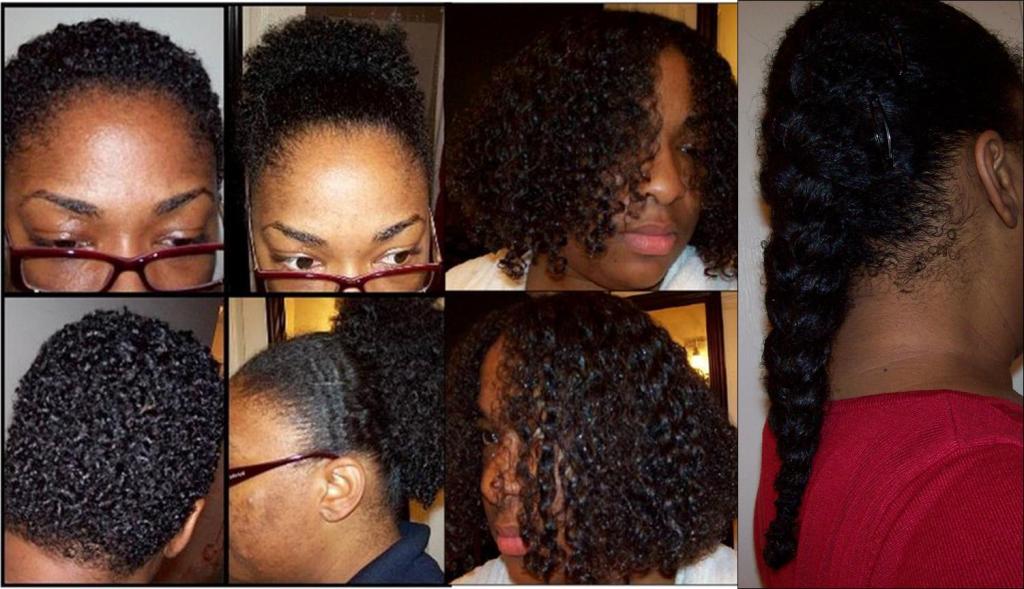
A timely visit to my father’s family made me wonder if I had what they had – I’d worn my hair chemically straightened since I was nine so I didn’t know what my curls or waves would look like twenty years later. So I decided to cut off all the chemically treated hair and go completely natural. I literally went to three shops, including a barber shop, and literally no one would cut my hair. I didn’t necessarily want a particular style, I just didn’t want it to look like it was cut with safety scissors and edged with a butter knife. And they all refused. I made my way to a natural hair salon and during my consultation she told me that the front of my hair should grow a little longer for the cut to look good and to wait three or four months before cutting. I kept it in a protective style for those months and I did the big chop as soon as I could. I had a teeny-weeny afro with tighter curls than I imagined, and I absolutely loved what was on my head. And I learned how to take care of it, and I focused on the care and treatment of my hair intensely. I didn’t necessarily show off my new cut – especially to my father’s family – because I wasn’t interested in anyone’s opinion. But that doesn’t stop people from saying what they want to say. I was told that it was unattractive and to never cut it that short again by relatives on both sides. I was told by people I worked with that it made me look thinner. And I was approached everywhere I went by other black women who asked me about my stylist and products I used.
The first four years chemical free starting with my Big Chop. I didn’t even put any heat on it during that time other than a blow-out in the first year for trimming and to check out my ‘fro.
Cutting my hair then for me was a change I made primarily because it was damaged, and I wanted to try something new. Cutting my hair then for my relatives was just a temporary solution to a problem and something to endure until it was long and straight again. Cutting my hair then for “society” was a statement of my blackness and my woman-ness and my American-ness. I wish I could have photographed the faces of all the people who had made various assumptions about me based on my hair the moment they learned they had me all wrong. And it’s funny that out of all the misconceptions, no one had the same misconception. Cutting my hair then had nothing to do with me as a person. It was the first time I didn’t think my hair was part of my overall value and I was irritated when other people continued to push that message (and burden) onto me.
Along the way, in addition to releasing the idea that my hair was somehow associated with my value as a person, I realized the significance of changing your hair after certain life events. I know there are many cultures who cut their hair after deaths and other losses and to symbolize new beginnings of all kinds. I was only ever advised to never cut my hair. No one told me that the urge to cut that man out of my hair after a breakup was primal and a wonderful release. And when I gave in to that urge, just wow! And no one told me that the urge to go red was a sign of strength – whether you are strong or need to be strong, red hair can embolden you for anything that comes your way. After I graduated college, my sister called me “Rebel Gina” because I was angry and saying “no” to everything I’d ever been taught in life. The hair during that time? Short, red, and wild.
This is NOT “Rebel Gina” but this is a short and red phase of life. It just so happens I regretted this cut myself, but I loved the color.
But just like when I was looking for that fat girl in old childhood pictures, I looked for the girl whose hair was supposedly spectacular. I looked for the girl who was identified in a crowd because of her hair. I searched out the girl who was somehow made better because she had something regarded unique on her head. And all I can see is that there were many other people around me who had hair that was significantly more spectacular than mine. I saw nothing particularly special about my hair. And I have the courage to admit it, the freedom to accept it – my hair is utterly unspectacular. But I understand that when it’s viewed through the lenses of others who don’t have the same kind of flexibility of styling that my coarse, curly, shiny, graying hair allows me that it appears to have some additional value. I no longer internalize that view because it says nothing about me and everything about them. My hair is not a part of what makes me valuable and I’d go as far as to say my hair has nothing to do with my identity. Sure, I can see where I inherited what I have from my ancestors, but apart from genetics, it has nothing to do with my identity. I use it as an expression of something or an accessory sometimes but it’s no more spectacular than my earrings and graphic tees.
Fourth Grade, Oakshire Elementary School – Memphis, Tennessee
Thank you, everyone, who has complimented my hair. I feel good when you agree with me that what I have on my head allows me to be free. And it’s okay if you don’t like the style I’ve chosen – you don’t have to remind me of better styles or try to drill it in my head that you don’t like my choice. Sometimes I don’t like my choice either. All of that is good but there is no value, uniqueness, nor importance in my hair.
March 30, 2020 – Just before my city went to COVID related Safer-at-Home orders. And I miss my stylist!
I am Regina Lynette, the girl with unspectacular hair.
I am a black American Christian woman who believes in having a full-on mental health team. I also know that while I am not the only one, I know that it’s not exactly commonplace yet for my demographic. Since I began my mental health journey in college, I have kept my path pretty quiet, sharing information only with people I deemed either safe spaces or emergency contacts. But I think the time has come to say more and say it publicly. This is another reason I decided to do this blog in this manner. Part of who I am includes details about my mental health journey. But you not gonna get the juicy stuff today. Today, I celebrate my current therapist.
I am a black American Christian woman who has a white American woman in charge of her *talk-therapy. And I love my therapist. This year, while watching horrific news about white people killing black people, I found myself in a mental state about racism I’d never been in before. I simply didn’t want to talk to white people about anything and I didn’t want white people to talk to me about anything, simply because they were white people. I didn’t want apologies. I didn’t want questions. I didn’t want greetings or terms of endearment. I turned my nose up at the idea that a white person had words to say. And about a week before my next therapy appointment – the one that came after I realized my sensitivities to white people just because they were white – I needed to decide how I was going to talk to my white therapist. Other than the awareness of her being a white person, I didn’t feel the same animosity or angst about talking to this particular white person and I tried to unpack that some before my session. I didn’t do a great job.
My therapist has an artistic background, has lived in other countries, and has lived in large American cities known for diversity as well as smaller southern cities known for lack of diversity and that was enough to remind me that she was a safe space. During that session I told her that I do not want to talk to white people. She paused the session to make sure she understood what I was saying – because she’s a white person and I was talking to her. Then I tried to say I still felt she was a safe person despite my current feelings about white people and hoped I wasn’t offensive. A few weeks later she reached out to me to ask if I’d heard about a therapeutic product made specifically for people of color designed by an African-American therapist. I thanked her for seeing my color. This was summer 2020. She is still my therapist and I still love my therapist.
That anecdote says nothing about how I’ve come to love my therapist, nor does it specifically promote therapy. But that anecdote is the demonstration that a therapist to love is a therapist who is right for you and your needs. A therapist to love is one who can handle what life throws you both and can still guide you through those challenging times. A therapist to love is one who sees you clearly and respects you completely. And my therapist is a therapist to love.
When I met this therapist, I was having complications and my chronic mental illness was out of remission leaving me unstable. She was referred to me by my psychiatrist along with a nutritionist. Having had therapy for more than 20 years, I had long developed a process to make sure I got the most out of my sessions. This included self-awareness of issues that surfaced, recognition of things that just weren’t working, and an acknowledgement of the level of disfunction my illness caused versus the level of disfunction my unresolved issues caused (which means I had to accept that sometimes I needed a pill and not only behavior changes).
There were a couple of problems immediately apparent to me in the first few sessions with this therapist. First, I wasn’t going to be in control of this process in the way I had been with previous therapists. Second, I didn’t have the energy, courage, nor foresight to take the reins of this process in the way I had done with previous therapists. Bumping up against that those first few sessions made me reconsider being under her care. I always had an introductory session or consultation before choosing a therapist and could establish my needs at that time. I just made an appointment with this therapist based on my chosen psychiatrist’s referral. But I decided to continue because in this case, my psychiatrist, talk-therapist, and nutritionist – my mental health team – all knew each other and could discuss my progress together and I wanted to see the benefits of that arrangement. So, I decided to “let go” (which ended up being the focus for at least a year) and stopped planning for my sessions. I would just show up and follow her lead. I found that the sessions where I had absolutely nothing planned to discuss were the best sessions. We were still getting to know each other, and I wasn’t really giving her much to work with – I wasn’t showing up and presenting myself to her in the sessions but was open enough to let her sort of rummage around and see what we could work on. And in time, she got to know me. She got to know the characters in my life. She knew when to pause a long time because she could see me thinking. She learned when to either re-direct or end the session because it was just too much to handle. And she learned how to check in with me at the start of each session to see how to best direct our time. Now she has a better handle on me than I have on myself in some ways and I trust her with my everything. That’s a therapist to love. And I love my therapist.
Only you know what you need from a therapist and only you know what’s most important to you in a therapist. However, when I am asked about what I’ve learned I need from a therapist and what’s important to me in a therapist, there is one thing that I consistently note first – the best professionals are artists. Creatives approach medicine with the idea that every human is different and that every human may respond differently to therapy – both techniques and medications. They understand that the patient knows more about their body and mind than anyone else and therefore require that a partnership be forged to determine a treatment plan (you’ll see this in the agreements in your intake paperwork or it will be discussed during your consultation and/or first appointment). Artists use their passionate natures to fuel their progress. And the patients of creative and artistic medical professionals benefit from getting a partner who holds their hand along the very customized treatment plan to reach the pinnacle of the individual’s health. They lay out a plan based on their education and experience and then stand back and look with admiration and pride at the mixed bag of tricks that the plan actually incorporates as it’s executed. My first artistic doctor beamed with pride with every success I had – we had. He fought to the death my insurance companies and got pissed at the pharmaceutical companies when they caused problems with getting my prescriptions filled. He was very invested in me and taught me to be very invested in my health.
I just wanted to tell the world that I love my therapist. And I know that it is critical that African-Americans seek therapy, and that African-American issues can often only be understood well by African-American therapists – so much so that I want to acknowledge it as fact. And I’ve had both black and white therapists and had positive experiences with both. Have the courage to seek the right therapist for you whether it’s gender, race, color, or any other identifiers and experiences.
I love my therapist.
*I use the term talk-therapy to refer to the sessions provided by my medical professional that rely mostly on talking. There are many different kinds of health professionals who take on this role so I use a broader term to focus on the process rather than the person’s credentials. When I use this term, usually I am separating doctors who prescribe medications from other medical health professionals who focus on a myriad of other techniques.
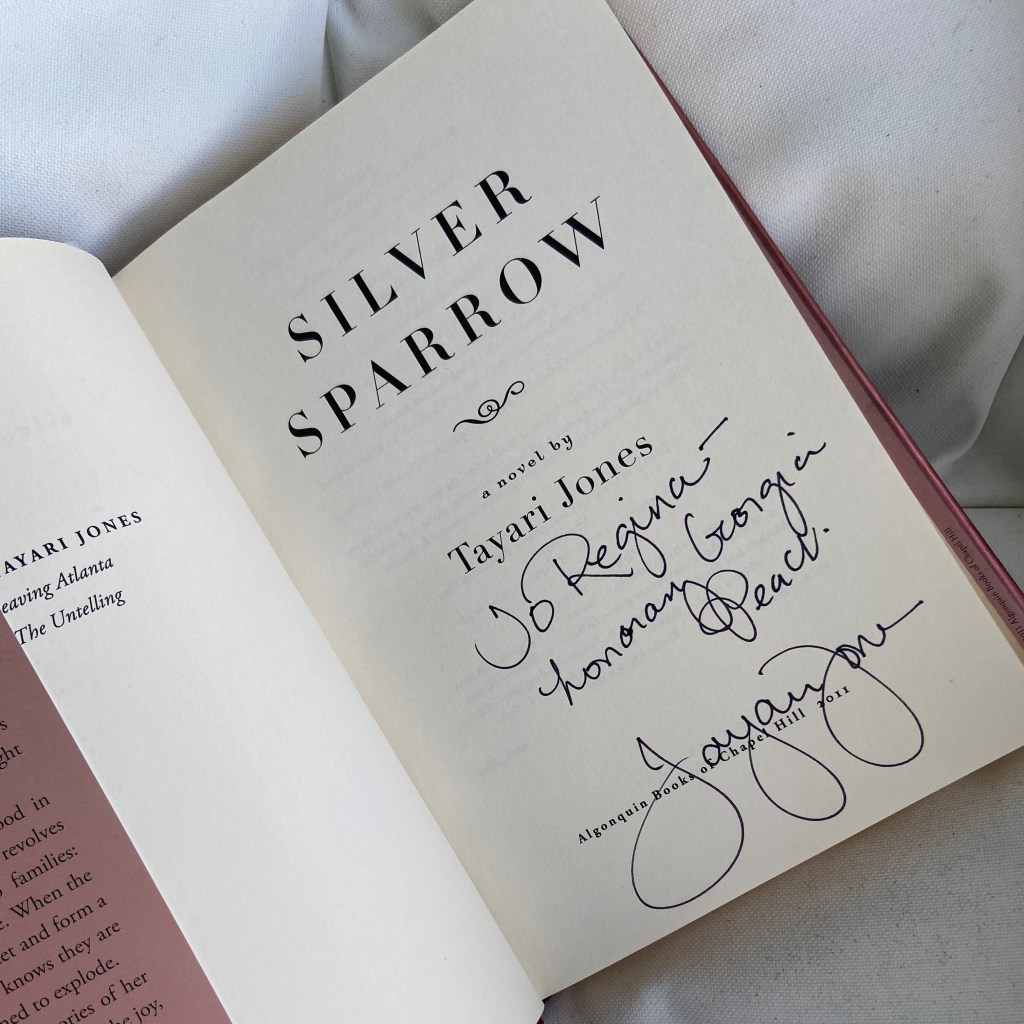
Silver Sparrow is the title of a novel by Tayari Jones about two half-sisters, their shared father, and how life unfolds for them and their families*. I went to see her at the Decatur Book Festival and while discussing her book, Tayari Jones asked if there were any Silver Sparrows in the room. I raised my hand. The feeling of pride that accompanied that acknowledgement surprised me.
The story of me and my half-siblings has always been shrouded in shame. I never took on the shame directly, but some people look at me as the shame – I was a catalyst for change in my parents’ lives. But I never even remotely accepted the blame for my parents’ decisions.
My father was married with children at the time he met my mother, and she was divorced with children. They began their relationship while my father was still legally married. I have 3 half-brothers and 4 half-sisters. I shared one half-brother and one half-sister with our mother. I shared two half-brothers and three half-sisters with our father. I’m the only and last child between my parents and all my siblings are “half”. No one in my immediate family used the term “half” so I’ll be dropping that now.
It was easy to share my mother with my brother and sister because they lived at home with me and neither of their fathers were involved in their lives. It was a little more complicated with sharing my father. His oldest children were close to my mother’s age, so he wasn’t co-parenting young children but adults. They were married and having their own children – I have three nieces and a nephew who are older than I am. So, while I was technically sharing my father with his older children, what was happening day to day was that I had a father (and in some respects my mother’s children had him as a father), and his older children were abandoned. With young children, fathers typically make some legal arrangement to share custody with mothers and all the children manage to grow up together in some manner. With adult children, what happened in our circumstances, is that I became a secret.
I didn’t realize I was supposed to be a secret, mainly because I knew the truth about my family structure and we never treated it like a secret. But when I spent time with my father’s children and I met people from their everyday lives, I had to be explained. “Who is this small child with you – too young to be friends with your own children?” people would ask. “This is my baby sister. Yep, there was one more who came much later.” Or if my nieces were asked then it was often, “This is my baby Auntie.”
And I almost got pleasure that we’d shocked someone because our family was a little unexpected. As a teenager and young adult I started to feel more sensitive to other people’s reactions.
The moment I felt for certain that I had been a kept secret was at my niece’s wedding. I was a bridesmaid and was approached at the rehearsal by two ladies I didn’t know. They asked who I was, and I told them the bride was my niece. They assumed I’d sort of adopted my way into the family – not that she was my biological niece. I explained – no, her father is my older brother – and the look on their faces, the sudden silence to me, and the whispering behind my back but in front of my face felt shameful. That is what I felt.
I feel compelled to provide some disclaimers. First, I do not know those ladies and if they were standing in my face this minute, I wouldn’t know they were the ones with whom I spoke and couldn’t tell you what the significance was of them being at the wedding rehearsal. Second, there could have been any number of reasons they weren’t privy to details about our family that had nothing to do with feelings or opinions on how I came to be – I have no idea what the relationship with these ladies is between my family. And third, though it’s no secret that this brother had a difficult time with our father and his choices, neither he, his wife, or his daughter ever made me feel anything less than precious when I was with them. This is just a recollection of a moment in my life where I felt shame and realized I was a secret – not a factual account of anything done to me by anyone. I was old enough that I could understand that my existence and the circumstances around my conception was not necessarily something to boast about and not necessarily information that just anyone needed to know. Yes, I am very aware that the compulsion to offer that disclaimer speaks rivers and yes, you likely will hear more about that later – I’m trying to keep these entries brief.
The first time I noticed how easy (and benign) it was for me to have become a secret was the first time I realized my siblings had become my secret. Years ago, an associate at work was leading a professional development workshop and as part of his intro and opening comments he would ask if anyone in the room had older brothers. This was much more about a segue into an anecdote about him having older brothers and less to do with getting a census of the participants. Though I had been in the room when he did this presentation several times, this was the first time I was a participant in the workshop, and so this was the first time I raised my hand. He was so startled that I felt a little embarrassed. He was silent for just a beat too long before he said that he had no idea that I had brothers. I said something to try and explain that there was no reason for me to have mentioned my brothers in our previous interactions – we had a professional relationship that was also relatively friendly – and before it became too awkward, he moved on. This would be true for most of the people I interact with on a daily basis. Just because I see or speak to someone everyday doesn’t mean that I’ve had any interactions with them that require them to know anything about my family structure. This has absolutely nothing to do with how I feel about any member of my family and everything to do with the point of whatever I am trying to say at that moment.
So since that revelation, I look back on my memories with a different lens and with much less sensitivity than I used to. If you call me Regina, you do not know the whole story, trust me (even if you already knew everything I just shared). And there are no secrets – just rooms to the house you haven’t been invited to enter, so to speak. If you know me well (likely you call me Gina) you probably get the explanation of my family structure because you probably need it – anecdotes can get complicated if you don’t know the key players. But if you were introduced to me as Regina, and now call me Gina, (or vice-versa) you are missing some details – they aren’t secrets but you find out things on a need-to-know basis. And I determine when you need to know.
The pride in raising my hand at the book festival to identify myself as a Silver Sparrow was because it was a pretty name for something complex that I now find beautiful. My parents made the choices they thought were best at the time. I say that they weren’t always the right choices. Maya Angelou said “Just do right. Right may not be expedient, it may not be profitable, but it will satisfy your soul.” Some of their choices were expedient at the cost of being right. Some of their choices were profitable at the cost of being right. And some of their choices were easy and comfortable at the cost of being right. I know my parents sometimes didn’t consider – and at times didn’t understand – the impact that their decisions would have on the generations to come after them. And there is a lot of pain associated with all of us who suffered consequences of their choices. But, the day I raised my hand proudly declaring myself a Silver Sparrow was the day I saw the beauty of what they gave me. I was exposed to many different philosophies of life – all my siblings were adults and I was often in a position to be taught by them as parents to children. The brother who I mentioned earlier in the wedding story taught me how women should be treated by what I saw in how he treated his wife and daughter. All my sisters wanted me to look and behave ladylike, even though they all had slightly different ideas of what that meant and different deliveries of the message. Everyone expected me to be studious and ambitious and encouraged me to be the best they thought I could be – whether they really knew what that was or not. If I had not been a Silver Sparrow, I wouldn’t have had the siblings I have, and we wouldn’t have had the life experiences that have made us all more intentional about our life choices and aware of what we are contributing to the following generations. And while my life experiences range from horrible enough to repress to so joyous it is heartwarming, it’s that spectrum that gives me pride.
I have 3 brothers. I have 5 sisters (fictive kin included). I am Regina Lynette, and I am a Silver Sparrow.
*Silver Sparrow by Tayari Jones is one of the books that I hugged after I finished reading it. I have read all her books and have recommended all of them at one time or another to friends and family – and now to you.
My Tayari Jones books are enjoying a sunset on the lanai. Pictured from left to right – An American Marriage, Leaving Atlanta, The Untelling, Silver Sparrow.
With intention and on purpose, my parents named me Regina Lynette. I didn’t choose my name – none of us does. But I learned to love my name at a very young age. And eventually, I began to make some choices about how my name was documented. The first choice I made about my name was in high school because that’s when you start signing documents and applications that will follow you for several years of higher education. I would go through several iterations over the years.
I first decided to document my name as Regina Lynette Walker. No middle initial for me – please spell my middle name. There were some limitations of course but I fully embraced my name in its entirety as given to me by my parents and documented on my birth certificate and social security card.
At this time in my life I had lost my mother, was living in hell with a step-monster, had lost my auntie/godmother and therefore had lost my little sister, and my name was all I had left in some ways. Mommy had a reason for naming me Regina – a hope for elegance. Daddy taught me to wear the royal crown that is the name Regina. My little sister was forever connected to my heart through our shared middle name, even though we were separated when my step-monster imprisoned me and my father emotionally abandoned me. After I graduated college, I eventually made another choice about my name.
The second choice I made about using my name was to “change” it to Regina L. Walker. Practically, it was a bit shorter and I had room for the flourishes I used for my cursive capital letters. It looked mature and was a nod to something my mother told me about her name.
My parents were older – I was called a “pleasant surprise” and there was a gap of 24 years between them. So, they had been educated in a more formal and what might be called sexist way of using married names. I think the form she’d been taught was First/Given Name, Maiden Name, Married Name. For her, this meant sacrificing her beloved middle name. She decided to go against that rule and used First/Given Name, Middle Name, Married Name. And most often she only used her middle initial rather than her full middle name. So now, my name format matched hers and I’d planned to completely drop my maiden name upon marriage just the way she did. Honestly, I lost all emotional connection to the name Walker during that time. My father had died and if I married, there was no one in his place to honor or pay homage to with a surname. And then something painful happened that I don’t fully comprehend that brought forth the most recent choice I’ve made about my name.
I made a third choice of documenting my name by dropping my middle name and initial altogether – Regina Walker. I don’t know what happened to provoke this change but I felt passionately about dropping that initial. I wanted my name to total 12 letters because the number 12 is ubiquitous in my life – for example my birthday is December 12 or 12/12.
I didn’t want to discuss my middle name with inquiring minds. I felt guilt about losing my baby sister and wondered where she was and how she was doing. I felt like I’d betrayed my godmother. My heart was broken, and I had stopped speaking along that gold thread to my sister’s heart nor did I hear anything from the other end. I would cringe when I saw my middle initial and changed it everywhere I could.
I’ve covered the three times I made a choice about my name and never mentioned how I got to Regina Lynette – the name of this blog. Well, that was chosen specifically for the blog and is not a name I use on documents nor is it a name I particularly want to be called. I continue to use only my first and last name for documentation. I continue to be called Regina or Gina as appropriate (and one other name that is only for one other person, and he knows who he is). But as I go along this journey that I’ve named Identity, I am using the two names that were given to me, selected with intention and purpose. While it has significance, I don’t include my surname here because I got that by default and there is no journey to follow to figure out who I am as a Walker – my temperament and some physical features have done that sufficiently.
I am Regina Lynette. The name Regina is of Latin derivation and means Queen. The name Lynette is of French origin and means Pretty One.
*Technically the name Lynette has many different origins and meanings. The American/Anglo Saxon is “bird”. The Celtic is “Grace”. The Latin origin means “mild”. And the French-Welsh/Welsh meaning is “nymph” or “idol”. I’ve taken a simpler definition with heavier influence of the French and use the definition “Pretty One”.
Roughly 13 years ago, I thought I was having general chit-chat with someone I was assisting with some clerical and logistic details of a presentation. He was someone I had heard about but only just met, and it turned into a mini-counseling session. I hated that – no one wants to find out they were dumping their issues on someone they just met.
It was bittersweet because he has a gift of counseling so not only was that something that he would do with anyone who has so many issues that they spill all out of your baggage, but he was good at it – hearing it, recognizing it, encouraging it, and coaxing it. He said one sentence that would change the trajectory of the following nine years of my life.
It was so simple and so obvious, but I needed to hear it and to hear it from him and to hear it on that day at that time. He said that I was comfortable with other people’s vulnerabilities – almost a safe space for them – but that I was uncomfortable with my own vulnerabilities and didn’t trust anyone with them. I mean, that’s not exactly profound in and of itself and it makes a lot of sense and could have easily just been a statement I acknowledged as an accurate observation. But for the season I was embarking on, it was a seed that landed on fertile ground. And for nine years I nurtured it, and it blossomed, and it gave me a bountiful harvest. I wrote all about it HERE.
Roughly six weeks ago, I was in a formal talk-therapy session and though we’d discussed this on some level for the last three years, she gave me a word – a seed falling on fertile ground. Identity. And just as I did with the word Vulnerability, I will explore Identity in a public way via this blog. And hopefully I will better manage the changes in my relationships and friendships that comes with this decision. I’ll continue to use literary license where necessary to protect the innocent, so to speak.
So, let’s just jump right in. As of today, I self-identify on social media with the following.
Sagittarius – Sagittarius is a sign of the zodiac that represents people born between November 23rd and December 21st.
Xennial – A micro-generation of people on the cusp of the Generation X and Millennial demographic cohorts, typically born in the late 1970s to early 1980s.
Sapiosexual – A person who finds intelligence sexually attractive or arousing.
Wounded Healer – A person who is compelled to help others because the person him/herself is “wounded.”
Tsundoku Sensei – A master at collecting unread books.
Printrovert – One who prefers the company of books to that of people.
Imperfectly – I have an Etsy shop selling prayer beads that I make without correcting imperfections.
That’s the easy part because I have already shared that with the general public. This information is like my music collection, books on my shelves, and the figurines I collect – conversation starters for anyone who I’ve allowed to enter my space.








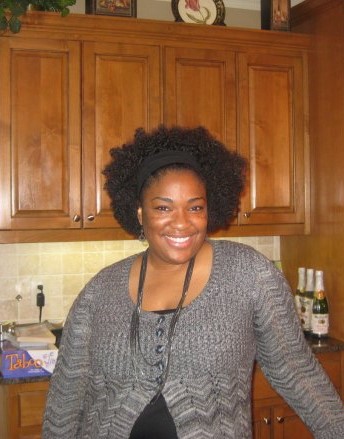

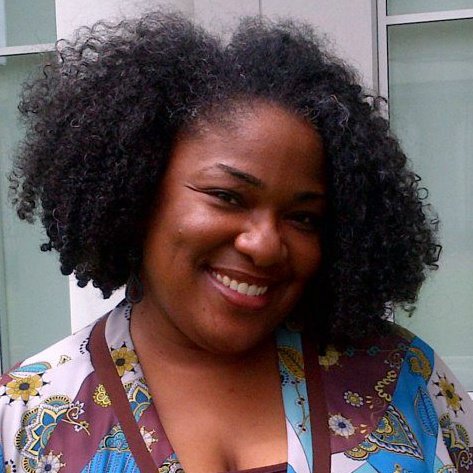


 I am Regina Lynette